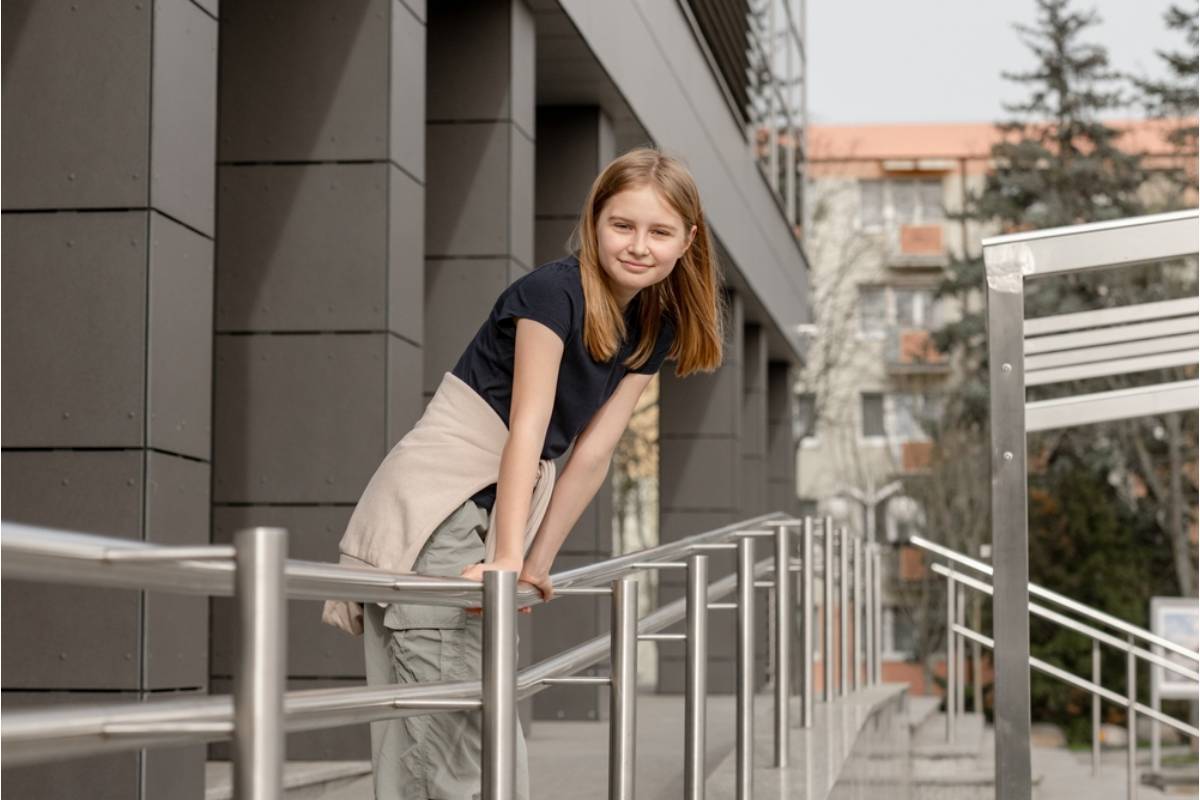
A Dad Found Out His Daughter Had Been Leaving the House Early Every Morning Not to Meet Friends but to Walk Around the Block Alone Before School Started Because It Was the Only Time Nobody Needed Her to Be Anything

Parents spend years trying to understand what their children are thinking, yet some of the most important struggles happen in complete silence. Children often continue smiling, earning good grades, and helping everyone around them while quietly carrying emotions they cannot explain.
That is exactly what happened in one family I came to know through a neighborhood volunteer program. What began as a father’s curiosity about his daughter’s unusual morning routine slowly uncovered something that no report card, teacher conference, or family dinner had ever revealed.
An Unexpected Pattern Appeared Before Sunrise
Mark had always been the first person awake in the house. Every morning he made coffee before anyone else came downstairs, giving himself a few peaceful minutes before work. One week he noticed the front door opening much earlier than usual.
At first he assumed his sixteen year old daughter, Lily, was meeting classmates before school. She always returned just before it was time to leave for the bus stop, so nothing seemed alarming. Still, the routine continued every single weekday, and his curiosity slowly grew.
She Thought Nobody Had Noticed
One morning Mark quietly looked through the front window after Lily stepped outside. Instead of walking toward the neighborhood park where teenagers usually gathered, she turned the opposite direction.
She walked slowly around the same block, keeping her hands in her jacket pockets. There was no phone in her hand, no headphones, and no one waiting to meet her. After completing the loop, she stood for a moment near a large oak tree before heading home as though nothing unusual had happened.
The Explanation Did Not Make Sense
That evening Mark casually asked where she had been going each morning. Lily barely looked up from her homework before answering.
“Just getting fresh air.”
The response sounded rehearsed. She immediately changed the subject by asking whether he needed help making dinner. Mark decided not to push because she had never given him a reason to doubt her honesty.
Still, he could not stop wondering why someone would wake up earlier than necessary just to walk alone.
Her Teachers Saw a Different Side
The following week Mark attended a scheduled conference at Lily’s high school. Every teacher described her using nearly identical words.
Responsible.
Reliable.
Helpful.
One teacher smiled and said, “If another student forgets something, Lily is usually the first person offering help.”
Another added that she often stayed after class to organize supplies without being asked. The comments made Mark proud, but something about them also made him uneasy.
Every Conversation Sounded the Same
Driving home, Mark realized nobody had described Lily as carefree or happy. Every compliment focused on what she did for other people.
She babysat her younger brother whenever needed. She volunteered during school events. She remembered birthdays, completed chores without reminders, and always stepped in when someone else struggled.
She rarely complained, which everyone interpreted as confidence.
Mark suddenly wondered whether silence and confidence were actually the same thing.
A Neighbor Shared Something Surprising
One afternoon an elderly neighbor stopped Mark while he was mowing the lawn.
“I see Lily every morning,” she said with a warm smile.
Mark expected her to mention seeing friends or exercising.
Instead, the neighbor explained that Lily simply walked slowly around the block, sometimes stopping to watch birds or look at flowers growing beside the sidewalk. She never seemed rushed. She looked peaceful in a way the neighbor rarely saw during the rest of the day.
He Followed From a Distance
The next morning Mark decided to observe without interrupting.
He stayed far enough behind that Lily never noticed him. She completed the familiar route before stopping near the same oak tree.
Then she closed her eyes and took several slow breaths. She stood completely still for nearly a minute before continuing home.
There was no mystery meeting. There was no secret friendship.
There was only a teenage girl standing quietly in a place where nobody expected anything from her.
One Honest Question Opened the Door
That evening Mark knocked gently on Lily’s bedroom door.
Instead of asking where she went, he asked, “What do you think about while you’re walking?”
She looked surprised by the question.
For several seconds she stared at the floor before quietly answering, “Nothing.”
Then she corrected herself.
“That’s why I like it.”
She Finally Put Feelings Into Words
Lily explained that every part of her day seemed connected to someone else’s expectations.
At school she tried to be the dependable student.
At home she tried to be the responsible daughter.
With friends she became the listener who solved everyone else’s problems.
Those morning walks were different. During those few minutes nobody needed advice, perfect grades, babysitting, or cheerful conversations. She could simply exist without performing a role.
The Truth Was Harder to Hear Than He Expected
Mark asked whether anyone had pressured her to become that person.
She shook her head.
“No one told me I had to,” she admitted. “I just noticed everyone seemed happier when I kept everything together.”
She worried that saying no would disappoint people. Eventually helping others became automatic, even when she felt exhausted.
The morning walks became her only chance to remember who she was before everyone started asking for something.
A Forgotten Memory Came Back
That night Mark remembered something from years earlier.
When Lily was eight, she had proudly carried groceries into the house. Everyone praised her for being so mature and responsible.
From that day forward, relatives constantly introduced her as “the dependable one.”
At first it sounded like a compliment.
Looking back, Mark realized the family had unknowingly handed a child an identity she felt obligated to protect.
Small Changes Began Inside the House
The next weekend Mark gathered the family without mentioning Lily’s confession.
Instead of assigning tasks based on habit, everyone received rotating responsibilities. Her younger brother learned to pack his own school bag. Mark took over several household chores that Lily usually completed automatically.
When Lily offered to help anyway, her father smiled and said, “Not today. Go do something just because you want to.”
She looked confused.
Then she picked up a novel she had not touched in months.
School Brought Another Surprise
A few weeks later Lily’s English teacher called home.
Mark immediately worried something had gone wrong.
Instead, the teacher laughed and said Lily had politely declined organizing another classroom project.
“When I asked why,” the teacher explained, “she smiled and said someone else deserves a chance.”
The teacher admitted she almost applauded.
For the first time, Lily had chosen her own limits instead of automatically accepting another responsibility.
The Morning Walk Changed Without Disappearing
Even after life became less demanding, Lily continued taking her morning walks.
Mark asked whether she still needed them.
She smiled and answered, “I don’t need to escape anymore.”
“I just like starting my day as myself before becoming everything else.”
The difference was subtle but important.
She was no longer walking away from pressure.
She was walking toward balance.
A Final Conversation Stayed With Her Father
Several months later Mark and Lily sat together on the front porch after dinner.
He apologized for never noticing how much pressure she had quietly placed on herself.
Lily rested her head against his shoulder and admitted she probably would never have said anything if he had accused her of sneaking around or demanded an explanation. The only reason she opened up was because he asked about her thoughts instead of questioning her actions.
From that day forward, the family stopped praising her only for being dependable. They celebrated her creativity, her humor, her curiosity, and even the moments when she chose to rest instead of helping someone else.
Mark often thought back to those quiet walks around the block. At first they looked ordinary, almost forgettable. In reality, they had been silent reminders that even the strongest and most reliable people sometimes search for a place where they are allowed to exist without earning approval, solving problems, or living up to anyone else’s expectations. Sometimes the greatest gift a parent can give is making sure their child knows they never have to prove their worth just to belong.