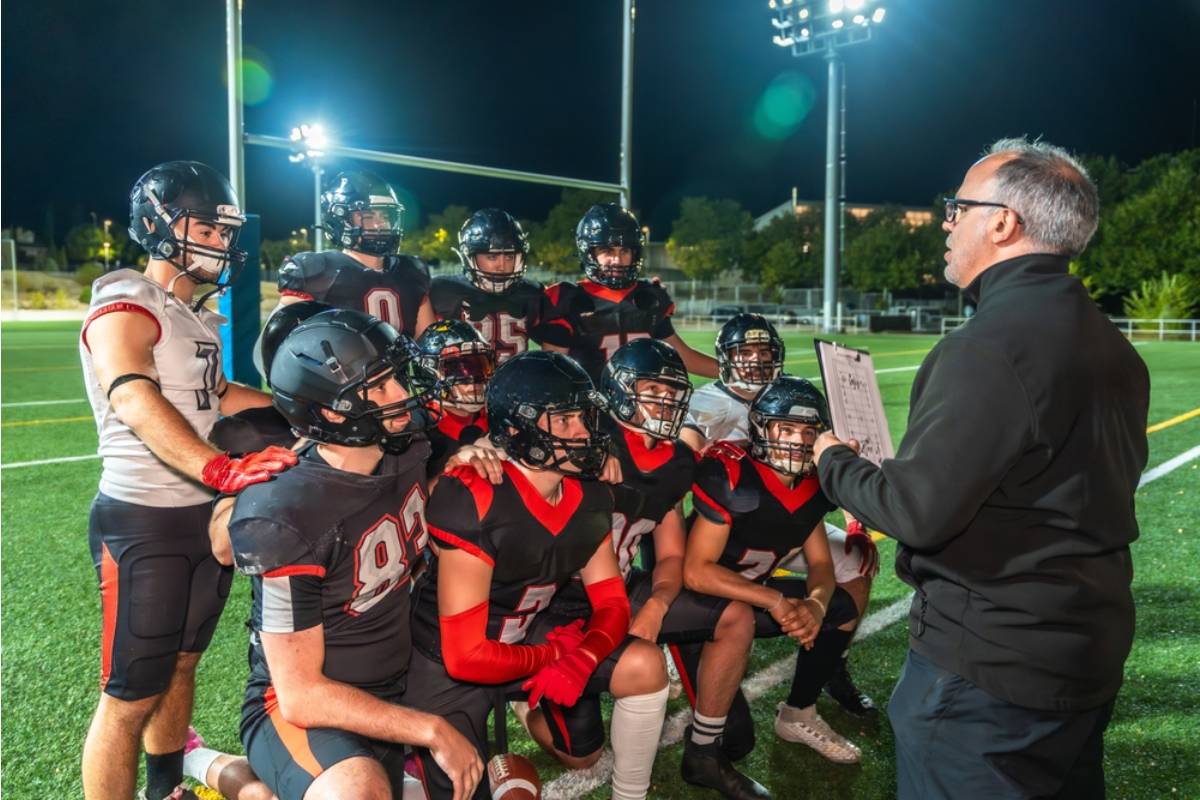
A Dad Says His Son’s Coach Made Cuts to the Team Based on Whose Parents Donated to the Booster Club That Year

A suburban high school football program in Texas became the center of tension after one parent raised concerns about how team selections were being handled. The father of a sophomore player noticed his son had been moved down the depth chart despite a strong preseason performance.
At first, he assumed it was just coaching strategy, but what he heard from other parents shifted his perspective. Rumors began circulating that booster club involvement might be influencing who made the team and who did not. What started as frustration over playing time quickly turned into a wider conflict involving trust, fairness, and money.
A Roster Surprise That Raised Questions
When the official roster was posted, the father expected to see his son listed among the rotation players. Instead, his name appeared lower than expected, behind athletes he had previously outperformed in scrimmages. The son tried to stay calm but admitted something felt off compared to what coaches had told him earlier in the season. The father decided to wait a few practices before saying anything, just to avoid jumping to conclusions. But as each practice passed, the pattern seemed to stay the same. His confusion slowly turned into suspicion.
Conversations in the Parking Lot
After evening practice, the father began talking to other parents in the parking lot. One mentioned that her son had made varsity after her family became more involved in the booster club this year. Another parent hesitated before saying similar things had been whispered around the program for seasons. Nobody said anything directly accusing the coaching staff, but the implications were hard to ignore. The father started noticing how often donation conversations came up during football meetings. What had once seemed like harmless fundraising now felt different.
A Sideline Observation That Changed His View
During a Friday scrimmage, the father stood near the fence and watched closely as his son played. He noticed that certain players received more consistent reps regardless of mistakes on the field. Meanwhile, his son was rotated out after minor errors that others seemed to be allowed to make without consequence. He tried to rationalize it as coaching preference, but the pattern felt uneven. By the end of the scrimmage, his frustration was hard to hide. Something about the structure no longer felt purely performance based.
A Booster Club Meeting That Felt Off
He attended the next booster club meeting hoping to understand how decisions were made. The discussion focused heavily on fundraising targets, new equipment purchases, and upcoming donor recognition events. At one point, a coach thanked “supportive families” for helping the program stay competitive, while listing new uniforms and travel expenses. The father noticed certain parents being acknowledged by name more than others. It felt less like a sports meeting and more like a network of influence. He left with more questions than answers.
A Private Talk With His Son
At home, he asked his son directly whether he had noticed favoritism tied to parent involvement. The son hesitated before saying he had heard teammates talk about it but never saw it openly discussed. He said coaches never said donations affected playing time, but players paid attention to patterns anyway. The father could tell his son was uncomfortable even talking about it. The kid just wanted to play football, not get involved in adult conflicts. That silence made the situation feel even heavier.
A Conversation With Another Coach
He requested a brief meeting with one of the assistant coaches to ask about playing time decisions. The coach gave a standard explanation about performance, effort, and practice consistency. When the father brought up concerns about external influence, the coach became noticeably guarded. He insisted that team decisions were strictly based on athletic evaluation. The conversation ended politely but felt distant. The father left without any reassurance.
Whispers From a Former Player
A few days later, a former player who had graduated the year before spoke with him at a local gym. Without being prompted, the young man mentioned that booster involvement had always played a bigger role than people admitted. He said families who were visible and active tended to see more favorable outcomes for their kids. He made it clear no one ever proved anything officially, but everyone noticed patterns. That conversation stuck with the father longer than any official explanation. It added weight to suspicions he had been trying to ignore.
A Practice That Confirmed His Doubts
During an open practice, he watched his son outperform several players who remained ahead of him in rotation. The drills were simple, and his son executed them cleanly while others struggled with repetition errors. Yet the depth chart did not shift afterward. The father saw coaches speaking more frequently with certain parents in attendance than others. It no longer looked random to him. The feeling of unfairness became difficult to dismiss.
A Heated Exchange With the Head Coach
He eventually confronted the head coach after practice in a controlled but tense conversation. The father asked directly whether donations or booster involvement influenced roster decisions. The coach denied it firmly and said such claims undermined the integrity of the program. The father pointed out specific inconsistencies he had observed over several weeks. The coach repeated that all decisions were based on performance. Neither side convinced the other, and the conversation ended sharply.
The Son Asks to Step Back
After hearing about the confrontation, the son asked if it would be better to quit the team entirely. He said he did not want his father fighting with coaches on his behalf. The father was caught off guard and reassured him that the goal was fairness, not conflict. But he could see the stress building in his son. The excitement about football had started turning into anxiety. That realization made the situation more personal than ever.
A Parent Group Discussion Turns Divided
A group of parents organized a meeting to discuss concerns about transparency in team selections. Some supported the father’s perspective, while others defended the coaching staff strongly. Accusations were avoided, but tension filled the room as different experiences were shared. A few parents admitted privately that they had similar suspicions but were afraid to speak up. The group left without resolution, but the divide was now visible.
School Administration Gets Involved
Eventually, the issue reached school administrators after multiple parents requested clarification. The administration stated that roster decisions were under athletic department control and not influenced by fundraising. They promised to review communication practices to ensure transparency. The father appreciated the response but remained skeptical. He felt the answers were formal rather than fully addressing what parents were seeing. Trust had already been damaged.
A Season That Ends Without Agreement
As the season continued, the son finished with limited playing time despite steady performance. The father never received confirmation of wrongdoing, but his doubts never fully disappeared either. Some families remained satisfied with the program, while others quietly stepped back from involvement. The booster club continued its fundraising activities as before. In the end, nothing was officially proven, yet nothing felt fully resolved either.