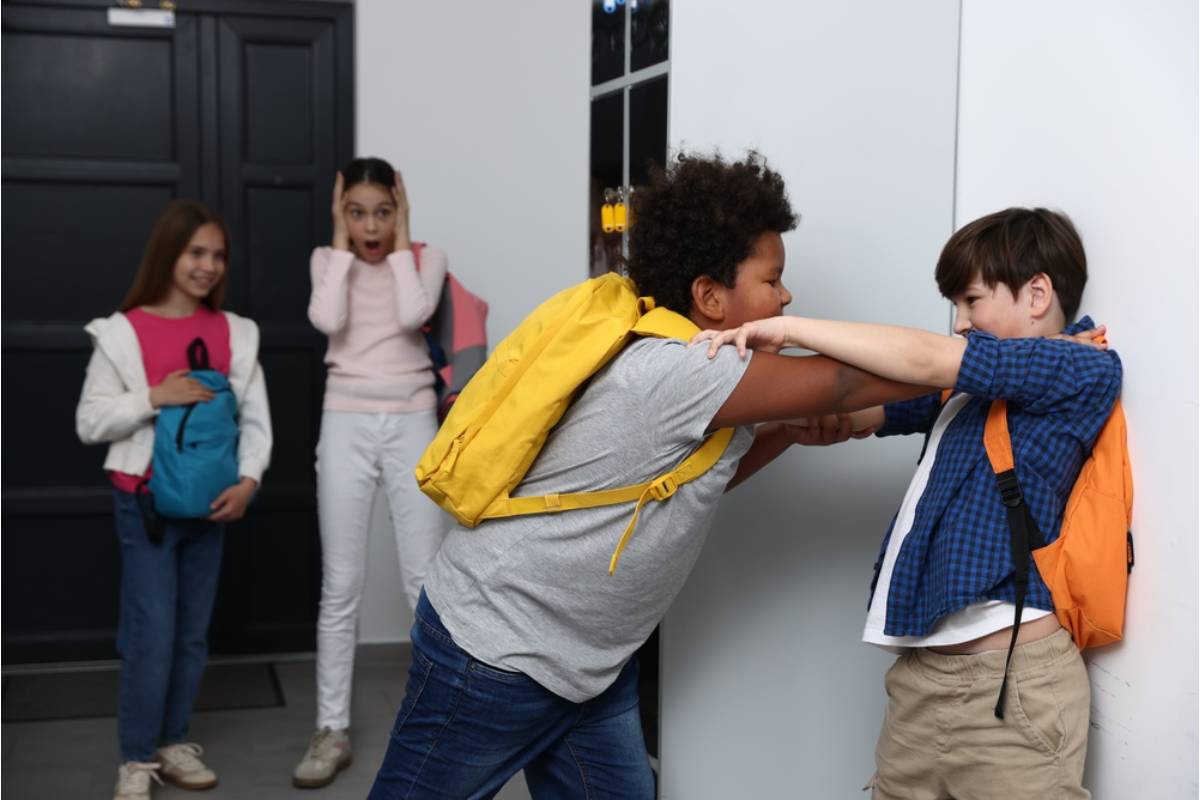
A Dad Says His Son’s School Called Him About a Fight, but When He Arrived He Found Out His Son Was the One Who Got Hit and Nobody Had Called It That

A quiet afternoon turned tense when a father received a call from his son’s school saying there had been a fight involving his child. The staff member on the line used firm language, explaining that his son had been “involved in physical aggression” and that he needed to come immediately.
The father did not ask many questions, only grabbed his keys and left work early. On the drive over, he kept replaying what “involved” could mean and whether his son had finally crossed a line. The call felt urgent, but strangely vague, and that uncertainty made everything worse. By the time he reached the school parking lot, his thoughts were already running ahead of the facts.
A call that set everything in motion
The school secretary had called with a tone that suggested seriousness, mentioning an altercation during lunch period. She said staff had separated students and that disciplinary steps were being considered. What stood out most was the phrase used repeatedly about his son being part of a fight. No mention was made about who started it or what exactly happened. The father asked if his son was safe, and she confirmed he was in the office. That confirmation did little to calm him as he walked toward the front doors.
Walking into a tense front office
Inside the school, the atmosphere felt unusually stiff, with staff speaking in low voices. The father checked in and was asked to wait while administration gathered details. He noticed another parent sitting across the room, equally confused and visibly upset. No one offered a clear explanation, only reassurances that the situation was being reviewed. Minutes felt stretched as he sat there trying to piece together fragments of the phone call. The lack of clarity made the situation feel heavier than it should have been.
A version of events that raised questions
An assistant principal eventually came out and explained that two students had been involved in a physical altercation near the cafeteria. She described it as mutual involvement, repeating that both students had engaged in the incident. The father immediately asked what that meant and whether his son had defended himself or started it. The response was careful but still unclear, focusing on policy rather than specifics. Something about the explanation did not match the urgency of the original phone call. The father felt the details were being shaped to avoid a direct answer.
Seeing his son in the hallway
When his son finally appeared from the hallway, he was not walking with confidence. There was a visible redness on his cheek and a slight hesitation in his steps. The father’s first instinct was concern, not anger, as he looked him over. A staff member quickly noted that the student nurse had already checked him earlier. The boy avoided eye contact at first, standing slightly behind the administrator. That small moment shifted the father’s understanding of what might have actually happened.
A story that did not match the call
Once they were seated together, the boy quietly explained that he had not thrown any punches. He said another student had pushed him after a disagreement during lunch line. According to him, he had tried to back away before things escalated. The father listened closely, realizing this did not sound like the “fight” he had been told about. The school staff nearby did not interrupt but seemed attentive to the conversation. The gap between the phone call and this account was becoming harder to ignore.
Witnesses from the cafeteria step forward
Two students were brought in separately to give statements about what they saw. Both described the same sequence, saying one student had initiated the physical contact. They also confirmed that others nearby had tried to break it up quickly. The father noticed that neither witness described it as a mutual fight. That word choice mattered more and more as each account aligned. The school staff exchanged looks, realizing the narrative was not as balanced as first described.
Security footage changes the tone
After some discussion, the principal agreed to review cafeteria security footage. The footage, shown in a small office screen, made the situation clearer within moments. It showed a brief confrontation where one student approached aggressively before contact escalated. The father watched quietly, his earlier frustration turning into disbelief. No one in the room spoke for several seconds after the clip ended. The original description of a mutual fight no longer matched what they had just seen.
Staff reconsider how the report was labeled
The assistant principal admitted that the initial report had been labeled too quickly based on early information. She explained that staff often used general terms like “fight” when documenting incidents under pressure. The father questioned how that could lead to a misleading phone call. There was an acknowledgment that communication to parents had not been precise enough. The tone in the room shifted from defensive to uncertain. It was clear that the wording had caused the confusion.
A conversation with the other student involved
Later, both students were brought in separately for clarification, including the other student involved. The father overheard part of the discussion, enough to understand there had been prior tension between them. The other student did not deny initiating the physical contact. School staff emphasized that both families would be contacted and consequences reviewed. The father focused more on understanding than punishment at that point. The situation felt less like a fight and more like a breakdown in supervision and communication.
Questions about why the call was so misleading
The father asked directly why he had been told his son was “involved in a fight” instead of being told he was struck. The principal admitted that the wording was standard but not always accurate in early reports. That explanation did not sit well with him, especially given how quickly he had left work. He pointed out that parents react differently depending on how information is framed. The staff acknowledged the concern and agreed the wording needed review. The damage from the initial call could not be undone.
A decision about next steps
After discussion, the school agreed to formally document the incident more accurately. They also said they would update their parent notification process for similar situations. The father requested written clarification of what actually occurred before any disciplinary assumptions were made. The staff agreed and promised a follow up meeting within a few days. His son was allowed to leave with him once the meeting concluded. The walk back to the car felt quieter, but less confusing than when he arrived.
A lingering concern about trust
Driving home, the father kept thinking about how quickly a single phone call had shaped his entire afternoon. The difference between “involved in a fight” and “was hit” felt significant in a way that could not be ignored. He wondered how many other situations might have been communicated in the same vague way. His son sat quietly in the passenger seat, still processing everything that had happened. The father decided he would be asking more questions going forward, even in routine school matters. What began as a rushed response turned into a longer conversation about how information should be shared when students are involved.