
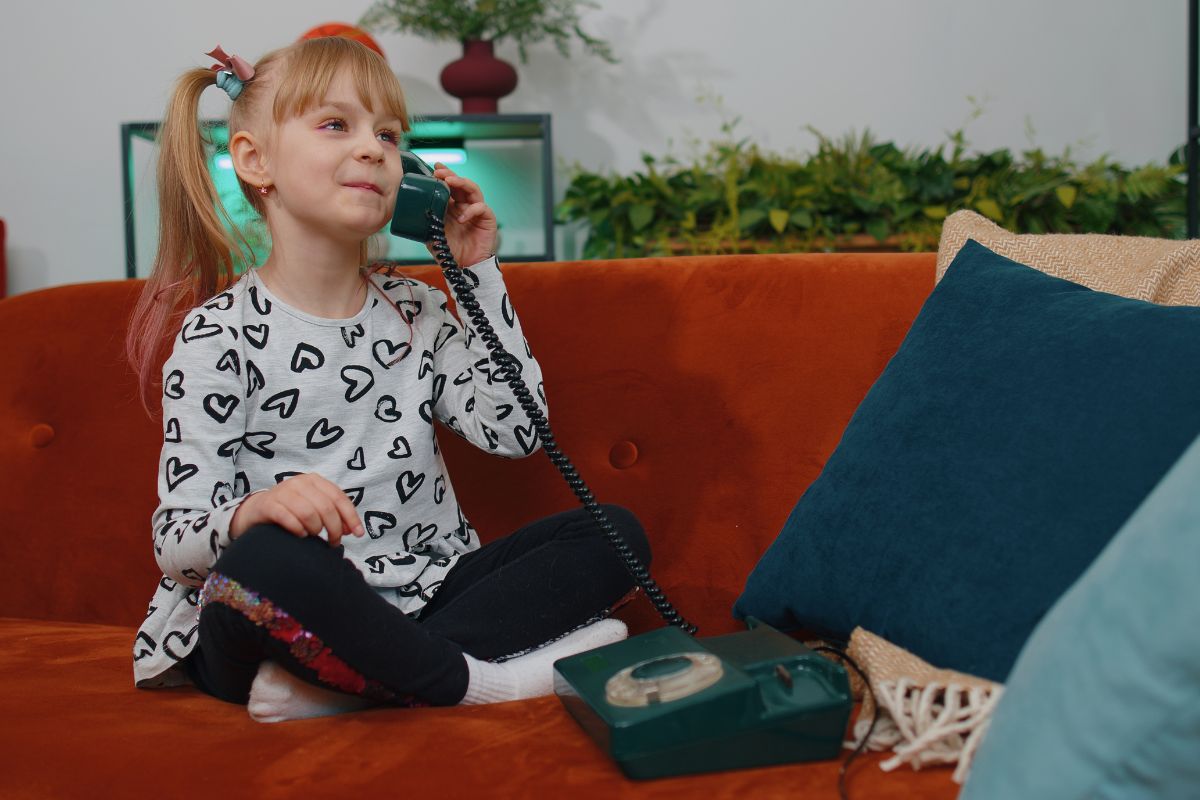
A Group of Moms Say No To Cellphones for their 7yr olds But Gave them These As a Gift

These moms weren’t trying to be strict or “anti-technology.” They just didn’t want smartphones in their 7-year-olds’ hands yet, so they chose a different solution that surprised even them.
For years, the debate around kids and smartphones has felt impossible to escape. Parents are torn between wanting their children to stay connected and worrying about screen time, social media pressure, and constant digital access.
Now, a surprising alternative is gaining traction: tin can landline phones, and no, they’re not the old string-and-can toys.
These are real, functional landline-style phones, designed to look playful and simple, but built to do one thing well: let kids communicate without giving them a smartphone.
What Are Tin Can Landline Phones?
Despite the name, tin can landline phones are actual wired phones that connect through a home landline or internal phone system. Many are styled to resemble vintage tin-can designs, with bold colors, large buttons, and simple receivers that feel approachable for kids.
They don’t connect to the internet. They don’t have apps. And they don’t offer constant notifications.
That simplicity is exactly the point.
Why Parents Are Turning to Them
People recently wrote a post about a group of mom friends who decided that they were not going to allow their kids to have cell phones until highschool but they eneded up surprising the kids with Tin Can phones instead.
Many parents say they’re looking for a middle ground, a way for kids to communicate without opening the door to everything that comes with smartphones.
Tin can landline phones offer:
- A way for kids to call parents or caregivers
- Communication with grandparents or trusted contacts
- Independence without digital overload
- A clear boundary between “talking” and “screen time”
For families trying to delay smartphones, these phones provide connection without temptation.
A Response to Growing Screen Concerns
Concerns about excessive screen use, online safety, and social media exposure continue to grow. Parents are increasingly aware that once a smartphone enters the picture, it’s difficult to manage access consistently.
Landline-style phones feel refreshingly controlled. There’s no scrolling, no endless content, and no pressure to be constantly available.
Instead, kids learn how to:
- Make a call intentionally
- Communicate clearly
- Respect time and boundaries
Teaching Communication Without Distraction
Another reason parents are embracing these phones is the way they encourage basic communication skills. Without texting shortcuts or emojis, kids have to speak, listen, and respond in real time.
For younger children especially, this helps build confidence in conversation without the added complexity of digital platforms.
Parents say it feels like teaching kids to ride a bike before handing them the car keys.
A Nostalgic Element Parents Appreciate
There’s also a nostalgic appeal. Many parents grew up with landlines as the primary way to communicate, and introducing kids to a similar system feels grounding.
The phones are often placed in shared spaces like kitchens or playrooms, reinforcing the idea that communication doesn’t have to be private, portable, or constant to be meaningful.
Not a Rejection of Technology — Just a Pause
Parents who choose tin can landline phones aren’t necessarily anti-technology. Most see this as a stepping stone rather than a permanent replacement.
It allows kids to practice responsibility, communication, and independence before navigating the much more complex world of smartphones.
The Bigger Trend at Play
This shift reflects a broader parenting trend: intentional tech use. Rather than jumping straight to the latest device, families are reconsidering what kids actually need at different ages.
Tin can landline phones fit neatly into that mindset — offering connection without complication.
Sources:


