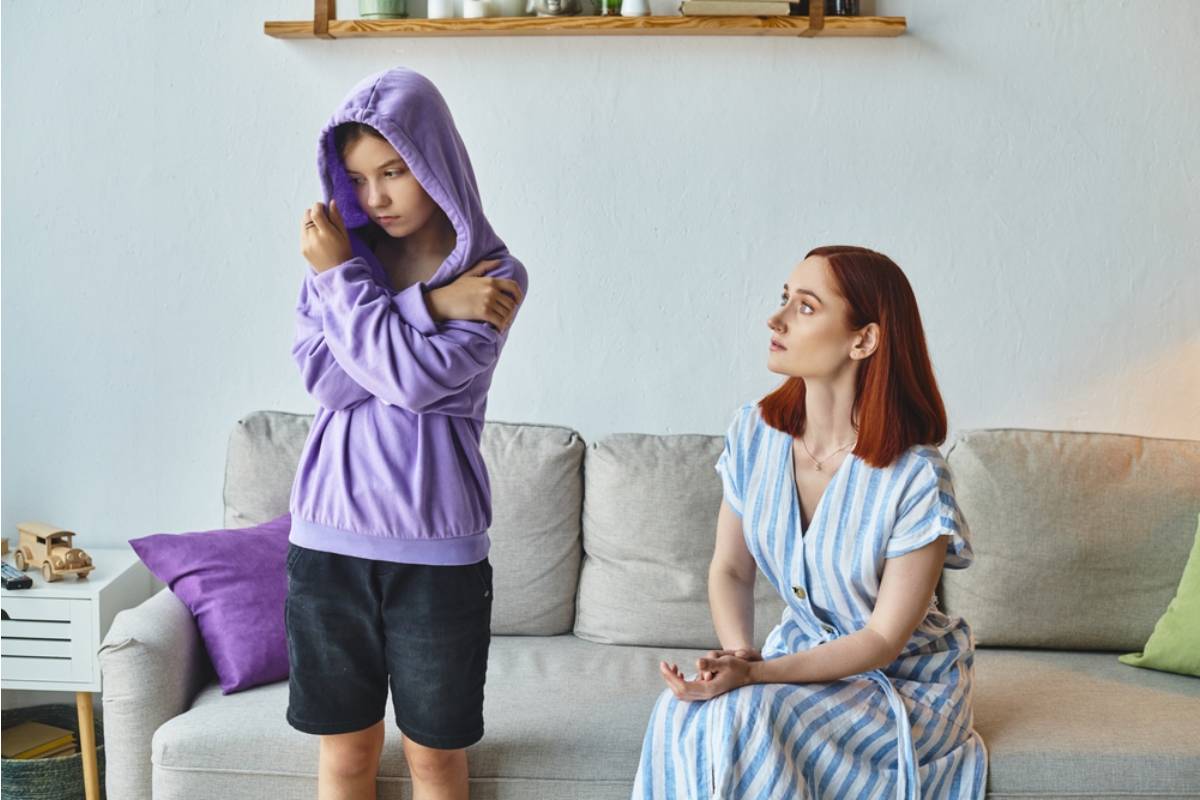
A Mom Says Her 14-Year-Old Can Have Sleepovers With Friends, but Only After She Meets Their Parents First, and One Awkward Meeting Changed Everything

A person shared her story about parenting a newly 14-year-old daughter who had recently started high school in Australia. She had one firm rule about sleepovers that her daughter didn’t particularly enjoy, although the rule itself was straightforward. Before her daughter could spend the night at another family’s home, she needed to meet the parents who would be responsible for her.
During the daytime, the mom was much more flexible and didn’t insist on the same level of preparation. A trip to a friend’s house or an afternoon activity didn’t automatically require a family introduction. Sleepovers were different because, in her view, there was a long stretch of nighttime hours when adults needed to know exactly who was around.
She Wasn’t Saying No to Sleepovers
The mom was careful to explain that she wasn’t banning sleepovers altogether. She wasn’t telling her daughter that she was too young, too irresponsible, or simply not allowed to have fun with her friends. Instead, her answer was usually something along the lines of, “Sure, as long as I can meet their parents first.”
That distinction mattered to her because she wanted her daughter to understand that the rule was about safety, not punishment. She wasn’t trying to make every social event complicated or turn herself into the parent who always ruined the plans. She simply wanted one extra layer of confidence before sending her teenager off for the night.
Her Past Made the Rule More Personal
There was another reason the rule existed, and it was much heavier than a simple parenting preference. The woman had experienced traumatic situations as a child and teenager, and those memories had stayed with her into adulthood. She admitted that those experiences had influenced the way she thought about risk, especially when it involved children being placed in unfamiliar environments.
At the same time, she was determined not to raise her daughter in a constant state of fear. She trusted her daughter to make good decisions and wanted her to grow into a confident, independent person. The challenge was finding the line between teaching independence and ignoring risks that she knew could become serious in an instant.
Her Daughter Saw It Differently
From the daughter’s perspective, the rule probably felt much less philosophical. She was 14, surrounded by friends, and dealing with the social world of high school where fitting in could feel extremely important. Having her mom insist on meeting another teenager’s parents could easily feel embarrassing, especially if her friends didn’t have the same requirement.
That created a frustrating mismatch between the two of them. The mom saw a five-minute conversation that could provide useful information, while the daughter could see it as one more obstacle standing between her and a normal teenage experience. Neither side necessarily believed the other was being unreasonable, but neither saw the situation from exactly the same angle.
Other Parents Thought the Rule Was Fair
A response from a person pointed out that plenty of families don’t allow sleepovers at all anymore, making the mom’s approach seem relatively moderate. Another person explained that her own parents had followed almost exactly the same system when she was growing up. They wanted to speak to the parents first and see who would actually be supervising the children.
For those parents, the rule wasn’t about mistrusting every family in town. It was about avoiding situations where a child could end up somewhere completely unfamiliar without the adults having established basic contact. The mom’s approach suddenly looked less like an extreme reaction and more like a fairly common family boundary.
Some Families Had Even Stricter Rules
The responses became even more revealing when other parents described rules that were considerably tighter. One person said her family had limited sleepovers to just a couple of homes where the adults were known extremely well. Another family had decided their children wouldn’t have sleepovers until they were 16.
A high school teacher also shared that her own school didn’t even allow sleepovers for younger teenagers until they reached 15. The various stories suggested that there was no universal agreement about the perfect age. However, there was a surprisingly large amount of agreement that parents had every right to set boundaries around overnight stays.
One Person Shared a Disturbing Memory
Then a response from a person brought up a particularly disturbing experience from adolescence. She remembered being 14 and attending a sleepover where the father of the household behaved inappropriately around her. The incident had stayed with her for decades and had influenced how she thought about children’s safety around unfamiliar adults.
Her story showed why simply knowing a child or trusting the parents indirectly wasn’t always enough for some families. A teenager could know another student extremely well while knowing almost nothing about the adults in that household. That difference was exactly what the mom was trying to account for with her rule.
Another Story Took the Warning Even Further
Another person shared an even more unsettling story from when she was 14 and babysitting for a family. She described being driven home by a drunk father who began talking to her in a deeply inappropriate way while she was trapped in the car with him. The situation became frightening enough that she eventually escaped from the vehicle when it stopped at a red light and found a way to contact emergency services.
The incident ended with police involvement, and the story became known around the local community. What had started as an ordinary babysitting job had turned into a frightening lesson about how quickly a supposedly familiar situation could become dangerous. For that person, sleepovers and unsupervised interactions with adults were never something she could treat casually again.
The Mom Had Already Said No Once
The original mom eventually revealed that she had already used her rule to refuse a sleepover invitation. She had met the parents and immediately felt that something about the situation was wrong. Her daughter didn’t agree and was still upset about the decision.
That moment captured the hardest part of the entire issue. To the daughter, her mother had simply prevented her from spending time with a friend for reasons that weren’t obvious. To the mom, however, saying no had been the whole purpose of meeting the parents in the first place.
The Strange Feeling Was Hard to Explain
The mother admitted that it was awkward when she couldn’t point to one specific thing and say exactly why she didn’t trust a situation. Sometimes there wasn’t a dramatic warning sign or a clear fact that could be presented like evidence in an argument. There was simply an overall feeling that something wasn’t right.
A response from a person acknowledged how uncomfortable that could be, especially because people who behave badly don’t necessarily announce themselves ahead of time. Someone can sound charming, polite, and perfectly ordinary during a brief conversation. That made the mom’s decision even harder to explain to a teenager who wanted concrete reasons for every restriction.
Geography Made Everything More Complicated
The mom had another problem that made her rule especially difficult to manage. Her daughter’s school was about 40 minutes away from their home, while most of her daughter’s friends lived close to the school. That meant casual parent-to-parent introductions weren’t especially easy to arrange.
The daughter could easily spend hours with her friends without the adults ever crossing paths naturally. The mom therefore had to rely on her daughter to help connect the families, which wasn’t always successful. What seemed like a simple parenting rule became surprisingly difficult because of the logistics surrounding the teenagers’ social lives.
One Person Suggested an Easier Solution
A response from a person suggested avoiding the awkward introduction entirely by creating opportunities for the parents to meet before a sleepover was even proposed. A casual coffee, a birthday gathering, or another low-pressure event could allow the adults to get familiar without making the daughter feel like she was delivering an official safety inspection request.
Another suggestion was for the mom to host a sleepover herself. Since the other parents would have to drop their children off, she would naturally have an opportunity to meet them and exchange phone numbers. What sounded like a complicated obstacle could potentially become a way for everyone to become more comfortable with one another.
Hosting the Sleepover Could Change Everything
The idea of hosting seemed particularly useful because it would flip the dynamic around. Instead of the daughter approaching a friend and explaining that her mother demanded to meet the parents first, the mom could become the parent welcoming everyone into her own home. The other families would get to see where the teenagers were staying, meet the supervising adult, and decide for themselves whether they were comfortable.
It could also help the daughter avoid feeling singled out. Rather than being the one child whose parent had an unusual requirement, she would simply be part of a group whose families were getting to know one another. The arrangement wouldn’t eliminate every safety concern, but it could make the rule feel much less like a personal restriction.
Trust Was Still at the Heart of the Argument
The mom repeatedly emphasized that she trusted her daughter. That was important because she didn’t want the teenager to interpret every safety rule as evidence that her mother believed she was irresponsible. Trusting a young person and recognizing that they can encounter situations they cannot control are two completely different things.
A response from a person summed up the same idea from another angle, saying that teenagers often experience awkwardness as though it were the end of the world. To an adult, meeting another parent for a few minutes might seem trivial. To a 14-year-old trying to fit in, it could feel like the most humiliating event imaginable.
Then the Twist Became Clear
The most striking part of the story wasn’t that the mom had a strict rule. It was that she had already demonstrated why the rule existed without ever needing to prove it through some dramatic disaster. One uncomfortable meeting had made her daughter angry, but the mom still believed that refusing that particular sleepover had been the correct decision.
That created the twist in the entire debate. The rule wasn’t truly about whether the mom trusted her daughter, and it wasn’t even entirely about whether she trusted other parents. It was about accepting that a child can make good choices and still end up in a situation controlled by someone else.
The Final Question Wasn’t Really About Fairness
By the end, the overwhelming response from other parents was that the rule was reasonable. Some families had the same requirement, while others had stricter policies and didn’t permit sleepovers at all. Even parents who approached the issue differently generally understood why a 14-year-old’s overnight environment deserved more attention than an ordinary afternoon visit.
The daughter might still roll her eyes, complain, or feel embarrassed, and the mom probably couldn’t prevent that part. But the mother wasn’t trying to win a popularity contest at home. She was trying to give her daughter independence without pretending that every unfamiliar household was automatically safe, and for her, that balance was worth a little teenage frustration.