A Mom Says Her Baby’s Tiny Anklets Became the Easiest Way to Know When She Was Awake, but Parents Quickly Warned Her About a Hidden Risk

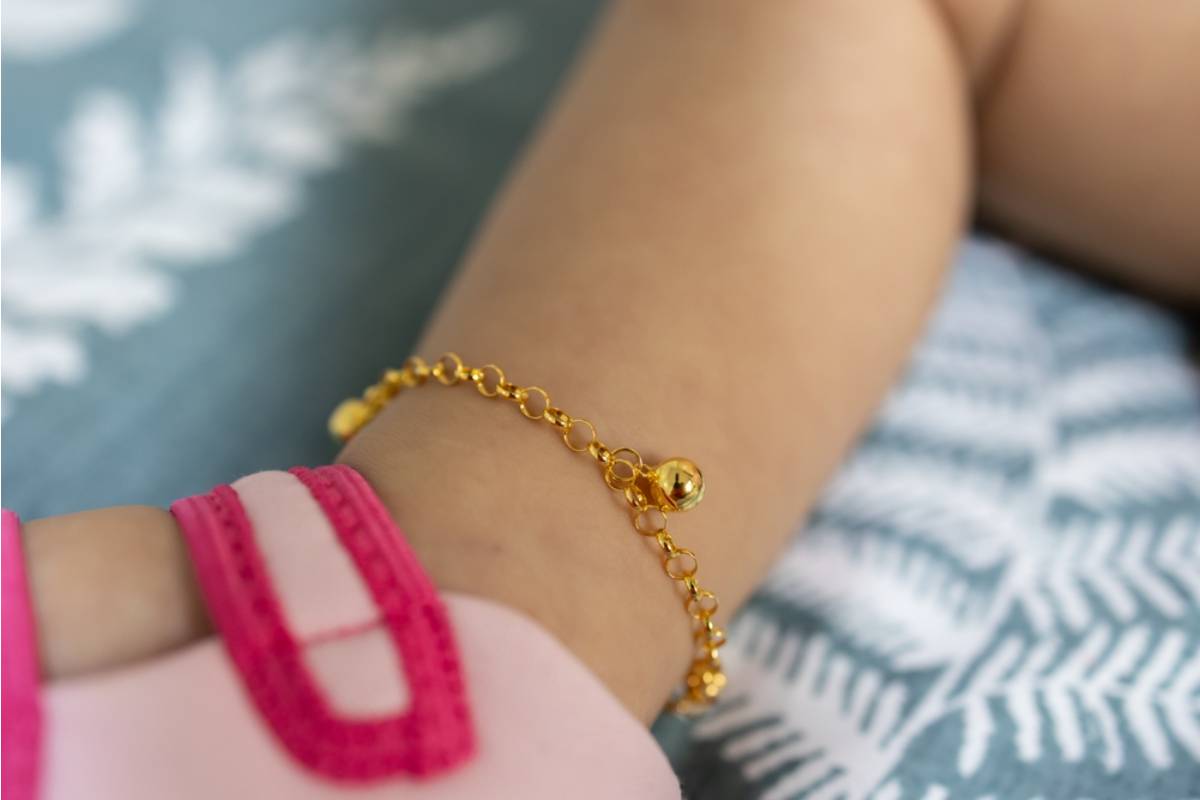
A person shared his story about a tradition from India that had quietly become one of the most useful parts of caring for his young children. Beginning around three months old, his babies wore lightweight silver anklets with tiny bells, commonly known by names such as golusu or payal. By the time one of his children reached two and a half years old, the jingling had become so familiar that he barely thought of it as a parenting trick.
Then he realized just how much information those little bells were giving him throughout the day. From another room, he could hear whether a child had started moving, whether the sound suddenly became more energetic, or whether the jingling stopped altogether. What had always seemed like an ordinary cultural tradition suddenly felt like a built-in alert system.
He Could Tell When a Child Was Awake
The most useful part was the constant background sound. The parent explained that he could often tell which child was awake simply by listening for the familiar jingle coming from another room. There was no need to repeatedly peek into a crib or wonder whether a quiet child had wandered somewhere.
That small advantage mattered even more during busy days. Babies and toddlers can go from completely still to suddenly mobile in a surprisingly short amount of time, so the sound offered an extra layer of awareness. The parent began thinking of the anklets less as jewelry and more as a gentle audio signal that followed the children around.
Silence Suddenly Meant Something
The most interesting detail was what happened when the jingling stopped. The parent said that when the sound suddenly disappeared, he noticed almost immediately and would go check on the child.
That silence could mean many innocent things, such as a child sitting still or falling asleep. But it could also mean the toddler had become absorbed in something suspiciously quiet, which every experienced parent knows can be its own warning sign. The little bells had essentially created a household rule where unusual silence deserved investigation.
The Tradition Was So Normal He Never Called It a Hack
Because the anklets were such a routine part of life, the parent hadn’t originally thought of them as a clever parenting invention. They were simply something babies wore in his culture, passed down as an ordinary tradition.
Only after having two children did he realize how useful the sound had become. The same object could carry cultural meaning while also solving a practical parenting problem. That combination was what made the discovery so charming to many people who responded to his story.
Other Parents Remembered Their Own Version
A response from a person joked that the idea sounded like putting a cowbell on a baby, but admitted that it was brilliant. Another person remembered using squeaky shoes on a toddler for exactly the same reason, especially while out and about.
Someone else said their child wore those shoes until around age three and that the squeaking was surprisingly effective. Even the adults who didn’t have traditional anklets seemed to recognize the basic idea immediately. Parents have apparently been inventing noisy ways to keep track of wandering children for generations.
One Family Used Bells to Catch Sneaky Toddlers
Another response from a person said their mother had put tiny bells on their shoelaces when they were a toddler. According to the story, the bells became especially useful whenever the child went unusually quiet.
The mother reportedly knew that when the bell stopped for too long, something questionable might be happening. The joke landed because nearly every parent understands that a mysteriously quiet toddler can be much more concerning than a loud one.
A Dad Connected the Tradition to Stairs
A person whose family used silver belled bracelets shared an even more practical example. Their child had apparently tried to climb stairs at moments when the parent needed to know exactly where he was.
The jingling gave the adults an extra clue that the child was moving around. It wasn’t a replacement for supervision, but it offered another way to notice sudden activity. In a house with a curious toddler, that little bit of information could be surprisingly valuable.
People From Other Cultures Recognized It Immediately
The tradition wasn’t limited to one country. A response from a person described a similar custom in Chinese families, where gold jewelry with bells could be given as part of a baby’s milestone celebration.
Another person said they still had their own gold anklet with a bell. Someone else remembered receiving one that had belonged to a family member years earlier, turning the object into both a piece of jewelry and a keepsake carrying family history.
The Tradition Even Appeared in Cambodia
A person from Cambodia said their culture also used gold anklets for babies. That added another interesting layer to the discussion because the idea wasn’t simply one isolated custom that happened to become useful.
Across different families and cultures, bells attached to children’s clothing or jewelry had been used as familiar sounds that helped adults keep track of little ones. The materials and traditions varied, but the basic idea remained remarkably similar. A tiny jingle could tell a parent more than they realized.
Some People Remembered Bells From Their Own Childhood
Older parents chimed in with memories of baby shoes that had bells attached. One person from Generation X recalled having bells on their shoes and said their daughter had worn them as a baby and toddler as well.
Another person still had the bells their mother had used decades earlier. One even said a family member continued carrying one as a good-luck charm, showing how an ordinary baby accessory could survive long after the practical reason for using it had disappeared.
The Conversation Took a Funny Detour
The discussion even wandered into squeaky shoes, toddler harnesses, and other creative ways parents had tried to prevent children from disappearing into another room. One person joked about having been such a difficult toddler that their mother used a harness, claiming it had once prevented a dangerous moment near a ferry railing.
Another parent said they still used a toddler leash in particularly crowded places and felt no shame about it. A separate story involved a teenager at a fair who wished she’d had one when she was younger because she was afraid of getting separated from her mother. The stories were funny, but they all pointed to the same reality: parents will happily accept a little noise or inconvenience if it helps them keep track of a child.
Then Someone Asked the Question Everyone Was Thinking
Eventually, a response from a person raised the obvious concern. Babies put nearly everything they can grab into their mouths, so what happens when the jewelry itself becomes the interesting object?
That shifted the mood of the conversation almost instantly. The original story was about convenience and tradition, but now people were considering whether an anklet could break, come loose, become a choking hazard, or snag on something. A cultural tradition that felt completely ordinary in one context suddenly looked very different through a child-safety lens.
Some Parents Avoided Baby Jewelry Entirely
A number of people said they had avoided jewelry for babies because of exactly those concerns. One response from a person explained that bracelets and anklets can potentially break or detach, especially when children pull or twist them.
Others raised concerns about small pieces becoming accessible to a child. Some compared the issue to warnings around other types of baby jewelry, emphasizing that familiarity within a culture doesn’t automatically remove physical risks associated with objects worn by infants.
The Choking Concern Became the Biggest Warning
One response from a person strongly urged others to take the safety issue seriously. They said pieces from baby jewelry can potentially come loose and become choking hazards, while jewelry can also catch on nearby objects.
The response also warned against assuming that traditional materials automatically make an item safe. A silver anklet may feel sturdy to an adult, but babies and toddlers interact with objects very differently from grown-ups. What matters isn’t just whether the jewelry looks strong, but whether it can withstand grabbing, pulling, twisting, and constant movement.
Some Parents Said Their Traditional Anklets Held Up Fine
Not everyone agreed that traditional anklets were automatically dangerous. A response from a person explained that their childhood anklet had used a loop-style closure and remained secure.
Another person said they had worn similar jewelry as a child and had never personally known anyone to have a problem. They also pointed out that some versions were designed with the bells enclosed in ways that made it harder for individual pieces to come loose. Still, those personal experiences couldn’t guarantee that every anklet would be equally secure.
The Original Parent Had a Simple Answer About the Noise
Someone asked whether the constant jingling ever became irritating. The parent admitted that imagining nonstop bells could sound annoying, but said his children had worn them for so long that they barely seemed to notice.
There were also different designs with varying numbers of bells. That meant parents could potentially choose something quieter rather than turning the child into a tiny marching band. Another response from a person put it more humorously, suggesting that a little jingling was far less annoying than most of the other things babies manage to do.
A Person Who Couldn’t See Saw Another Benefit
The story took another unexpected turn when a blind person said they loved the concept. For someone who depends heavily on hearing to understand what is happening nearby, the idea of a gentle, recognizable sound attached to a mobile baby seemed especially useful.
Another person recalled a childhood experience involving a blind babysitter who cared for three children. The youngest had a small bell attached to his clothing so the babysitter could hear where he was moving. The story showed that the concept could be more than a cultural tradition or parenting convenience. In some circumstances, an audible cue can make monitoring a child easier for caregivers with different needs.
The Anklets Became a Kind of Family Soundtrack
By this point, the tiny bells had taken on a bigger meaning. They weren’t simply decorative pieces sitting around a baby’s ankles. They had become part of the family’s everyday soundtrack, quietly signaling movement, play, and those suspicious moments when the house suddenly became too quiet.
The parent could hear a child approaching before seeing them and notice activity without constantly hovering. For someone caring for children alone or managing more than one child, that extra information could feel reassuring. It was easy to understand why the tradition had become so beloved.
But Tradition Couldn’t Answer the Safety Question
The heart of the discussion eventually became a balancing act between cultural familiarity and modern safety concerns. A practice can be deeply meaningful, passed through generations, and genuinely useful while still requiring parents to think carefully about how an item is made and used.
The responses didn’t erase the appeal of the anklets. Instead, they added an important complication that the original storyteller hadn’t focused on at first. The same tiny object that makes a helpful sound can also become a physical hazard if it breaks, loosens, or catches on something.
The Real Twist Was Hidden Inside the Compliment
The story began with a simple recommendation. A parent had discovered that something children in his culture routinely wore could also function as an effortless way to know when they were awake and moving.
Then the responses revealed that the idea was much bigger than anyone expected. Similar bells had existed across cultures, generations, shoes, bracelets, and even children’s clothing, but the same conversation eventually returned to the question of whether the convenience was worth the potential risk. What started as a charming parenting hack ended with a reminder that even the most beloved family traditions deserve a safety check when tiny children are involved.
The Tiny Jingle Was Never Really Just a Noise
In the end, the anklets represented several things at once. They were cultural tradition, family memory, a source of entertainment, and an accidental monitoring system that helped parents know where their children were.
That was probably why the story resonated so strongly with people from completely different backgrounds. Some remembered wearing bells themselves, some had recreated the idea with squeaky shoes, and others had never heard of it before. The little jingle had traveled much farther than the original parent probably expected, carrying with it both the warmth of tradition and the reminder to keep safety at the center of anything worn by a baby.