A Mom Says Her Uncle’s Unexpected Death Brought Her Family Under One Roof, and She Discovered How Much Easier Parenting Could Be With a Village

A person shared her story after her uncle unexpectedly passed away on a Sunday, leaving her entire family grieving and searching for comfort in one another. For the next six days, relatives gathered at her grandmother’s house, a place that had belonged to the family for more than 50 years. What began as a painful period of mourning soon became an unexpected glimpse of a different kind of family life.
The woman had six first cousins, and although several of them had partners, only she and her sister had children. With so many relatives around, the house was suddenly filled with people who loved one another and wanted to be together. Amid the grief, she began noticing something that made her question how modern families were expected to raise children.
Her Daughter Suddenly Had a Whole Team of Caregivers
During those long afternoons, the woman would sometimes catch only brief glimpses of her young daughter as the toddler played happily with her cousins. Rather than constantly asking her mother for attention, the little girl had a whole group of familiar people ready to entertain her. Her mother could finally take a step back without worrying that her daughter was lonely or missing out.
The difference became even more noticeable when the woman needed to work one evening. She went downstairs expecting to manage the usual combination of work responsibilities and parenting, only to find that her toddler had already been fed and bathed. The little girl was happily playing with her niece and nephew, while the adults around her had naturally shared the responsibilities that usually fell on her parents alone.
Even the Smallest Parenting Tasks Became Easier
The woman soon discovered that the help went far beyond keeping the children entertained. One day, her uncle and cousin took all three children for a wagon ride around the neighborhood, giving the parents a rare opportunity to enjoy some breathing room. The children got an exciting little adventure, while the adults could relax knowing their loved ones were looking after them.
Even bedtime became less stressful in this unusually supportive environment. When the toddler refused to fall asleep one night, her great-grandmother settled beside her and let her watch Sesame Street in bed at midnight. Instead of turning bedtime into another exhausting battle, the woman could step away, knowing that someone who adored her daughter was happy to keep her company.
For Once, She Could Go to the Bathroom Alone
The woman admitted that one of the most noticeable differences was how freely she could move through her own day. She could finish a task, get a moment to herself, or simply use the bathroom without constantly needing to check whether her toddler required something. These might seem like tiny luxuries to someone without children, but to a parent handling most daily responsibilities, they can feel enormous.
What made the experience special was that the help did not feel like an inconvenience to the other adults. Her relatives were not reluctantly watching the child because her parents had run out of options. They genuinely enjoyed spending time with her, and the toddler was just as happy to be surrounded by people she loved.
The Family Home Reminded Her What Parenting Could Look Like
As the days passed, the woman began thinking about how different her everyday life felt compared with those six days at her grandmother’s house. At home, parenting usually meant relying on herself and her partner to manage work, meals, bedtime, entertainment, and everything else their child needed. With extended family nearby, those responsibilities seemed to spread naturally among several people.
She acknowledged that the arrangement was temporary and that living together permanently would probably create its own complications. Even so, she could not ignore the relief of having people around who wanted to help without needing to be asked repeatedly. The experience left her wondering whether families had gradually lost something important by becoming so separated from one another.
She Began Questioning the Way Modern Families Live
The woman felt that society had made independent living seem like the obvious goal, even when it left parents struggling to manage everything alone. Families often lived far apart, with each household responsible for maintaining its own home, earning enough money, and arranging childcare. In her view, this structure could make raising children feel unnecessarily difficult.
She also wondered whether economic pressures had played a role in the loss of communal living. When relatives lived separately, they needed individual homes, separate household expenses, and often paid childcare to cover the hours when parents were working. The woman began to question whether the independence society celebrated sometimes came at the cost of connection, support, and a more balanced family life.
Other Parents Admitted They Dreamed of a Shared Neighborhood
Her story resonated with people who had imagined creating their own little community with relatives or close friends. One person described a long-held dream of buying a large piece of land where several families could build their own houses and move freely between them throughout the day. The children could grow up together while the adults shared meals, conversation, and the ordinary responsibilities of life.
For the woman who had shared her experience, the idea sounded especially appealing because she was already close to her cousins. She did not have a large circle of friends who could provide that kind of support, but her extended family already had the relationships such an arrangement would require. She found herself wondering whether they might someday build lives closer together instead of meeting only on special occasions.
One Family Had Already Turned That Dream Into Reality
A person responding to the discussion revealed that their family had actually created the arrangement others were only dreaming about. Before the COVID-19 pandemic, their brother had purchased a massive property and later sold land to family members so they could build their own houses nearby. Eventually, three households were living on the property, with relatives able to spend time together without sharing the same front door.
The family had also created a large shared wood and machine shop, giving them another place to work on projects and connect. The person said they saw their relatives three or four times a week, making family support part of ordinary life rather than something reserved for holidays. The revelation immediately caught the original poster’s attention, as she wanted to know more about how the arrangement worked.
The Secret Was Not Perfect Boundaries, but Honest Conversations
When someone asked whether living so close together required exceptionally healthy boundaries, the family member offered a surprising answer. Their relationships were not necessarily perfect, and they did not pretend that sharing land eliminated every disagreement. Instead, they explained that their family members tended to speak directly when someone upset them rather than allowing resentment to build for years.
That approach seemed to work better than expecting everyone to get along all the time. Living close to relatives meant disagreements could not always be avoided, but honest conversations made it easier to address them before they became larger problems. The exchange offered a reminder that a supportive family community did not need to be flawless, provided the people involved were willing to work through their differences.
Another Parent Said Grief Can Bring Old Family Traditions Back
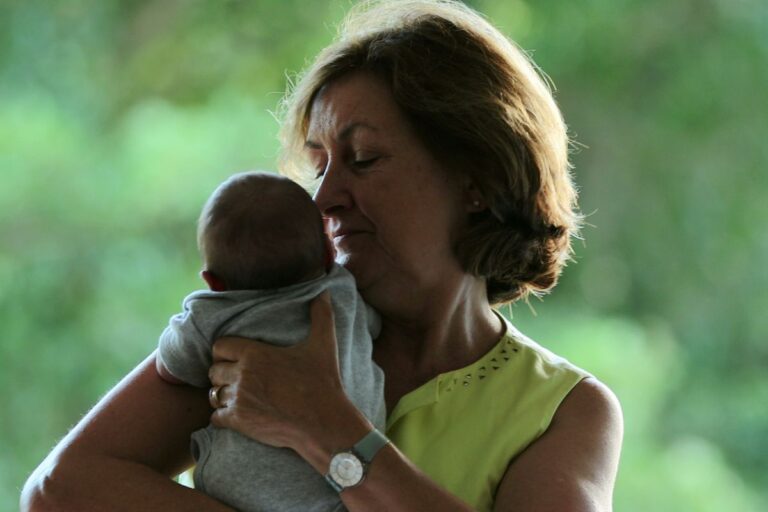
One response struck a particularly emotional note by describing how the period between a death and a funeral can bring relatives together in an unusual way. During those days, grief and childcare often happen side by side, as family members gather in the same home and begin looking after one another without much planning. The person recalled a great-grandmother who would take whichever baby was fussing and somehow have the child asleep on her chest two hours later.
The memory captured the feeling the woman had been struggling to explain. In the middle of a difficult week, older family routines had briefly returned, allowing several generations to share responsibility for the children and comfort one another. The response suggested that the family’s temporary togetherness was not an entirely new idea but a glimpse of something many families had once experienced more regularly.
Family Vacations Became Another Way to Build a Village
Not everyone could move onto a shared property, but several people suggested that regular family trips could provide some of the same benefits. One person recommended taking an annual vacation together, explaining that it had become the best part of the year for their family. Another parent agreed that traveling with cousins could be exhausting, but having several children and adults together often made childcare easier than managing two children alone.
One family rented several cabins at the same resort, giving everyone their own space while keeping them close enough to share the workload. When the children were younger, the adults could take turns managing naps and early bedtimes, allowing everyone to enjoy parts of the trip. As the children grew older, they began fishing and exploring together, creating the sort of memories that extended well beyond a single holiday.
One Toddler’s Favorite Part of Vacation Said Everything
The original poster revealed that her own family had started making these trips a priority that year. They had already gone on a vacation in June and planned another gathering at a cousin’s mountain home during the winter. The relatives had also discussed being more proactive about seeing one another, rather than waiting for special events to bring them together.
What touched her most was how her two-and-a-half-year-old daughter remembered the experience. Whenever someone asked the toddler about her favorite part of the trip, she answered by naming her cousins rather than mentioning an activity or attraction. For the woman, that simple response showed how much children could value the chance to be surrounded by people they loved.
Not Everyone Found Living Close to Family So Wonderful
Although the idea of a built-in village sounded wonderful to many people, others shared experiences that showed why it could also go wrong. One person described living with extended family while raising a toddler and an infant for around two years, only to leave with serious regrets. The practical help with childcare came at a steep emotional cost because the relatives expected the children to be raised according to the older generation’s rules.
Another person explained that sharing a home with parents and grandparents could mean losing control over everyday decisions. In their family’s experience, one grandmother received help with meals and housework but had little say over the furniture, her children’s clothes, or how she wanted to live. Although family members continued their relationships afterward, the experience convinced her to discourage the next generation from sharing a home with their parents.
The Woman Realized That a Village Must Still Respect Parents
The woman acknowledged that these concerns were real, because being surrounded by relatives did not automatically mean receiving the right kind of support. Some families struggled with alcohol, ongoing conflict, or relatives who refused to respect parenting decisions. Others discovered that the cost of having help was surrendering too much privacy or control over their children’s upbringing.
She felt fortunate that her family generally listened to her and her sister when it came to parenting their children. There were still small disagreements, such as relatives allowing her daughter to eat whatever she wanted, but the woman did not feel that she had to fight for every decision. Her experience highlighted an important distinction: a genuine village does not simply mean having more adults nearby, but having people who support the parents while respecting their boundaries.
She Returned to Everyday Life With a Different Perspective
Eventually, the family would have to leave the grandmother’s house and return to their separate homes, jobs, and routines. The woman knew that spending every day under one roof could create tensions, even among relatives who loved each other deeply. Still, she could not forget how naturally the family had shared childcare and how much happier her daughter seemed with so many familiar faces around her.
The hardest part was realizing how different ordinary parenting felt when she and her partner were largely responsible for everything themselves. During those six days, she had experienced a version of family life where asking for help was not an emergency and taking a break did not mean turning to a screen to occupy her child. Her uncle’s passing had brought a painful week, but it had also revealed something she did not want her family to lose: the comfort of caring for one another and raising children together.