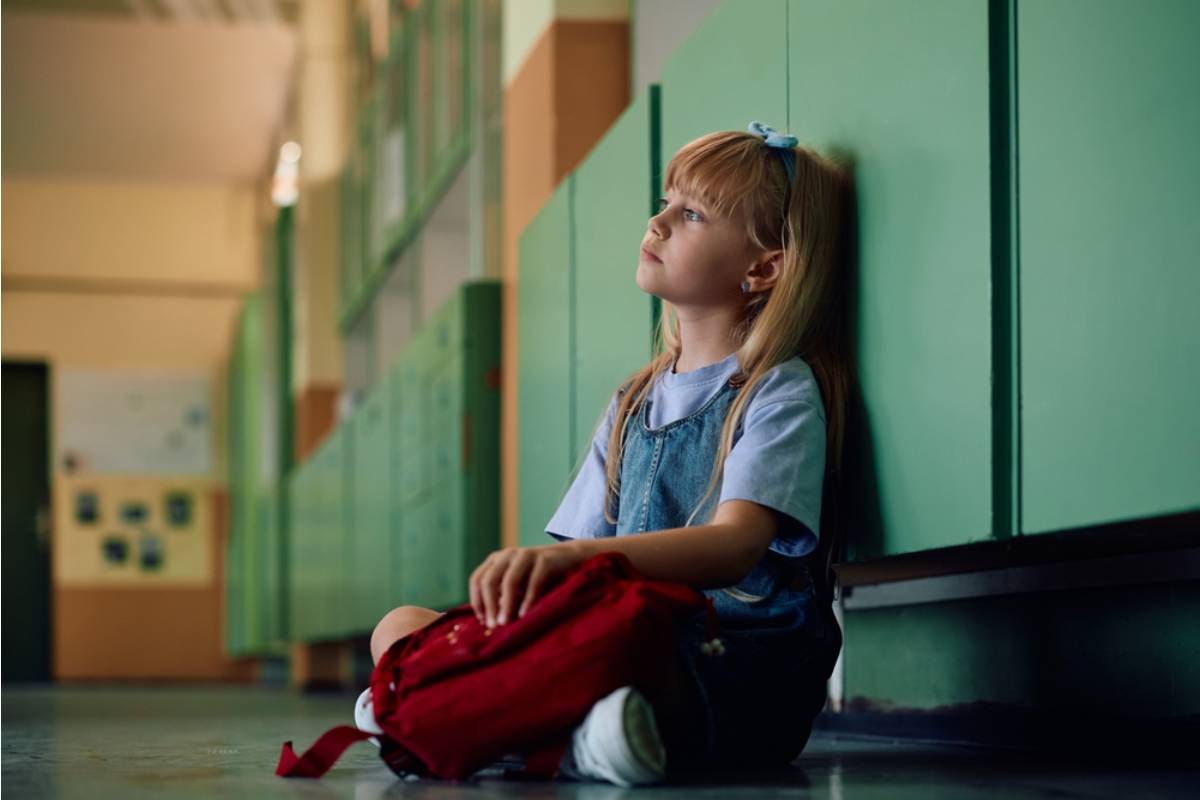
A Mom Sent Her 11-Year-Old Daughter Back to Boarding School at 7 PM Over a Missing Dress, and Was Waiting at the Gate When She Finally Returned

A person shared his story about being 11 years old, living with his mother in a tiny studio apartment, and being known as a very forgetful child. One evening around 7 PM, his mother was unpacking his things when she noticed that one of his dresses was missing. What followed began as an argument about clothing but quickly became a frightening journey through unfamiliar streets.
The child was already used to being afraid whenever his mother became angry. He remembered her calling his name and immediately peeking out from the bed they shared while she stood in the bathroom. He rushed toward her because he already knew that whatever came next probably wasn’t going to be gentle.
The Question He Already Knew
His mother demanded to know how many times she had told him not to forget his clothes. He answered that she had reminded him many times, and the moment those words left his mouth, he began crying and apologizing. Instead of calming down, she continued insulting him until the child became focused on only one thing: making the anger stop.
Then she told him to leave the apartment and go back to school to retrieve the missing dress. There was one major problem that seemed obvious to an adult but apparently disappeared inside a frightened child’s mind. It was already 7 PM, the school was about two kilometers away, and he was only vaguely familiar with the route.
He Wasn’t Thinking About the Danger
The child didn’t stop to calculate whether walking alone through the neighborhood at night was safe. His only thought was that he needed to get the dress because his mother was angry and he needed that anger to end. So he rushed out of the apartment with tears still running down his face.
The family lived in a poor settlement that was busy, confusing, and full of unfamiliar turns. He had only walked to school by himself around three times before, which meant he wasn’t exactly confident about navigating the route. Still, fear of disappointing his mother pushed him forward faster than common sense ever could.
The Streets Became a Maze
Before long, the child realized he was lost. Instead of turning around and going home, he began stopping strangers and asking them for directions because returning without the dress felt more frightening than continuing alone.
As he moved through the streets, he had to weave between traders, public transportation, motorcycles, and other people going about their evenings. The situation became even more chaotic when he slipped and landed with both feet in sewage. Somehow, even covered in filth and crying, he was still thinking about finding that dress.
Every Turn Felt More Desperate
The longer he wandered, the more disoriented he became. He was trying to recognize landmarks while also avoiding traffic and figuring out which road would finally lead him toward the school. There was no comfort in the journey because the child wasn’t exploring or wandering by choice, he was desperately trying to complete the mission he had been given.
Eventually, something familiar appeared in the distance. He recognized the stretch of road that led toward the school and suddenly found himself running again. After everything that had happened, he was close enough to believe that the hardest part was finally over.
The School Guard Was Shocked
When the child reached the school gate, he explained that he had come to collect a dress he had forgotten. The guard was shocked because the school had already closed for the evening, and seeing a young child arrive alone at around 7 PM was clearly unusual.
The child didn’t have time to explain the whole story or think about how strange the situation looked from the outside. He simply hurried toward the dormitory and searched for the missing dress. When he finally found it, the relief was immediate because he believed he had solved the problem.
The Dress Was Finally in His Hands
Holding the dress felt like holding a ticket back to safety. The child sighed with relief and began imagining the journey home, convinced that now his mother would no longer be angry about the mistake. After all the fear, confusion, sewage, traffic, and tears, the missing piece of clothing was finally accounted for.
He rushed back toward the school gate, probably expecting to find the same empty entrance he had arrived at earlier. Instead, someone was already there waiting. His mother was standing near the gate with her hands on her hips.
The Twist Was Waiting at the Gate
The sight of his mother should have meant relief, but the mood was anything but simple. She looked angry, but there was also something else on her face that the child would recognize only much later: worry. Instead of asking whether he was hurt or how he managed to find his way, she questioned why he had left as though the decision had been entirely his.
The child was confused because he hadn’t forgotten the instruction that sent him out. He remembered being told to leave and retrieve the dress, yet now his mother was acting as though the dangerous journey had never been ordered. They walked home together in silence, leaving the strange encounter at the school gate hanging in the air.
Nobody Mentioned What Happened
Once they returned to the apartment, the entire incident seemed to disappear without explanation. There was no conversation about the child getting lost, no discussion about the sewage, and no real acknowledgment that he had crossed busy streets alone at night. The dress was back where it belonged, and apparently that was enough to end the story.
But children often remember frightening moments long after adults decide they are finished. The child didn’t need an apology to understand that something about the evening had been deeply wrong. He simply carried the memory forward without knowing exactly why his mother’s behavior bothered him so much.
Then a Response Changed the Perspective
A response from a person suggested that the mother may not have suddenly realized she had crossed a line at all. Instead, the theory was that she became worried because someone else might notice what she had done to her child. That interpretation shifted attention away from the argument itself and toward the moment at the school gate.
The school guard had already seen the child arrive after closing time. According to the person who shared the story, the guards were speaking with the mother when the child returned from the dormitory. Suddenly, her concern about appearances made the strange questioning at the gate look very different.
The Guard May Have Seen Too Much
The child had arrived crying, alone, late at night, and asking to enter a closed school because he had forgotten a dress. From the outside, that would have been an alarming scene for any responsible adult to witness. A person responding to the story pointed out that the mother’s behavior may have changed because she realized the guard could start asking uncomfortable questions.
The storyteller later agreed that this possibility had never occurred to him as a child. At the time, he only saw his mother waiting at the gate and assumed she was angry that he had left. Looking back, however, he could see how the presence of another adult may have forced her to think about how the situation appeared from the outside.
The Silence Became Part of the Memory
The strangest part was that the incident was never discussed afterward. There was no explanation for why a frightened 11-year-old had been sent across town alone at night, even though he barely knew the route. The silence made the entire experience feel almost unreal, as though the family had silently agreed to pretend it had never happened.
A response from a person described growing up with a similar pattern, where private behavior changed dramatically whenever other people were present. Behind closed doors, the parent could be cruel or aggressive, but in public, the same person could suddenly appear caring and protective. That comparison gave the original storyteller another uncomfortable lens through which to view his childhood memory.
Years Later, the Details Still Mattered
What made the story especially haunting wasn’t just the missing dress. It was the fact that an 11-year-old child never stopped to consider his own safety because his mother’s anger had become the bigger danger in his mind. He was lost, crying, covered in sewage, and surrounded by unfamiliar streets, yet the idea of returning home without the dress seemed worse.
That detail revealed how deeply fear had shaped the child’s thinking. He wasn’t trying to rebel, prove a point, or escape his mother. He was simply trying to complete an order quickly enough to avoid another outburst.
The Mother Was Waiting All Along
The final twist wasn’t that the mother was worried. It was that she appeared to be worried only after the child reached the school and encountered another adult. She had sent him away alone, but once someone else could witness the consequences, she was suddenly standing at the gate waiting for him.
That moment became the part of the memory that refused to disappear. The missing dress was eventually forgotten, the sewage was washed away, and the streets became distant childhood scenery. What remained was the image of a frightened child returning through the school gate, carrying the item he had been ordered to retrieve, while the adult who sent him there stood waiting and acted as though none of it had happened.