A Nightly Phone Habit Has Been Linked to Teens Falling Asleep an Hour Later, and Researchers Found a Second Sleep Problem That Begins After the Screen Goes Dark

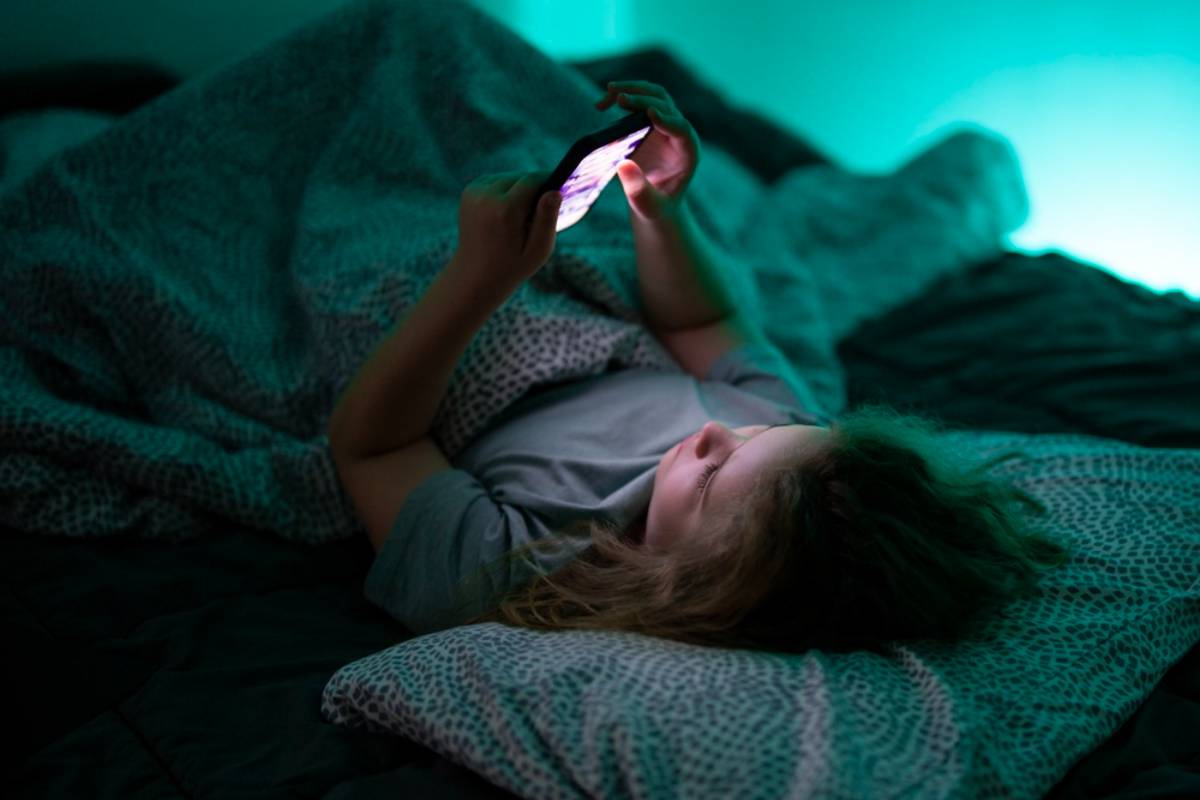
Smartphones have become a familiar part of teenagers’ evenings, but what happens when scrolling continues long after the rest of the household has settled down? A New York Post report published October 21, 2026, highlighted new research linking late-night phone use with delayed sleep and a greater likelihood of waking during the first part of the night. The findings suggest that the timing of smartphone use could matter as much as the amount of screen time teenagers accumulate throughout the day.
The researchers examined two distinct habits rather than treating all evening screen time as one category. They investigated whether continued phone use after 10 p.m. was associated with when teenagers fell asleep and how long they slept. They also examined phone activity immediately before sleep onset to determine whether that narrower window was associated with interrupted rest.
Why Teenagers Have So Much Sleep to Protect
Teenagers are still developing physically and mentally, making adequate sleep an important part of their daily routine. The Centers for Disease Control and Prevention recommends eight to 10 hours of sleep per 24 hours for adolescents ages 13 through 18. That recommendation leaves considerably less room for late-night distractions than many teenagers may realize when they pick up their phones before bed.
Sleep affects more than whether a student feels tired the following morning. Insufficient rest is associated with difficulties involving attention, behavior, learning, and mental health, while sleep deprivation can also increase the risk of injuries. When a teenager regularly loses sleep because bedtime keeps moving later, those lost minutes can become part of a much larger problem.
The Biological Reason Teens May Prefer Later Bedtimes
Teenagers do not always experience sleepiness on the same schedule as younger children or adults. Puberty is associated with changes in the body’s circadian timing, which can make adolescents naturally inclined to fall asleep later and wake up later. The National Institutes of Health explains this age-related tendency in its overview of healthy sleep.
That biological shift can make early school mornings particularly challenging. A teenager may struggle to fall asleep early even when an earlier bedtime would help accommodate the next day’s schedule. Adding prolonged smartphone use to that existing mismatch can leave even less opportunity for the amount of sleep recommended for healthy development.
How Researchers Measured What Happened at Night
The findings came from a study titled Evening Phone Use and Sleep Outcomes Among Youth, published online in JAMA Pediatrics on October 19, 2026. Researchers Yihong Zhao, Lauren Hale, and Dimitri A. Christakis analyzed smartphone activity alongside sleep measurements from wearable devices. Their original research paper provides the detailed results and explains how the analysis was conducted.
The final analysis included 425 adolescents with an average age of approximately 14.8 years. Together, they contributed 7,591 valid nights of data, allowing researchers to examine differences in sleep associated with changes in each participant’s own phone-use habits. The researchers used repeated observations rather than relying exclusively on teenagers to remember and report how long they had used their devices or slept.
The Study Went Beyond Asking Teenagers to Estimate Screen Time
The researchers obtained smartphone activity records through an application that passively tracked foreground app use on participating Android devices. Sleep timing and duration were measured using Fitbit data, giving the researchers two sources of information that could be aligned across individual nights. The study’s measurement approach helped distinguish actual recorded phone activity from estimates based on memory.
The underlying data were collected between November 30, 2020, and February 5, 2024, through the Adolescent Brain Cognitive Development Study. For the primary analysis, participants needed at least 14 valid nights of overlapping smartphone and sleep data. The researchers excluded iPhone users because the tracking application used in this analysis recorded app activity on Android devices, an important limitation when considering how broadly the findings apply.
Social Media Accounted for Much of the Evening Phone Activity
The study found that social media was the dominant category of evening smartphone use among participants. Apps identified in the research included YouTube, TikTok, Snapchat, and Instagram, and social media use appeared on more than half of the recorded nights. Other app categories accounted for considerably less average use during the measured evening periods.
On average, the teenagers recorded about 40 minutes of smartphone use after 10 p.m. The researchers also found that some phone use occurred very close to sleep onset, making it possible to investigate whether the timing of those final interactions was associated with different sleep outcomes. The study did not establish that any particular social media platform was uniquely responsible for the observed associations.
The Difference Between an Ordinary Night and a Late-Scrolling Night
One of the clearest findings emerged when researchers compared nights on which teenagers used their phones more than their personal average after 10 p.m. with nights when they used them less than that average. On the higher-use nights, the observed sleep-onset time was approximately 65 minutes later. Total sleep time was about 20 minutes shorter, illustrating how the same teenager’s sleep could differ from one night to another.
These comparisons provide useful context because they examine changes within individuals rather than simply comparing teenagers who habitually use their phones more with those who use them less. A teenager’s usual routine, school schedule, and other personal characteristics can differ from those of another teenager. Looking at individual night-to-night variation helps researchers examine whether deviations from a person’s own normal phone use coincide with changes in sleep.
Thirty Extra Minutes After 10 P.M. Made a Measurable Difference
The researchers also used statistical models to estimate how each additional minute of phone use beyond a participant’s typical level related to sleep. In the adjusted analysis, 30 additional minutes of smartphone use after 10 p.m. were associated with sleep beginning about 26 minutes later. The same amount of extra use was associated with approximately 11 minutes of later final awakening and nearly 13 minutes less total sleep.
Those figures describe statistical associations, not a guarantee that every teenager will lose exactly the same amount of sleep. They also represent adjusted estimates, which differ from the raw comparison between higher-use and lower-use nights. Nevertheless, the results suggest that extra screen time late in the evening may reduce the opportunity available for sleep rather than merely shifting bedtime without any reduction in total rest.
The Later the Phone Use Continued, the Stronger the Association
The researchers examined phone use after several evening cutoffs, beginning at 8 p.m. and extending through midnight. Across those windows, the estimated association with delayed sleep onset became stronger as the cutoff moved later. In practical terms, additional phone use closer to the middle of the night was more closely associated with delayed sleep timing than use earlier in the evening.
The analysis also found an association between additional late-evening phone use and a later final awakening. However, the shift in wake-up time was smaller than the delay in sleep onset, helping explain why total sleep duration decreased. When a teenager must still get up for school or another morning commitment, going to sleep later does not necessarily leave enough opportunity to recover that lost time.
Another Concern Appeared in the Minutes Before Sleep
The researchers did not stop at examining when teenagers fell asleep. They separately studied smartphone activity in the five to 30 minutes immediately preceding sleep onset and compared it with wakefulness measured after sleep began. Phone use closest to sleep onset was associated with more sustained wakefulness during the early part of the night.
The strongest association appeared in the five-minute window immediately before sleep onset. In the researchers’ model, each additional minute of phone use above a participant’s usual level in that window was associated with approximately 0.74 additional minutes of sustained wakefulness after sleep began. This was a statistical relationship, not proof that every extra minute of phone use directly caused an awakening.
The First Thirty Minutes of Sleep Stood Out
The researchers found that the association between phone use immediately before sleep and subsequent wakefulness was concentrated mainly within the first 30 minutes after sleep onset. The relationship weakened when they examined a longer period extending into the night. This distinction suggests that late-evening phone use and phone activity immediately before falling asleep may be associated with different aspects of sleep.
That early period matters because sleep is not a uniform state from the moment a person closes their eyes. The body moves through stages of sleep, and the transition into more consolidated rest unfolds over time. The study’s findings raise the possibility that activity immediately before sleep is related to this transition, although the research did not establish a definitive biological mechanism.
Why Phone Use Might Interfere With Winding Down
There are several plausible explanations for why late-night smartphone use and sleep timing might be connected. Continuing to watch videos, read messages, or browse social feeds takes up time that could otherwise be spent sleeping. Social interactions and rapidly changing content may also keep a person’s attention engaged at a point when they are trying to settle down.
Light exposure is another possible factor because the body’s sleep-wake timing responds to light signals. However, the researchers could not determine whether the associations they observed resulted primarily from delayed bedtime, mental or emotional stimulation, light exposure, or a combination of these influences. Establishing which mechanism matters most would require research that measures the content of phone use and tests interventions more directly.
Why the Findings Need to Be Read Carefully
Despite the clear statistical patterns, the study was observational rather than a controlled experiment in which researchers randomly assigned teenagers to use their phones for different amounts of time. It therefore cannot establish that smartphone use alone caused the subsequent changes in sleep. Other circumstances surrounding a particular evening could also contribute to differences in when someone falls asleep or how often they wake.
There are additional limits to the measurements and sample. Participation in the smartphone-tracking substudy was voluntary and the analysis was restricted to Android users, while wearable sleep estimates do not perfectly match measurements obtained through laboratory sleep studies. The researchers also measured smartphone activity rather than all possible evening screen exposure, so the results should not automatically be extended to every device or digital activity.
Earlier Research Suggests the Bigger Picture Is Complicated
The relationship between screen use and sleep has not produced identical findings across every study. A separate 2026 systematic review and meta-analysis published in JAMA Pediatrics examined 25 studies involving 4,562 children, adolescents, and young adults. It found a small association between increased daily screen use and later sleep onset, but no statistically significant overall associations with several other sleep measures, including total sleep time and sleep efficiency.
That review and the newer smartphone study examined different kinds of evidence and should not be treated as though they tested precisely the same question. The newer research focused specifically on the timing of smartphone use and used recorded phone activity alongside wearable sleep measurements. Taken together, the research suggests that when a teenager uses a phone may be important, while also showing why broad claims that all screen exposure has the same effect on sleep would go too far.
What Families Can Try Without Turning Bedtime Into a Fight
Dr. Daniel Bigman, a child and adolescent psychiatrist and sleep medicine physician at Northwell Health who reviewed the findings, emphasized the importance of protecting teenagers’ sleep. In a PIX11 report published through AOL, he recommended keeping phones out of the bedroom and replacing stimulating late-night activity with calmer alternatives. Reading, listening to gentle music, stretching, and relaxation exercises were among the options he discussed.
A practical approach is to create a predictable wind-down period and gradually move demanding digital activities earlier in the evening. Families can also agree on where phones will charge overnight, reducing the temptation to check notifications or begin another round of scrolling after getting into bed. These measures are reasonable sleep-hygiene strategies, although the specific study did not test whether any one of them would eliminate the associations it identified.
A More Consistent Routine May Matter More Than One Perfect Night
A teenager’s sleep schedule is shaped by more than a smartphone alone. School start times, homework, activities, personal responsibilities, and the biological tendency toward later sleep can all affect how much rest is available. A regular bedtime and wake-up time can help families establish a routine that makes adequate sleep more achievable, even when the schedule cannot be changed completely.
Parents can also set an example by putting their own devices aside during the household’s wind-down period. The goal does not have to be eliminating every screen from a teenager’s life or assuming that every late-night phone interaction is harmful. Instead, the findings provide a reason to pay particular attention to prolonged use after 10 p.m. and phone activity immediately before sleep.
The Important Detail Is What Happens After the Scrolling Stops
The new study adds a useful distinction to the discussion about teenagers and screen time. Extra smartphone use after 10 p.m. was associated with later sleep onset and shorter sleep duration, while use immediately before falling asleep was associated with greater wakefulness during the early part of the night. Those findings point toward timing as an important part of understanding the relationship between phones and adolescent sleep.
The evidence does not mean that every teenager who uses a phone late will experience disrupted sleep, nor does it prove that phone use is the sole explanation for sleep difficulties. It does, however, suggest that protecting the final part of the evening may be worthwhile when teenagers are struggling to get enough rest. For families trying to build healthier routines, putting the phone away earlier could be a practical step toward preserving the eight to 10 hours of sleep adolescents are recommended to get.