A School Counselor Says a Student Asked Her What Age Is “Too Old” to Still Want Your Parents to Come to Things

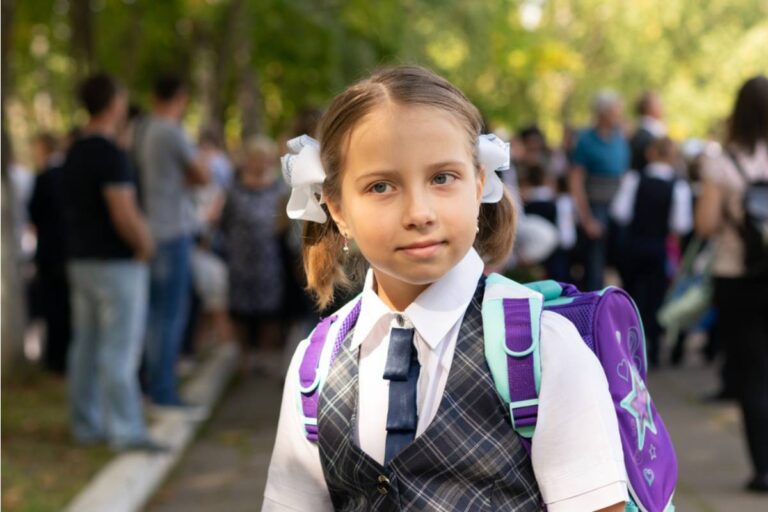
The counseling office was quiet in that familiar way it only gets during the last period of the school day. A school counselor was finishing notes when a student lingered near the doorway instead of heading out with everyone else. The student shifted her backpack strap and hesitated like she had already decided not to ask but could not leave without doing it.
She finally asked a question that sounded simple on the surface but carried more weight than expected: at what point does someone become too old to still want their parents at school events. The counselor paused, not because the question was unclear, but because of how carefully it was delivered. It was the kind of question that usually meant there was a story already happening, not one being invented.
The student who stayed after the bell
Most students left quickly when the final bell rang, but this one stayed seated longer than usual. She pretended to scroll on her phone, even though her eyes were not really moving with the screen. The counselor noticed her stillness and waited without rushing her out. Eventually, the student walked closer instead of leaving. Her posture suggested she had been rehearsing something in her head all day. When she finally spoke, it felt like she was testing whether the words would sound strange out loud.
The question that felt heavier than expected
The question came out in a way that was careful and uncertain. She asked if there was an age where wanting your parents at events becomes embarrassing. The counselor did not answer immediately because the question did not feel theoretical. It sounded like it had already happened in her life in some way. The student looked down as soon as she finished speaking, as if she regretted asking it. The silence in the room made it clear that this was not casual curiosity.
Trying to answer without making it personal
The counselor responded gently, saying there was no universal cutoff for something like that. She explained that people often feel differently depending on their relationship with their parents. While speaking, she watched the student’s reaction closely. The student nodded but did not seem fully comforted by the answer. Instead, she seemed to be measuring whether her feelings were normal or not. The conversation already felt like it was about something unspoken.
The name that kept coming up in conversation
Over the next few weeks, the counselor began noticing the same name appearing in different contexts. Teachers mentioned the student being distracted during presentations. A few classmates casually said she often left events early or stayed near the edges of group activities. Each mention included a reference to her parents attending school events regularly. It was never framed as a problem, but it formed a pattern in the background. The counselor started connecting details that had not seemed connected before.
A pattern the counselor starts noticing
During assemblies and school activities, the student’s attention always seemed divided. She would glance toward the entrance whenever adults started arriving. Her expression would shift slightly when she spotted her parents among the crowd. It was not embarrassment exactly, but something more complicated and harder to label. The counselor realized the student was not reacting to presence alone, but to how visible that presence was. That distinction made the earlier question feel more specific in hindsight.
The hallway encounter that confirms it
One afternoon, the counselor saw the student with her parents in the hallway after a school event. The parents were enthusiastic, taking photos and asking her to stand in the center of every shot. The student complied but kept adjusting her position slightly away from direct attention. Her smile looked practiced rather than relaxed. When the parents walked ahead, she stayed behind for a moment longer than necessary. That pause confirmed there was tension beneath what looked like normal involvement.
A parent who always shows up first
Teachers mentioned that her parents were often among the first to arrive for events. They signed up for volunteer slots and sat in the front whenever seating allowed. Their involvement was consistent and visible, which the school usually considered a positive sign. However, visibility did not always match comfort for the student involved. The counselor began to understand that presence itself could feel overwhelming depending on context. What looked supportive on paper was more complicated in practice.
The student’s hesitation during group work
In group settings, the student often hesitated before speaking, especially when parents might be observing. She seemed more relaxed when working alone or away from public attention. One teacher noted that her confidence varied depending on whether adults she knew were nearby. The counselor reviewed these observations and saw a consistent shift in behavior. It suggested that her awareness of parental presence was shaping her participation. That realization reframed earlier interactions in a new way.
The private conversation that shifts tone
The counselor eventually invited the student for a follow up conversation. This time, the student did not hesitate as long before sitting down. She admitted she sometimes felt like she was still being watched even when she was not directly being corrected. She explained that her parents meant well but were very involved in everything she did at school. As she spoke, her tone stayed respectful but carried exhaustion. The issue was not attendance itself, but how constant it felt.
A peer comment that changes context
The counselor later learned about a moment during lunch when a peer made a light comment about her parents always being around. It was not meant unkindly, but it landed differently for her. She reportedly laughed at the time, but did not talk much for the rest of the day. Small remarks like that seemed to accumulate over time. The counselor began to see how external observations were affecting her internal comfort. It was not one event, but repetition that created pressure.
The counselor’s meeting with staff
A brief discussion among staff brought more clarity to the situation. Teachers agreed the parents were involved but not disruptive in an obvious way. However, they also acknowledged the student seemed less relaxed in their presence than other students in similar situations. The counselor suggested that emotional impact was not always visible through behavior alone. The staff agreed to be more mindful without making assumptions. It became less about correcting anything and more about understanding context.
The follow up session with the student
In a later session, the counselor brought up the original question again without pressuring for details. The student smiled slightly, remembering how awkward it had felt to ask. She said she was not trying to push her parents away, just trying to understand her own feelings. She explained that she sometimes felt guilty for wanting space. The counselor reassured her that mixed feelings were common in close family relationships. The conversation felt lighter but more honest than before.
The moment the student explains more
Eventually, the student shared that her discomfort was not about specific events but about always being emotionally “on” when her parents were present. She said she could not fully relax because she felt observed even during normal moments. That constant awareness made school feel less like her own space at times. The counselor listened without interrupting, letting her fully express it. By the end, the student looked relieved simply from naming it clearly. The issue had become less abstract and more understandable.
The decision to involve family support
After several conversations, the counselor suggested a family meeting focused on communication rather than correction. The student agreed, though with visible hesitation. The goal was not to reduce involvement, but to help balance expectations and comfort. The counselor framed it as making sure support did not unintentionally feel like pressure. The student asked if that was even possible without hurting feelings. The counselor said it required adjustment, not withdrawal.
Aftermath reflection
In the weeks that followed, small changes began to appear in how school events unfolded for the student. Her parents still attended, but there was more space for her to move independently within those moments. The counselor noticed she stayed longer at events and interacted more freely with peers. The question she had asked earlier no longer felt unanswered, but reframed. It was not about age at all, but about balance and perception. What started as a simple question ended up revealing something much deeper about how support can be felt in different ways.