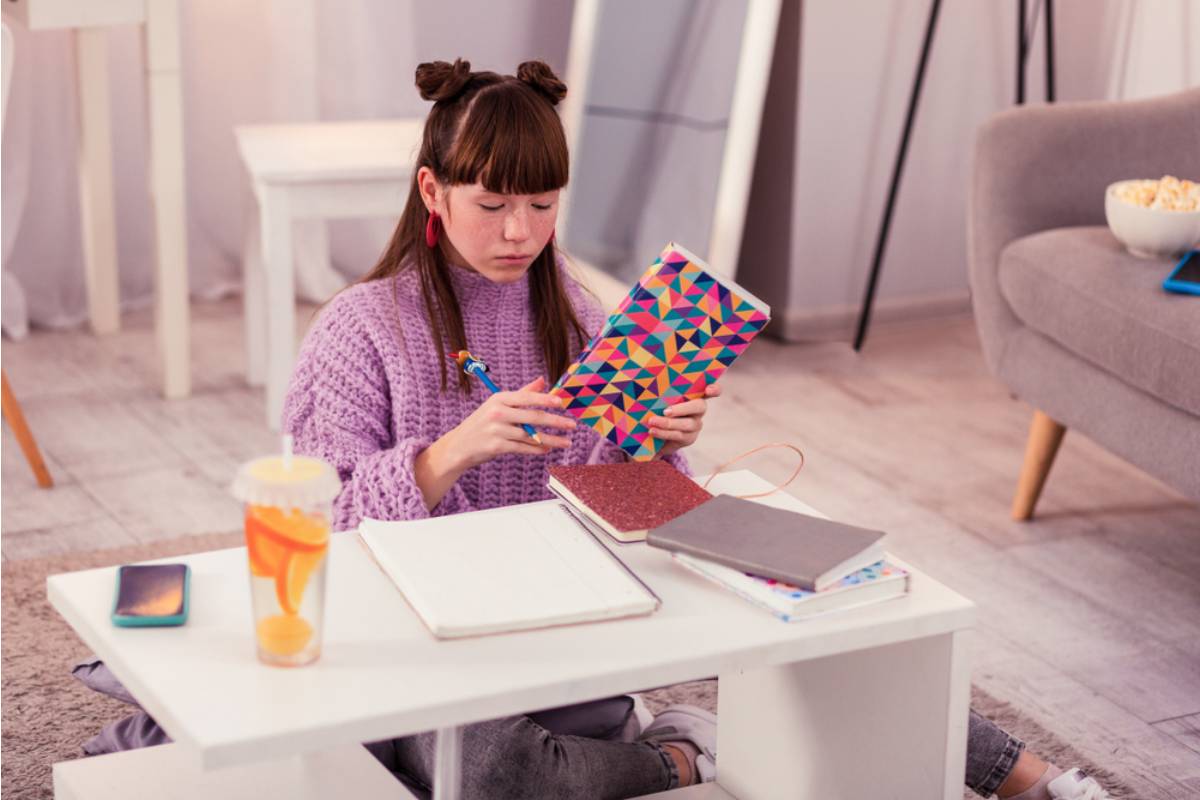
A Teen Says Her Sister Has Started Claiming the Family Living Room as a Private Study Space, and Her Parents Keep Telling Her It’s Just Because She’s “Like Her”

A 17-year-old girl said her family had always dealt with an unusual living arrangement because their home only had two rooms besides the shared living room. Her parents slept in the master bedroom, while she and her 13-year-old sister shared the smaller bedroom. Although everyone had belongings in both rooms, the limited space meant that privacy had always been something the family had to negotiate.
The older sister had her desk in the smaller bedroom, while her younger sister had a desk in the master bedroom. It wasn’t ideal, but the arrangement had worked well enough because each girl technically had somewhere to study. Then the older sister began preparing seriously for college exams, and suddenly the family’s tiny living arrangement became much harder to navigate.
Closing the Bedroom Door Was Her Solution
For about a year, the older sister had been spending a lot of time studying for exams. Her desk was positioned directly beside the bedroom door, meaning anyone walking past could easily see what she was doing, while she could also see everyone moving through the hallway. That constant movement made it difficult for her to concentrate.
She started closing the bedroom door while studying, not because she believed the entire house should revolve around her. She simply wanted enough privacy to focus on schoolwork without watching people pass by every few seconds. In her mind, closing the door was a practical solution to a poorly positioned desk rather than a demand that everyone else disappear.
Her Sister Had a Different Setup
Her 13-year-old sister’s desk was in the master bedroom, where it was much harder for people walking around the house to see what she was doing. The younger girl therefore had considerably more natural privacy than her sister did. There was a desk waiting for her, and she could study there without having to stare directly at a doorway.
Despite that, the younger sister apparently disliked using her own desk. Instead, she preferred bringing her schoolwork into the living room. That decision might not have been a problem on its own, except that she also wanted the living room to become completely quiet and empty while she studied.
The Television Suddenly Became Off-Limits
The family only had one television, and it was located in the living room. The older sister said her younger sibling wouldn’t let anyone watch it while she was studying, even when the person watching had headphones on. She also didn’t want anyone simply sitting in the room while she worked.
That quickly created an uncomfortable situation because the living room was a shared area rather than a private bedroom. The older sister felt she was being pushed out of one of the only communal spaces in the house. What made it more frustrating was that their parents apparently accepted the arrangement instead of telling the younger sister to use one of the bedrooms.
Her Parents Had an Explanation
The parents didn’t seem to view the situation as unreasonable. According to the older sister, they believed the younger girl was simply “following her footsteps” because she also needed to be alone while studying. That explanation made the older sister especially frustrated because she felt the two situations weren’t remotely identical.
She argued that she had never demanded complete isolation from the entire household. Her request for privacy came from the fact that her desk was awkwardly positioned and exposed, while her sister already had a relatively private desk available. To her, the comparison seemed to ignore the very different circumstances surrounding their study habits.
Then There Was the Problem With Her Belongings
The older sister also had another reason for not wanting to simply swap spaces without thinking about it. She said her younger sister had a history of secretly taking makeup and stationery from her cupboard in the smaller bedroom. That history made the suggestion that the younger girl use her desk there feel much less harmless.
She suspected the request might be about more than finding a quiet place to study. In her mind, allowing her sister to occupy the smaller bedroom could give her easy access to belongings she already had a habit of taking without permission. That suspicion made the entire situation feel less like a study problem and more like a power struggle over space and possessions.
The Living Room Became the Battleground
As the situation continued, the older sister felt as though she was being asked to sacrifice the living room for her sister’s preferences. She couldn’t watch television, couldn’t comfortably sit in the room, and apparently couldn’t even enter without causing an argument. The shared space had quietly become her sister’s temporary private library.
The younger girl reportedly became especially upset if her sister tried to turn on the television. The older sister said her sibling would yell and even push her away when she came near the living room. What had started as a disagreement over studying was beginning to feel like a complete takeover of the family’s common area.
People Saw a Simple Solution
A person responding to the story suggested that the family stop treating the situation like an impossible problem. The simplest solution, according to several responses from people, was to swap desks and make sure the older sister’s belongings were secured. That would give the younger sister access to the study environment she claimed to need without allowing her to control the living room.
The suggestion also addressed the older sister’s biggest practical concern. If she had a way to lock away her makeup and stationery, the risk of her belongings disappearing would be much smaller. In that arrangement, both girls could have access to a desk while still respecting each other’s possessions.
The Idea of Locking Up Her Stuff Took Hold
The older sister immediately seemed interested in the suggestion of using locks or a small locking cabinet. She said she was looking into cabinet locks so she could put her more expensive belongings together in one place. That way, she wouldn’t have to worry about protecting every individual item scattered throughout her cupboard.
A response from a person recommended keeping the key somewhere the younger sister couldn’t casually reach it. Others suggested a locking drawer or container that could be secured before any room arrangement changed. For the older sister, this seemed like one part of the problem she could actually solve herself, even if she couldn’t convince her parents to intervene.
Not Everyone Thought the Sister Was Wrong
Interestingly, not every response from a person believed the younger sister was behaving badly. Some people argued that different students genuinely require different conditions to concentrate, and wanting absolute quiet wasn’t necessarily unreasonable. From that perspective, the younger sister’s preference to study alone could be legitimate even if her chosen location was inconvenient.
The problem, those people pointed out, was that the living room remained a shared area. Wanting quiet was one thing, but expecting everyone else to surrender access to the television and furniture was something different. A person responding suggested that the family should simply establish a rule that neither girl could claim the living room exclusively.
Someone Suggested the Master Bedroom
One response from a person pointed out an option the older sister hadn’t emphasized in her original story. Since the younger girl apparently disliked studying in the master bedroom, the older sister could potentially use the desk there instead. That would place her in the same relatively private environment that she believed her sister already had.
The proposal wasn’t perfect because the master bedroom belonged to the parents, but it highlighted how much of the conflict centered on personal preference. The younger sister wanted the living room because she liked studying there, while the older sister wanted the smaller bedroom because that was where her own desk was located. Neither preference automatically gave either sibling ownership over a shared space.
Then the Arguments Became More Physical
The older sister later clarified that this wasn’t merely a disagreement where her sister politely asked for quiet. She said that when she tried to enter the living room, her sister would scream and even push her away. That detail made several responses from people much more concerned about the dynamic between the siblings.
One person responding pointed out that the older sister couldn’t simply pretend she had authority over the house either. Their parents were ultimately responsible for deciding how the common space should be used. Still, the physical pushing and screaming suggested that the family needed a clearer boundary before the situation escalated further.
Some People Thought She Was Overthinking It
A few responses from people took a much more relaxed view of the situation. They argued that the older sister was leaving for college soon and would eventually have her own living space. From that perspective, the constant frustration might not be worth turning into a major family conflict during the final stretch of high school.
One person even suggested that the younger sister might genuinely be trying to imitate her older sibling without understanding why the circumstances were different. The younger girl could have noticed that her sister closed doors and wanted quiet, then copied the behavior without recognizing that she already had a more private study setup. That possibility didn’t make the living room problem disappear, but it offered a less hostile explanation for her behavior.
The Older Sister Was Not Convinced
The older sister didn’t seem persuaded by the idea that imitation was the whole story. She already knew her sister had taken belongings from her room without permission, so the timing made her suspicious. It was difficult for her to believe that the younger girl suddenly needed the exact space she had become protective of for purely academic reasons.
At the same time, she admitted that her family home was simply too small to give everyone everything they wanted. There was one television, one living room, two bedrooms, and several people competing for privacy. The physical limitations of the house meant that even reasonable preferences could collide almost immediately.
A Bigger Problem Was Hiding Beneath the Arguments
As the responses continued, people began focusing less on who was right about studying and more on the family’s lack of rules. The parents appeared to be allowing two teenagers to negotiate shared spaces through shouting, avoidance, and frustration. Instead of establishing clear expectations, they were largely telling the older daughter that her sister was simply like her.
That left the older sister feeling as though she had to defend her own boundaries without parental support. She couldn’t stop her sister from choosing the living room, couldn’t force her to use her own desk, and couldn’t keep her belongings safe unless she purchased locks herself. The situation was becoming less about studying and more about whether anyone in the household was willing to enforce basic respect.
The College Countdown Changed Everything
There was also an obvious clock running in the background. The older sister was preparing to leave for college, meaning her current frustration had an expiration date. Several people reminded her that she was very close to having a room and study environment entirely under her own control.
That fact offered some perspective, but it didn’t necessarily solve the immediate problem. Being close to freedom didn’t make it enjoyable to have her access to the family living room restricted in the meantime. Still, knowing the arrangement wasn’t permanent gave her at least one reason not to let the conflict consume her final months at home.
Her Own Solution Started Looking Better
By this point, a practical compromise seemed more realistic than getting everyone to agree about who was behaving worse. The older sister could secure her belongings, allow her sister to use the smaller bedroom desk, and push her parents to establish a clear rule that the living room remained available to everyone. That wouldn’t make the house bigger, but it would prevent one person from claiming a shared room indefinitely.
A response from a person also emphasized that both sisters were still young and trying to find control in a cramped environment. The younger sister might genuinely need quiet, while the older sister genuinely needed access to the rest of the house. Neither need automatically erased the other, which meant the adults in the home ultimately had to create a workable compromise.
The Real Twist Was Who Had More Space All Along
The irony was that the younger sister had been demanding the one thing her older sister thought she already possessed: privacy. Yet the younger sister was doing it from the family living room, a place where everyone else traditionally had access. Meanwhile, the older sister had spent a year quietly closing a bedroom door simply to block the traffic passing her desk.
The disagreement therefore became a strange mirror between the sisters. One had a private desk but wanted the shared room, while the other had the shared-room desk but wanted a little privacy. By the time the situation was laid out in full, the real problem wasn’t that either girl needed to study differently, but that the family had never figured out how to divide such a small amount of space fairly.
The Final Choice Was About Boundaries
The older sister ultimately seemed to understand that she couldn’t force her parents to see the situation exactly as she did. She could, however, protect her possessions, refuse to accept physical pushing, and continue asking her parents for a reasonable rule about the living room. Those were boundaries she could defend without turning every evening into another battle.
Whether the younger sister was genuinely struggling to focus or simply enjoying the power of controlling the room remained uncertain. The biggest lesson for the older sister was that she didn’t need to solve that mystery before protecting herself. With college approaching and a new chapter waiting, the question became whether she would spend her final months at home fighting over one television, or leave knowing she had finally learned how to stand up for her own space.