Dad Says He Refused to Let His Son’s Coach Call Him “Soft” for Comforting a Teammate Who Was Crying After a Loss

When Jason arrived at his son’s soccer game that Saturday afternoon, he expected to watch a tough match and celebrate whatever outcome came afterward. He never expected a conversation with a coach to make him question what some adults still considered strength.
His fourteen year old son, Caleb, had always been competitive, but he was also the kind of kid who noticed when someone else was struggling. After the game ended, one small moment between teammates turned into a disagreement about what it meant to be strong. What happened next forced everyone involved to rethink the difference between toughness and kindness.
The Final Minutes of a Difficult Game
Caleb’s team had worked hard all season and reached the final round of a local youth soccer tournament. The game was close, and every player knew the outcome could come down to one mistake. Parents on both sides shouted encouragement as the teenagers pushed through the final minutes.
When the opposing team scored the winning goal, Caleb’s teammate Ryan collapsed onto the field in frustration. Ryan had missed a chance earlier that could have changed the game, and he immediately blamed himself. While other players walked away quietly, Caleb stayed behind.
The Moment Caleb Chose to Stay
Jason watched as his son walked over to Ryan and sat beside him. Ryan covered his face with his hands and admitted he felt like he had let everyone down. Caleb did not tell him to stop crying or pretend it did not matter.
Instead, he said, “You played your hardest. One moment does not decide who you are.” Jason noticed that Ryan slowly calmed down after hearing those words. It was a small interaction, but it showed the kind of teammate Caleb wanted to be.
A Coach Who Saw It Differently
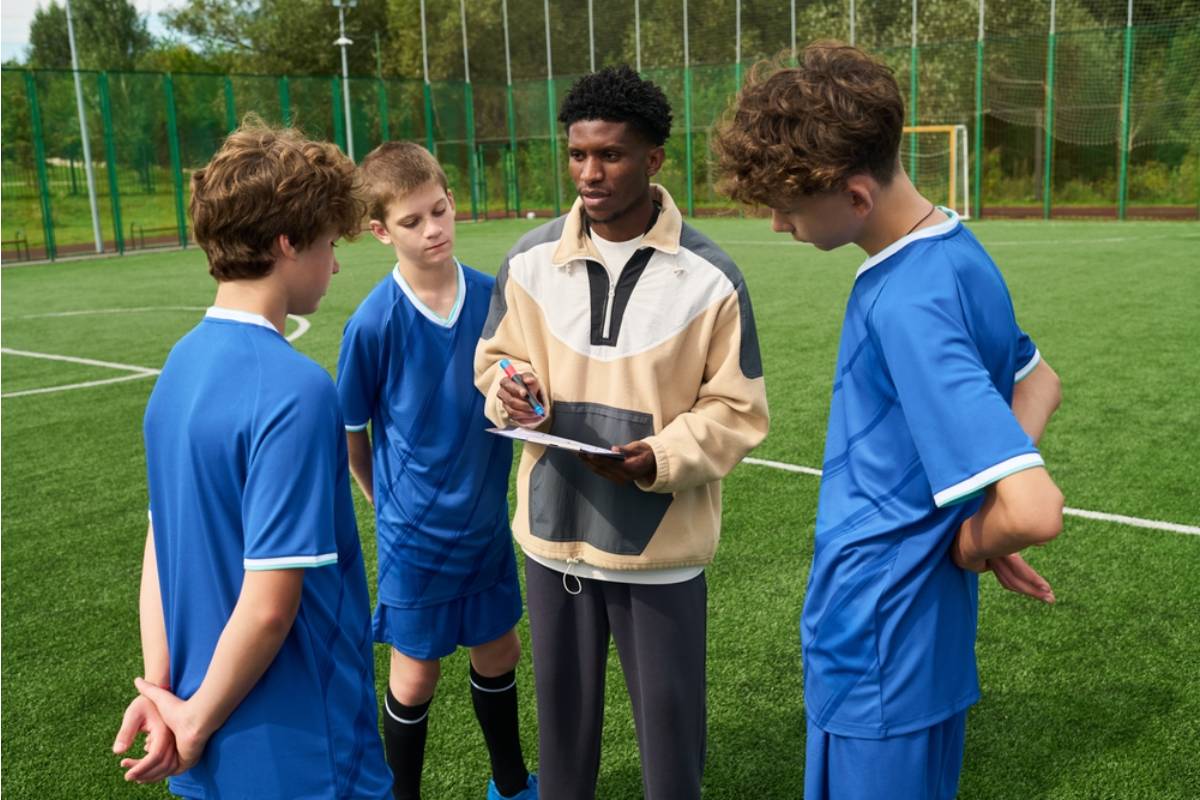
As the team gathered near the bench, Coach Miller called the players together. He congratulated them for competing but then looked toward Caleb and Ryan.
Later, Jason heard Coach Miller tell Caleb that he needed to be careful about encouraging too much emotion after a loss. The coach said players needed to learn how to handle disappointment and that spending too much time comforting someone could make them appear weak.
The Comment That Stayed With Jason
Jason initially thought he had misunderstood. He had respected Coach Miller and appreciated the effort he put into training the team. But hearing someone describe his son’s compassion as a problem bothered him.
After the players finished talking, Coach Miller approached Jason. He said Caleb was a talented player but needed to develop a stronger mindset. Then he used the word Jason could not forget.
He called Caleb “soft.”
A Father’s Immediate Reaction
Jason took a moment before responding because he did not want the conversation to become an argument in front of the team. He asked Coach Miller what he meant by that.
The coach explained that athletes needed to be mentally tough. He believed players who focused too much on emotions could lose their competitive edge. Jason listened carefully but disagreed with the idea that caring about another person was a weakness.
The Drive Home Was Quiet
On the way home, Caleb sat in the passenger seat staring out the window. Jason could tell something was bothering him. Finally, Caleb admitted he was worried the coach was right.
He said he did not want his teammates to think he was not serious about winning. He explained that he cared about the game, but he also cared about the people playing beside him. Jason realized his son was questioning a part of himself that had always been a strength.
The Conversation About Strength
That evening, Jason sat with Caleb and talked about what real strength meant. He explained that controlling emotions and ignoring emotions were two completely different things.
Jason told him that athletes needed discipline, focus, and resilience, but those qualities did not require becoming cold. He reminded Caleb that some of the strongest people in life were the ones who could handle pressure while still showing compassion.
A Different Example From the Past
Jason shared a story from his own younger years. He told Caleb about a time when a coworker had helped him through a difficult situation even though nobody expected them to. That simple act had stayed with him for years.
He explained that people often remember who stood beside them during hard moments. Winning games and earning recognition mattered, but the way someone treated others often mattered longer.
The Parents Begin Talking
After the incident, Jason spoke with a few other parents who had witnessed what happened. Some agreed with Coach Miller and believed young athletes needed to develop thicker skin.
Others admitted they had noticed a change in sports culture where children were sometimes encouraged to hide emotions instead of learning how to manage them. The conversation revealed that many parents had different ideas about what they wanted their children to gain from competition.
Ryan’s Parents Share Their Perspective
A few days later, Ryan’s parents contacted Jason. They thanked him for raising a son who stayed with Ryan after the loss.
They explained that Ryan had been struggling with confidence for months. Hearing another player tell him that one mistake did not define him had made a bigger impact than they expected. They said Caleb’s words helped Ryan return to practice feeling supported instead of ashamed.
A Meeting With the Coach
Jason eventually requested a conversation with Coach Miller. He made it clear that he respected the coach’s commitment to the team but wanted to discuss what happened.
He told the coach that he understood the importance of mental toughness. However, he believed empathy was also a valuable skill for athletes. He asked whether the team could teach players how to recover from disappointment instead of simply hiding it.
The Coach Reflects on His Approach
At first, Coach Miller defended his position. He explained that he had grown up in an environment where athletes were expected to push through everything. He believed that approach helped him succeed.
But after thinking about the conversation, he admitted he may have been too focused on one definition of toughness. He recognized that leaders on a team needed to support each other, not just compete together.
Changes Inside the Team
Over the next few weeks, the team dynamic began to shift. Coach Miller started including conversations about teamwork, communication, and handling pressure. Players were encouraged to support each other after mistakes instead of immediately moving on.
The team still trained hard and held players accountable. The difference was that mistakes became opportunities to improve rather than reasons to criticize each other.
Caleb Finds Confidence Again
Caleb continued playing with the same determination he had always shown. He did not become less competitive because he cared about his teammates. Instead, he became one of the players others trusted during difficult moments.
His teammates began coming to him after frustrating games because they knew he would listen. They also respected him during matches because they saw that kindness and competitiveness could exist together.
The Lesson Beyond the Field
Months later, Jason still thought about the day someone labeled his son’s kindness as weakness. He understood that sports were supposed to teach more than winning and losing.
Caleb learned that being supportive did not mean avoiding challenges. It meant having the courage to help others face them. Jason learned that parents sometimes have to protect the qualities they hope their children never lose, even when the world tells them those qualities do not belong.
The experience reminded their family that strength is not measured only by how someone performs under pressure. It is also measured by how they treat people when nobody is forcing them to care.