Mom Says She Tried to Recreate School at Home in Year One of Homeschooling, Now She’s Warning Others, “That Was My Biggest Mistake”

She set up a row of desks, printed a week’s worth of worksheets and tried to replicate the structure of the classroom she and her child were leaving behind. By the end of that first year of homeschooling she was depleted, the kids were checked out, and a post on Reddit captured her raw conclusion: “That was my biggest mistake.” Her confession landed with other parents, some nodding in agreement, others relieved they weren’t the only ones who had learned the hard way.
The first-year trap: turning home into a classroom
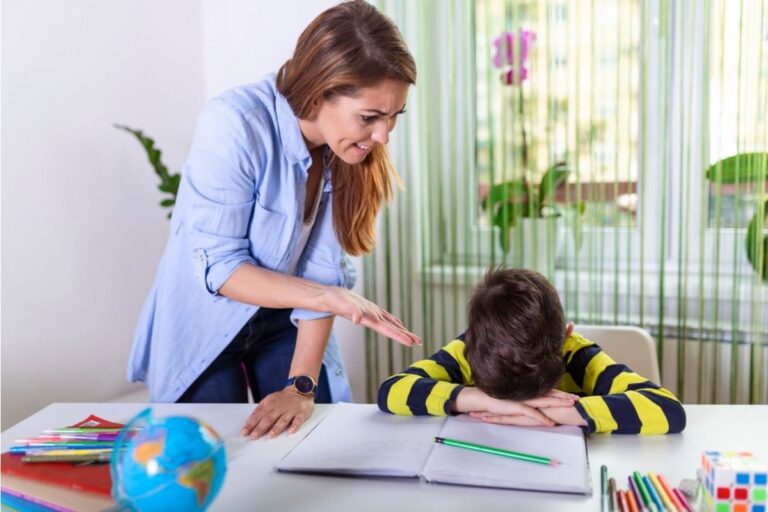
When school shuts down and parents step in, it’s natural to reach for the familiar. For many, the blueprint for “school” is clear: desks, timed lessons, rigid subjects, and a day structured by bells and schedules. The intuition is practical, recreate the environment you know and you’ll replicate the outcomes you want. But what made sense on paper quickly revealed itself as a mismatch in practice. Children who had thrived in the social rhythm of a brick-and-mortar school found the home setup constraining. Parents discovered that the energy required to police a school-like routine at home drained the joy out of learning, turning curiosity into compliance and leading to burnout on both sides.
Why copying school often backfires
School and home serve different psychological functions. A classroom is optimized for group management: predictability, uniform pacing and external accountability. Home is optimized for intimacy, flexibility and individualized attention. When you transplant one into the other without adaptation, you lose the advantages that make each setting work. The result is typically disengagement: children resist, lessons feel forced, and learning becomes a chore. Experienced homeschoolers often point out that motivation at home is more internal, kids respond when they feel ownership over what they’re learning, not when the day is built around making them sit through a full textbook chapter.
What she changed, and what actually worked
The pivot came when she stopped thinking like a teacher in a school and started acting like a learning partner in a home. Instead of recreating daily periods, she created rhythms: blocks of focused activity interspersed with play, chores, hands-on projects and family time. Math became practical problem solving, measuring for a build, budgeting for groceries, rather than a page of isolated problems. Reading was tied to family stories and trips to the library instead of silent desk time. Shorter, more frequent sessions replaced marathon lessons, and weekends were no longer mini-school. Importantly, she let her children’s interests lead the content. That shift didn’t abandon rigor; it reframed it so the work felt meaningful rather than punitive.
Common challenges and how families adapt
Switching away from a school-in-home model does not mean chaos. Many parents worry that less structure equals less learning, or that their kids will fall behind academically. The homeschooling community offers a variety of strategies for preserving accountability without reverting to rigid schooling. These include setting clear daily priorities rather than minute-by-minute schedules, tracking progress through portfolios or projects instead of hourly worksheets, and using short, consistent practice for skills like math and handwriting. Community co-ops, subject-focused tutors, and local classes can provide social and academic supplementation while allowing the core of learning to remain flexible and interest-driven.
Dealing with guilt and external pressure
One of the hardest parts of the transition is the quiet pressure from within and outside the family to “do it right.” Parents compare curricula, social media feeds, and test scores. That comparison fuels guilt when reality doesn’t match an idealized version of organized, photo-ready homeschooling. The experienced parents in the thread emphasized permission, permission to let go of perfection, to try approaches that fit the family’s temperament, and to accept that learning can be messy. They remind newcomers that homeschooling isn’t a single model; it’s a spectrum. Your outcomes are more likely to be defined by relationships, consistency and joy than by how closely your home imitates a school day.
What Parents Can Take From This
If you’re starting out or rethinking your approach, treat the first year as an experiment rather than a courtroom trial of your abilities. Begin by prioritizing connection: secure your child’s trust and curiosity before ramping up academic intensity. Design rhythms, not rigid schedules, short lessons, pockets of free play and regular outings. Follow interests to build motivation, and blend academics into life skills so learning feels purposeful. Keep accountability simple: a weekly portfolio, a project presentation or an hour of focused study each day can provide measurable progress without imposing a school-like regime. Find a community for support and swap ideas rather than comparing accomplishments. Finally, give yourself grace. Adapting to homeschooling is a process; the biggest mistake is thinking you must do it all perfectly from day one. Learn, adjust, and let your family’s version of learning evolve.