A Dad Says Dressing His Eight-Month-Old Daughter Suddenly Felt Like Wrestling an Octopus, and the Tiny Buttons Were Only Making Things Worse

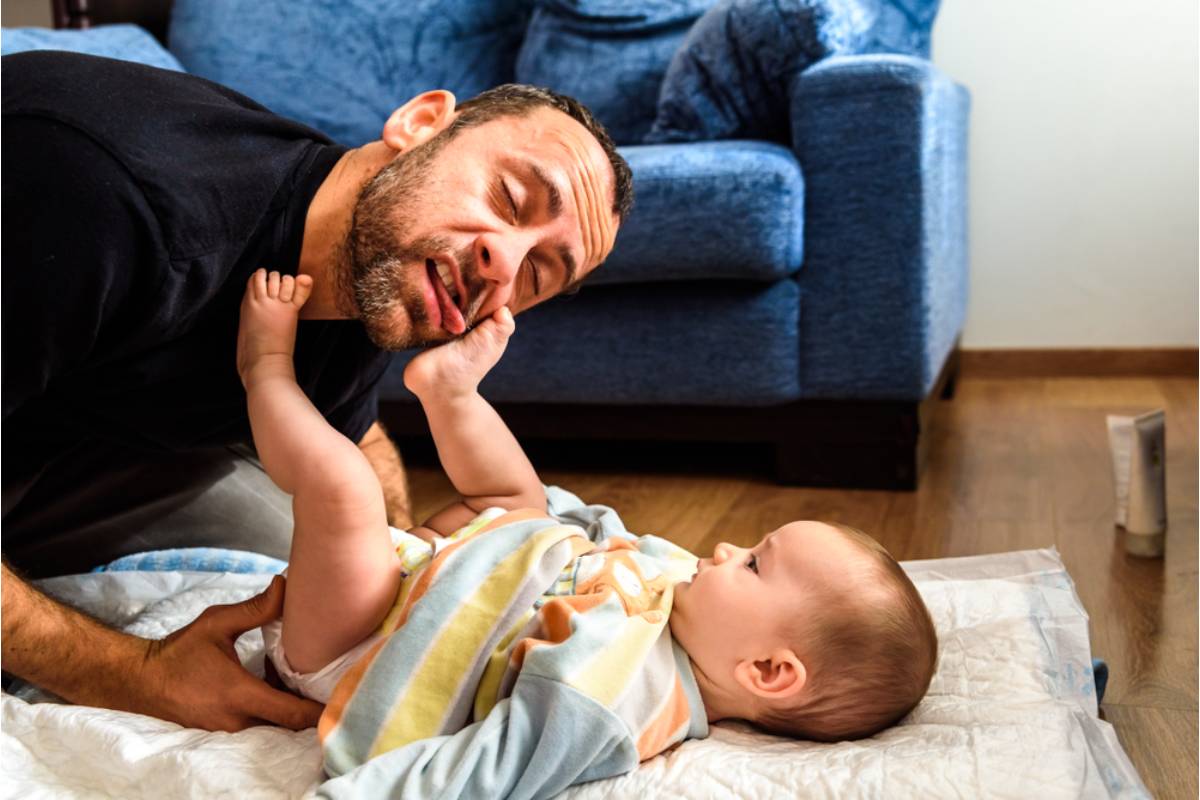
A father with an eight-month-old daughter recently reached the end of his patience while getting her dressed. He had managed baby clothes for months without much trouble, but one particular day turned a routine outfit change into a full wrestling match. His daughter was tired, teething, and determined to wiggle every possible direction while he tried to guide her arms through a smaller-than-usual onesie.
What bothered him most was how complicated some baby clothes seemed to be for something that was supposed to cover a very small human. Tiny arm openings, decorative details, rows of buttons, and awkward designs suddenly felt like obstacles rather than clothing. In a moment of pure frustration, he joked that a poncho would be a much better invention for babies.
Then Came the Octopus Comparison
The father described the experience as being similar to putting fingerless gloves on an octopus with almost no patience. The image was funny, but anyone who had tried dressing a squirming baby could understand exactly what he meant. Every time he thought he had one arm through, the baby moved, twisted, or pulled it away.
The problem was not that he could never dress his daughter successfully. He explained that most days were perfectly manageable and that he had been the one caring for her throughout her first eight months, so he had plenty of practice. This particular day was simply rough, and he wanted to complain about it without turning the experience into a parenting competition.
The Buttons Became the Real Villain
The onesie itself was only part of the problem, because plenty of other outfits had already tested his patience. Some baby clothes seemed to have buttons, snaps, ruffles, or other decorative details that looked adorable in a photograph but became inconvenient during an actual diaper change. A parent dealing with a messy baby at three in the morning was unlikely to appreciate an outfit that required a small construction project.
One especially troublesome item mentioned by another parent had more than twenty buttons running along the back. The outfit looked nice enough for a picture, but the parent eventually took the photograph with the garment carefully draped over the newborn instead of actually putting it on. The clothing had officially become a photography prop rather than something the baby was expected to wear.
One Parent Found a Better Way
A response from a person offered a solution that sounded almost too simple. Instead of fighting with traditional onesies, the family had dressed their baby in infant kimonos until he was ready for more conventional clothes. The side-opening design avoided much of the arm wrestling and made changes dramatically easier.
Other parents chimed in with similar experiences using gowns, sack-style sleepers, and simple cotton outfits. These clothes were not necessarily the flashiest options, but they had one major advantage: they were designed around the fact that babies need frequent diaper changes and have absolutely no interest in cooperating with them.
The Tiny Kilt Had an Unexpected Advantage
Another person shared a story about dressing a four-month-old baby in a tiny kilt for a wedding. At first, the outfit sounded like another example of style winning over practicality, but the family discovered an accidental advantage. When it was time to change the diaper, they could simply lift the kilt out of the way instead of navigating a complicated collection of snaps.
The story prompted another observation from a person who pointed out that infant skirts and dresses have historically been common in different cultures partly because they were practical. Suddenly, what sounded like an old-fashioned choice started looking strangely modern. A garment that allowed easy access to a diaper might actually be exactly what exhausted parents had been asking for all along.
Some Parents Declared Pajamas the Winner
Several parents admitted they had stopped pretending babies needed elaborate daytime wardrobes. Their children spent most of their time in soft pajamas, cotton onesies, joggers, or simple pants because those options were easier to wash and easier to put on. The moment an outfit became difficult to change, it often disappeared into the back of the drawer.
One parent explained that the rule was simple: if changing a diaper required removing the entire outfit, the outfit was probably never getting another chance. That philosophy eliminated plenty of beautiful but impractical clothes. It also created a wardrobe that actually matched life with a small child rather than life as imagined by someone arranging a catalog photograph.
The Grandparents Were Not Helping
Then came the familiar enemy in baby clothing stories: the incredibly cute gift. The father explained that grandparents had discovered dresses that were so adorable they seemed impossible to resist, even though some of them lacked convenient snaps and used ordinary buttons instead. The clothes looked wonderful in pictures but were far less exciting when there was a real diaper to change.
A response from a person summed up the problem in a different way, suggesting that many of the cute coordinated sets were primarily purchased as gifts and rarely became everyday clothes. That seemed to explain why some baby wardrobes were packed with tiny outfits that remained untouched. The cutest garment in the closet was often the one with the fewest practical reasons to wear it.
Then Parents Started Comparing Babies to Food
The conversation took a hilarious turn when parents began describing their children’s different body shapes. One called their baby a long, skinny “spaghetti” child whose clothes fit in length but hung loosely around the waist. Another described a child as a short, chubby potato who needed clothing several sizes larger than expected.
The comparison made one thing obvious: babies do not come off an assembly line with identical proportions. Some had long legs, some had round bellies, and some seemed to require a completely different size for every part of their bodies. A person even joked about having one long and skinny child, one short and chubby child, and one short and skinny child under the same roof.
The Clothing Sizes Created Their Own Mystery
For some families, the label on the clothing seemed almost meaningless. A child could be wearing a size intended for a much younger baby simply because the waist was narrow, while another child the same age needed multiple sizes up because of longer legs. Parents trying to rely on age-based sizing quickly discovered that babies had their own rules.
This problem did not disappear once children became toddlers. Some parents said their children still avoided jeans because the fit was uncomfortable or simply made no sense for their body shape. Soft pants, leggings, shorts, and dresses often worked better because they gave children room to move without forcing them into a standardized shape.
Then Someone Mentioned the Washing Machine
Baby clothing also created another battle that had nothing to do with getting dressed. One parent openly declared that any child’s clothing labeled hand wash only was going into the washing machine anyway. Their reasoning was brutal but understandable: children are messy, laundry is constant, and a delicate garment has limited chances of surviving real life.
The father in the original story agreed with the general attitude. A response from a person joked that if an outfit claimed it could not go into the washer, parents should simply give it their best shot. At that point, practicality had completely defeated the fantasy of carefully preserving tiny luxury garments.
Safety Was the One Complication Nobody Could Ignore
Not everyone agreed that baby clothing designers were simply making terrible decisions. A person who worked in apparel manufacturing explained that children’s clothing is subject to safety requirements, including rules affecting how garments fit. The comment suggested that some of the snug openings parents disliked were not random design choices.
Another person pointed out that certain loose features and ordinary buttons could create genuine safety concerns. That was an important wrinkle in the argument because it showed that some inconvenient details had a reason behind them. Parents could still hate the outfits, but at least now there was evidence that a few design decisions were about protecting children rather than annoying exhausted adults.
Sleepwear Added Another Layer to the Puzzle
The discussion became even more complicated when someone explained why certain children’s clothes had to look different from sleepwear. Sleep clothing is subject to stricter requirements, which means manufacturers have an incentive to make daytime outfits clearly different. That could partly explain why some children’s clothes seemed strangely bright, decorative, or impractical.
Suddenly, the chaos had a logic behind it. The outfits were not necessarily designed without consideration for real children, but they were being shaped by safety rules, commercial appeal, gifting culture, and the desire to make clothes look distinctly different from pajamas. Unfortunately, none of those factors helped a tired parent wrestle one tiny arm through an armhole.
The Gym-Bro Solution Was Surprisingly Popular
The father joked that he wanted to dress his daughter in one of those shirts with enormous arm openings, and one parent revealed that they had actually done something similar. The loose-arm design turned out to be practical, easy to put on, and far less frustrating than many traditional outfits. It was the kind of solution that sounded ridiculous until someone actually tried it.
Other parents had reached their own version of the same idea by putting babies in simple bodysuits, cotton pants, or even just diapers with oversized bibs at home. Nobody seemed particularly concerned about creating a perfect outfit for a baby who was mostly crawling around the house. Comfort had quietly become the dress code.
One Grandmother Chose Function Over Fashion
A grandmother offered a surprisingly practical perspective during the discussion. She said she was especially impressed by sleepers with two-way zippers because they eliminated the midnight battle of dealing with rows of snaps. After helping care for grandchildren, she had apparently learned that functionality becomes more valuable every time a diaper needs changing in the dark.
Her attitude summed up what many parents seemed to discover sooner or later. Cute clothes were welcome for holidays, pictures, weddings, and special outings, but everyday clothing needed to survive everyday life. The moment a garment became a burden, even the prettiest pattern in the world could not save it from being abandoned.
Then the Original Complaint Got a Pushback
Not every response was sympathetic to the father’s frustration. A few people insisted that onesies were incredibly easy to put on and suggested that he might simply be doing it wrong. That criticism irritated him because the whole point of his story was that he had experienced one unusually difficult moment, not that he had spent eight months unable to operate a onesie.
He explained that his daughter had been especially wiggly that day because she was tired and teething. His frustration had been temporary, and he had shared the story simply because sometimes even experienced parents have moments when a routine task suddenly feels impossible. The criticism ended up becoming almost as entertaining as the original clothing complaint.
The Baby Had Apparently Won the Battle
A response from a person later acknowledged that they had worked with children for years and still struggled to understand how putting on a onesie could become such a challenge. At the same time, that person admitted that the father was probably telling the truth. The explanation was simple: babies are unpredictable, and one unusually difficult moment does not require a complicated diagnosis.
That seemed to restore some sanity to the conversation. The father had not suddenly forgotten how to dress a baby, and the onesie industry had not secretly declared war on parents. An exhausted adult had simply met an especially energetic eight-month-old at exactly the wrong moment.
By the End, Practicality Had Won
The strangest part of the entire discussion was how quickly parents reached the same conclusion from completely different experiences. Kimonos, nightgowns, footed pajamas, soft pants, loose bodysuits, dresses, kilts, and enormous armholes all shared one important feature: they made life easier. The winning garment was rarely the one that looked most impressive in a photograph.
The father started out complaining about tiny armholes and decorative clothing, but the responses turned his frustration into a much larger lesson about parenting. Babies do not care whether an outfit is fashionable, coordinated, or worthy of a family photo. They care about being comfortable, moving around, and getting through the day, while their parents quietly dream of the mythical outfit that can survive all three.
And the Twist Was Sitting in the Closet
The father had joked that the perfect baby outfit might be a simple poncho, but the responses suggested that versions of that idea had already been around in different forms for generations. Loose gowns, kimonos, sack sleepers, skirts, and simple bodysuits all existed because people had eventually discovered that dressing babies should not feel like an athletic event. The supposedly strange alternatives were often the most practical ones.
In the end, the biggest enemy was not the onesie itself but the expectation that baby clothes needed to be complicated to be cute. Parents were quietly choosing comfort, easy diaper access, machine washing, and freedom of movement over tiny buttons and elaborate designs. The real twist was that the solution had never been hidden at all: the best baby outfit was simply the one that did not turn getting dressed into a battle.