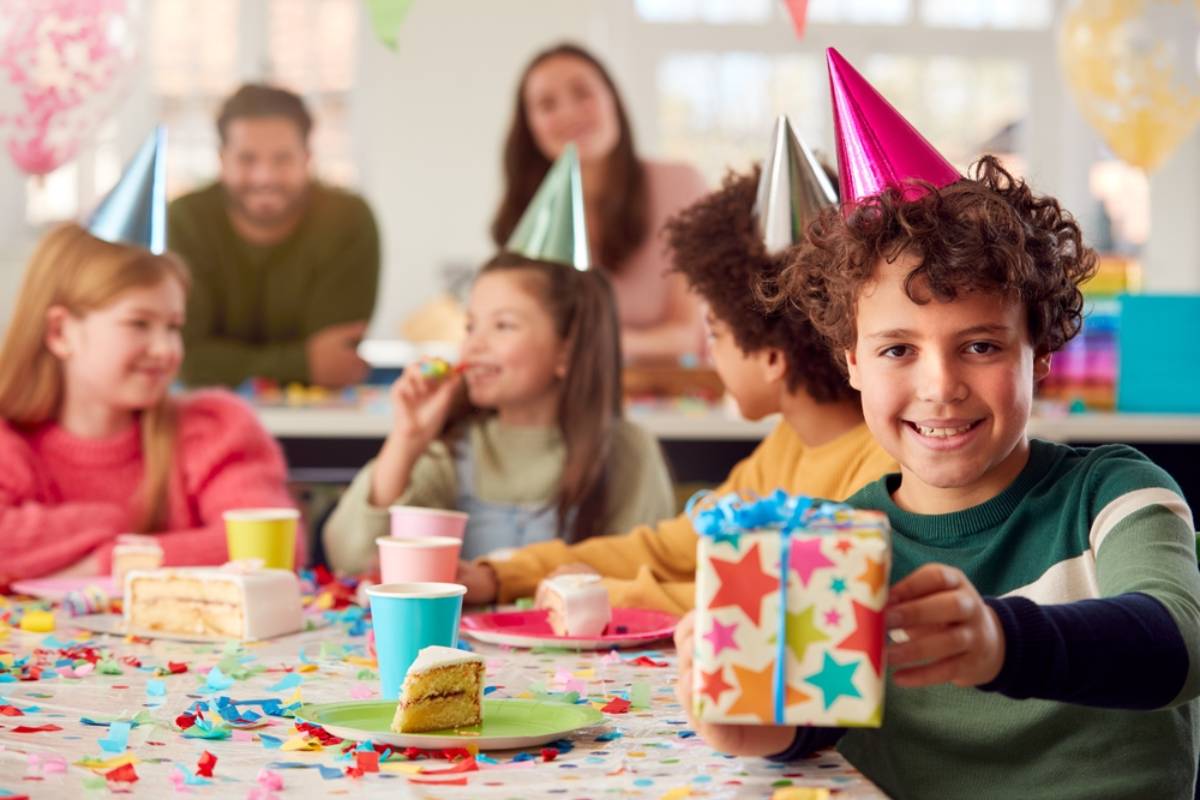
A Dad Says His Son’s 13th Birthday Party Turned Into Absolute Chaos When 30 Teenagers Took Over Their Apartment Lounge, and One Unexpected Moment Changed the Entire Day

A father had spent the past four years hosting his son’s birthday parties in the lounge at the top of their apartment complex. The space offered a beautiful view of the city, plenty of room to play, and everything needed for a fun afternoon with friends. He had developed a simple formula that seemed almost impossible to get wrong, with video games, board games, and a mini basketball hoop keeping everyone entertained.
For his son’s earlier birthdays, the arrangement had worked wonderfully, so the father had every reason to believe this year would be just as successful. He set up the Nintendo Switch on one television and the PlayStation 5 on another, then placed board games across the tables. Everything looked ready for another memorable celebration, but his son was turning 13, and the father was about to discover that entertaining teenagers was an entirely different challenge.
Thirty Friends Showed Up, and the Party Suddenly Felt Much Bigger
The birthday boy was now in seventh grade, and his social circle had grown considerably since the earlier parties. More than 30 friends showed up, including several who had never confirmed that they were coming. The father had no way to contact some of their parents because he did not have their phone numbers, making it difficult to know exactly how many children to expect.
At first, having so many friends around probably seemed like a dream come true for a teenager celebrating his birthday. For the father, however, the unexpected turnout created a supervision problem before the party had properly begun. The lounge that had comfortably hosted previous celebrations was suddenly filled with a much larger crowd, and the father had underestimated just how energetic a group of seventh graders could become.
The Video Games Became Louder Than Anyone Expected
The father had carefully arranged several activities, hoping the children would move between games and keep themselves occupied. Unfortunately, the board games barely attracted their attention, as the teenagers were far more interested in playing video games and trash-talking one another. What had once been a relaxed gathering had quickly turned into a noisy competition filled with shouting and constant commotion.
The situation became even harder to manage when the children started running around and wrestling. The father had planned for entertainment, but he had not anticipated spending his afternoon trying to keep a room full of teenagers from turning into a wrestling arena. The energy level seemed to increase by the minute, and the father soon realized that simply providing activities was not enough to keep the gathering under control.
One Child Ended Up in Tears After Being Mocked
The party took a more serious turn when one child became upset after other children began making fun of him. Instead of stopping the behavior, another child recorded the incident on a phone, turning an already uncomfortable situation into something potentially humiliating. The father had to intervene immediately rather than treating the incident as ordinary birthday-party mischief.
He walked the distressed child to his car so the child could leave safely, then returned to confront the situation inside the lounge. He also made the child who had recorded the incident delete the videos from his phone. At that point, the father was no longer simply hosting a birthday celebration, as he was trying to protect one child’s feelings while making it clear that humiliating someone for entertainment was unacceptable.
A Physical Fight Made the Afternoon Even More Difficult
Just when the father might have hoped the worst was over, two other children became involved in a physical confrontation. They exchanged insulting remarks and became aggressive toward one another, escalating the tension throughout the gathering. The birthday party had now moved far beyond noisy games and harmless excitement.
One of the boys tried to leave the party and walk home while still visibly upset. The father physically stopped him from leaving in that state and stayed with him until he began to calm down. Rather than simply sending the boy back into the crowd, the father took him to his apartment, where he could pet the family dog and talk through what had happened.
The Family Dog Became an Unexpected Source of Comfort
The father seemed to understand that the upset child needed more than a quick instruction to settle down. He brought the boy into a quieter environment away from the commotion and allowed him to spend time with the family’s dog. Sometimes, a familiar animal and a calmer space can help a child regain composure when emotions become overwhelming.
The moment also showed how quickly a birthday host can become responsible for situations that have little to do with cake, presents, or games. The father had invited his son’s friends over to celebrate, yet he found himself helping children manage conflict and distress. Even while trying to keep the party moving, he made time to ensure that a child who was struggling did not feel abandoned in the middle of the chaos.
The Father Had to Deal With the Aftermath After Everyone Left
Eventually, the party came to an end, but the father’s responsibilities did not finish when the last guest walked out. He contacted three different parents to explain what had happened and check that everyone involved was doing all right. He also apologized for the difficult situations that had unfolded during the celebration.
Fortunately, the parents responded kindly and took the incidents in stride, even chuckling a little about the chaos. Their reactions likely came as a relief after an afternoon in which the father had been forced to manage several emotionally charged situations. Still, the experience had taken a toll, and he was left wondering how a birthday party that had seemed so straightforward could become so complicated.
His Son Had Fun, but He Could See His Dad Was Stressed
From the birthday boy’s perspective, the party had still been enjoyable, even though it had included several unpleasant moments. His father, meanwhile, was exhausted from supervising the crowd, dealing with the fights, and making sure the upset children were safe. The contrast between their experiences showed how differently children and adults can view the same event.
The son also noticed that his father was stressed, which suggested that he had been paying attention to more than just the games and his friends. Despite the chaos, the father had managed to give him the celebration he wanted while stepping in whenever the situation required an adult. It was not the smooth afternoon he had imagined, but the father had remained involved rather than ignoring the problems and hoping they would disappear.
The Birthday Boy Made a Surprisingly Mature Observation
Later, when the father and son were back at home, the conversation took an unexpected turn. The father had previously explained that puberty could bring stronger emotions and make adolescence a confusing period. His son admitted that he had not fully understood what that meant until he watched his friends become so chaotic and aggressive during the party.
The observation stood out because it showed a level of self-awareness that many adults might not expect from a 13-year-old. Instead of simply blaming the other children or treating the fights as entertaining drama, the boy had begun connecting what he witnessed with the emotional changes his father had described. After such a stressful afternoon, that conversation gave the father a meaningful reminder that his son was learning and growing through the experience.
He Encouraged His Son to Check on the Friends Involved
The father did not want the arguments to become the final word on the birthday celebration. He asked his son to text the friends who had been involved in the fights and wish them well. The messages also gave the boy an opportunity to express sympathy that their day had ended badly.
That decision helped turn the experience into a lesson about friendship and responsibility rather than merely a story about teenagers behaving badly. The father had already stepped in to prevent situations from getting worse, but he also wanted his son to understand that caring about friends means acknowledging difficult moments afterward. Even when a gathering goes wrong, there can still be opportunities to show kindness and encourage better choices.
Other Parents Recognized the Challenge of Hosting Teenagers
After sharing his experience, the father received responses from people who understood why the gathering had overwhelmed him. One response came from a middle school teacher who joked that the father had experienced a small taste of their daily working environment. The teacher suggested keeping the next celebration smaller, reflecting how difficult it can be to manage a large group of young teenagers.
Other people also pointed out that children’s behavior can change dramatically around this age. Some explained that a handful of friends might get along perfectly well together, only for a much larger gathering to become noisy and unruly. Their experiences helped put the father’s afternoon into perspective, showing that the problem was not necessarily a failure of parenting but a challenging combination of age, group dynamics, and insufficient structure.
A Smaller Guest List Started Sounding Like a Brilliant Idea
The father eventually decided that future birthday celebrations would need a different approach. Rather than inviting more than 30 children, he considered limiting the guest list to just five friends. That would make it easier to supervise the gathering, reduce the chances of conflict, and give everyone more opportunities to enjoy the activities.
He also considered arranging a more structured outing, such as an escape room, instead of relying on a large room filled with entertainment options. A scheduled activity could give the children a shared goal and leave less room for the gathering to spiral into uncontrolled wrestling or arguments. After experiencing the difference between a manageable party and a room full of energetic teenagers, the father was ready to rethink his entire birthday formula.
Some Parents Suggested Making the Phones Part of the Rules
Another response from a person offered a practical suggestion that could help prevent similar problems at future gatherings. The person described collecting the children’s phones at the beginning of a party and keeping them in a designated bowl, allowing the children to retrieve them when the event ended. The approach was intended to reduce distractions and discourage the kind of recording that had contributed to one child’s humiliation.
The suggestion was particularly relevant because a phone had turned an unpleasant moment into something that could potentially follow a child beyond the party. While collecting devices would not automatically prevent every argument, it could establish clearer expectations about privacy and respectful behavior. For the father, setting rules before the guests arrived might become just as important as choosing the right games or deciding how many children to invite.
The Party Revealed How Much Group Size Can Change Everything
Several people who had experience with teenagers observed that small gatherings often work better than large ones. A few close friends can spend hours playing games, chatting, and enjoying snacks without necessarily needing constant supervision. Add dozens of children to the same space, and the social atmosphere can change quickly as excitement, competition, and peer pressure begin feeding into one another.
That did not mean every teenager at the party had behaved badly or that inviting friends was a mistake. Instead, the experience highlighted how much planning and adult supervision can matter when children reach adolescence. The father had created a welcoming space for his son and his friends, but the size of the gathering made it difficult to give every situation the attention it needed.
A Stressful Birthday Still Gave His Son Something Valuable
By the end of the day, the father was exhausted and firmly reconsidering his plans for the following year. The party had included shouting, a child leaving in tears, a physical confrontation, and several difficult conversations with parents. Yet his son had still enjoyed celebrating with his friends, and their conversation afterward suggested that the experience had taught him something important about growing up.
The biggest surprise was that the day had become more than a birthday party, giving the boy a firsthand look at how emotions and group behavior can affect friendships. His father had wanted to provide a memorable celebration, and he certainly succeeded, although not in the way he expected. Next year, a smaller guest list and a more structured activity may be the winning combination, but this father has already learned one important lesson: a room full of 13-year-olds can turn even the simplest birthday plan into an unforgettable adventure.