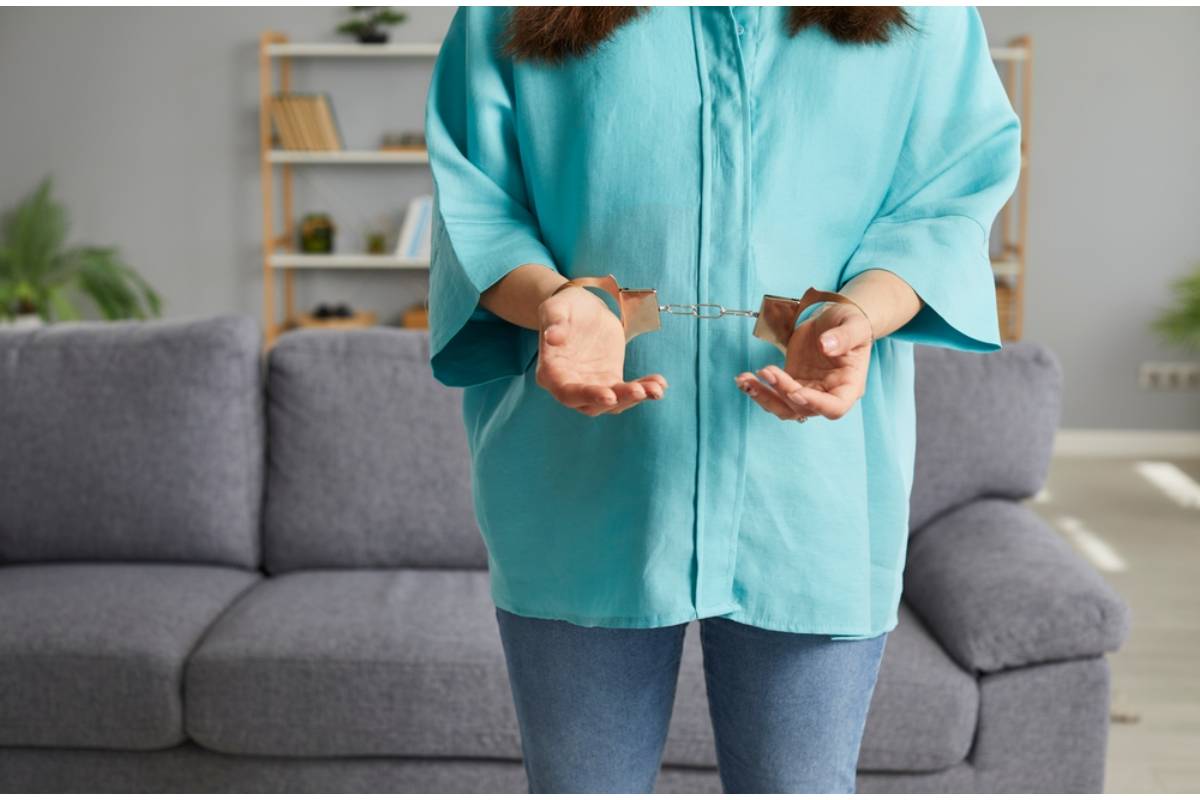
A Daughter Says Her Mother Blamed Her for Getting Arrested After a Violent Fight Over a Vape, and Her Mother Still Refuses to Apologize

A person shared her story about a fight with her mother that began over a marijuana vape and ended with police taking her mother away in handcuffs. At 19, she said marijuana possession was legal for her in her state, although her mother had always been inconsistent about how she felt about her daughter’s use. One morning, while the young woman was getting ready for work, her mother suddenly entered the bathroom and tried to take the vape from her.
The daughter refused to hand it over, and the argument quickly became physical. According to her account, her mother assaulted and strangled her, leaving visible bruises across her body. What started as a disagreement over an object turned into a domestic violence incident serious enough to send one woman to the hospital and the other to jail.
The Fight Became Something Much More Serious
The daughter said the violence left her frightened and badly shaken. She called the police, and her mother spent the night in jail while the daughter was taken for medical evaluation. Hospital staff photographed the injuries, and the young woman said doctors even performed scans because of the severity of what had happened.
Yet even during that terrifying night, the daughter felt guilty. She reportedly sobbed to police officers and begged them not to arrest her mother, even asking whether the charges could be dropped. The officers had to explain that the decision was no longer hers to make.
Guilt Took Over Before Anger Could
At first, the daughter described herself as feeling like the worst person alive for getting her mother arrested. She imagined her mother sitting in a jail cell and blamed herself for how the situation had unfolded. There was a painful contradiction in her feelings because she was the person who had been hurt, yet she was still worrying about how the consequences affected the person who hurt her.
That guilt is what made what happened later so startling. The daughter expected that the seriousness of the incident might eventually sink in for her mother. Instead, weeks passed with almost no communication, leaving the young woman to process the situation largely on her own.
The First Conversation Was About a Raincoat
When the two finally interacted again, the daughter said the subject was not the assault. She had borrowed her mother’s raincoat while rushing to work on a stormy day and returned home completely soaked after biking through the rain. Instead of asking whether her daughter was okay, her mother reportedly complained that she had taken the coat and would probably never wash it.
The daughter admitted that she did not wash it because the exchange irritated her so much. After everything that had happened, the focus had somehow shifted to a raincoat. The bizarrely ordinary complaint became a preview of how completely her mother seemed to be avoiding the much bigger issue sitting between them.
Then Her Mother Started Giving Orders Again
Soon afterward, her mother approached her about cleaning her bedroom and bathroom. The daughter acknowledged that she had been putting the chores off because she was busy and tired from work, and she accepted that she needed to handle them. For a moment, the conversation appeared to be about nothing more than unfinished household responsibilities.
Then her mother returned less than 40 minutes later and repeated the order. According to the story, she became increasingly angry and warned that she would enter the daughter’s room the next day and throw away her belongings if the cleaning was not done. The daughter again said she would take care of it, but this time she also asked her mother to leave.
The Daughter Finally Drew a Line
The young woman then remembered a boundary her therapist had encouraged her to establish. She told her mother that the next time her mother wanted to speak with her, it needed to begin with an apology. Otherwise, she said, she would not engage in the conversation.
That boundary apparently struck a nerve immediately. Her mother became furious and argued that the entire incident could have been avoided if her daughter had simply handed over the vape. The daughter could hardly believe what she was hearing because her mother was still presenting the decision not to surrender the vape as the real cause of the violence.
Her Mother Blamed the Victim
The daughter reminded her mother that refusing to hand over a vape was not permission to assault someone. She pointed out that the police had seen her injuries, arrested her mother, and that she had needed medical treatment afterward. She also reminded her that hospital staff had documented the bruises and examined her after the attack.
Instead of acknowledging any of that, the mother reportedly said she did not care. She even dismissed the therapist’s opinion and told her daughter that she would not apologize. The conversation had reached an extraordinary point where the daughter was asking for accountability and her mother was treating the very idea of accountability as an insult.
Then Came the Threat About Her Future
The mother reportedly told her daughter that she planned to remove her from her health insurance when she turned 21. She also made it clear that she did not care what the daughter’s therapist thought about their relationship. Those statements added another layer of tension because the daughter was already trying to become financially independent.
She told her mother that she was saving money and hoped to move in with a friend. The goal was no longer simply to win an argument or receive an apology. It was beginning to look like a long-term plan to create enough distance that her living situation would not depend on someone who had already shown she could become violent.
The Court Case Was Still Waiting
The family was also facing an upcoming court case related to the domestic violence incident. At first, the daughter had been seriously considering dropping the charges because she loved her mother and felt conflicted about what had happened. Her feelings had not disappeared just because the violence had occurred.
But the mother’s refusal to apologize changed something inside her. The daughter admitted that she no longer knew whether she could bring herself to abandon the case simply to make her mother more comfortable. What had initially been a painful decision about punishment had become a question of whether the consequences might finally force her mother to confront what she had done.
Her Mother Had Been Ordered to Get an Evaluation
The daughter also revealed that the court had ordered her mother to undergo a mental health evaluation. She did not know exactly what had happened during that process or whether her mother was cooperating with it. That uncertainty added to the strange mixture of hope and skepticism surrounding the case.
Part of the daughter still seemed to wonder whether something could change. At the same time, her mother’s behavior after the assault gave her very little evidence that genuine reflection had taken place. The court could order an evaluation, but it could not make someone honestly accept responsibility.
A Response From a Person Offered a Blunt Reminder
A response from a person argued that the daughter should continue with the court process because her mother needed to face the consequences of her actions. The person also suggested that court-ordered treatment or other consequences might eventually give the mother an opportunity to change, while making it clear that the violence had not been the daughter’s fault.
Another response from a person emphasized something equally important: the daughter did not necessarily control whether the case continued. The criminal justice system can take over after police become involved, meaning that feeling guilty about an arrest does not automatically mean the victim can simply undo what happened.
Other People Recognized the Pattern Immediately
Several responses from people focused on the mother’s apparent inability to accept responsibility. One person compared accountability to something narcissistic parents often avoid, saying they may try to push the consequences of their actions onto somebody else instead. The daughter had already experienced that reversal when her mother claimed the assault would never have happened if the vape had simply been surrendered.
Another response from a person offered an analogy about loving something that repeatedly causes harm. The person compared it to loving favorite foods that had become harmful and realizing that affection could remain while distance became necessary. That idea seemed particularly relevant because the daughter repeatedly said she loved her mother despite everything that had happened.
Love Made the Decision Much Harder
The daughter did not portray her mother as terrible every second of every day. She said that when her mother was not angry or abusive, she could be a genuinely fun person to spend time with. That made the situation more complicated than simply deciding whether she loved her.
She could love her mother and still be frightened of her. She could remember good moments and still remember being strangled badly enough to require medical attention. Those two realities were uncomfortable together, but the daughter’s story made clear that one did not erase the other.
The Threats About Being Kicked Out Added More Pressure
During the argument, her mother repeatedly asked why the daughter continued living in the house if she was so unhappy. The daughter responded that the house technically belonged to her stepfather, although she described him as being strongly under her mother’s influence. She also believed that if they wanted her gone, there would need to be a formal process rather than simply throwing her out during an argument.
The practical problem was that moving out was easier said than done. The daughter was 19, working, and saving money, but she did not yet have everything she needed to live independently. A response from a person pointed out that telling someone to leave without considering whether they can actually afford housing can turn well-meaning advice into another impossible demand.
Saving Money Became Part of the Escape Plan
Despite the uncertainty, the daughter had already started building a way out. She was saving money with the goal of moving in with a friend, which would give her an alternative to continuing under the same roof. The plan was modest, but it represented something much larger than a change of address.
For perhaps the first time, she was thinking about her future without making her mother’s emotional reactions the center of every decision. The idea was not to punish her mother or win the family argument. It was simply to create a life where safety and independence were not dependent on whether her mother happened to be calm that day.
One Response Warned Her to Protect Her Independence
A response from a person advised the daughter to make sure her savings and important documents were secure. The person raised concerns about financial access and suggested keeping paperwork and personal records somewhere her mother could not interfere with them. The advice reflected a larger fear that the conflict could become more complicated as the court case continued.
Other responses encouraged her to consider domestic violence resources and possible relocation assistance. The emphasis was not on making a dramatic escape overnight, but on finding practical ways to reduce her dependence on a volatile household. Suddenly, the daughter’s plan was not merely about saving enough for rent, but about carefully building a safe exit.
The Daughter Had Expected an Apology
Perhaps the most revealing part of the entire story was how little she had initially demanded from her mother. She did not tell her mother to erase the past or become a completely different person overnight. She asked for an apology before they continued having ordinary conversations.
Instead, even that small request reportedly triggered anger. The daughter was being asked to resume everyday life while the person who had allegedly assaulted her refused to say she was sorry, creating a bizarre situation in which cleaning a bathroom was treated as a more urgent subject than domestic violence.
The Real Turning Point Was Her Mother Saying “I Don’t Care”
The daughter’s memories of the hospital, the bruises, the police, and the arrest had all represented undeniable consequences. Yet the words that seemed to affect her most were her mother’s reported declaration that she simply did not care. In that moment, the daughter stopped hearing an argument about a vape and started hearing a much bigger statement about whether her mother recognized her pain at all.
That may have been the moment when the guilt began giving way to clarity. She could not force her mother to feel remorse, and she could not make her understand accountability through one more argument. What she could control was what she did next.
The Twist Was That the Arrest Was No Longer the Main Issue
At the beginning of the story, the daughter was devastated that her mother had been arrested. She cried to police and wanted the charges gone because she felt responsible for what was happening to her parent. By the end, she was questioning whether protecting her mother’s comfort was worth sacrificing her own safety.
The arrest itself was no longer the biggest source of conflict. The larger problem was that her mother had apparently survived the immediate consequences without accepting responsibility for what led to them. The daughter was beginning to understand that loving someone did not require pretending that their actions were acceptable.
She Was Starting to Choose Herself
The daughter remained conflicted, but her priorities were changing. She was working, saving money, listening to her therapist, considering her legal situation carefully, and thinking about moving in with a friend. Those steps were small individually, but together they represented a major shift away from the guilt that had consumed her immediately after the arrest.
Her story began with a young woman crying because her mother was sitting in a jail cell. It ended with that same young woman realizing that her mother’s consequences were not hers to carry. The apology might never come, the relationship might never return to what it was, and the court might determine what happens next, but one thing had changed completely: she was finally treating her own safety as something that mattered.