A Mom Found Out Her Daughter Had Been Trading Seats With Classmates All Year Just to Avoid Sitting Near a Window Facing Her House

Parents often think they understand the little routines that shape their children’s school days. Melissa knew which classes her daughter liked, which teachers she talked about at dinner, and even which cafeteria meals she avoided.
Nothing in those daily conversations hinted that sixteen year old Sophie had been quietly changing one part of her schedule almost every single day. The truth only surfaced because of an email that seemed too minor to deserve a second thought. By the end of that week, Melissa realized her daughter had been carrying a burden that no report card or parent teacher conference had ever revealed.
An Email About Classroom Seating
Melissa was checking her inbox during lunch when she noticed a message from Sophie’s history teacher, Mrs. Callahan. It was not a disciplinary notice or an academic concern. The teacher simply wanted parents to know that seating assignments had been flexible throughout the semester because students often traded places before class began.
One sentence stood out.
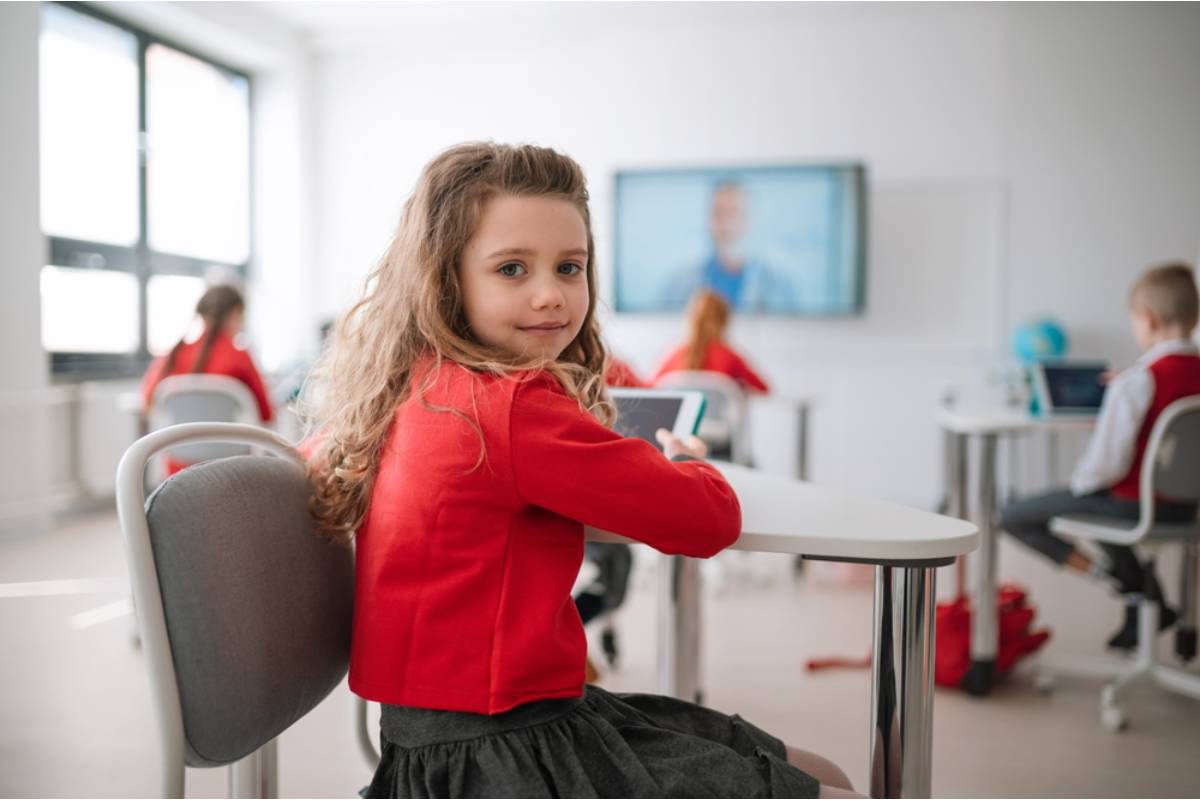
Mrs. Callahan wrote that Sophie always found someone willing to switch with her whenever she was assigned to the window side of the classroom. The teacher assumed it was simply a preference, but after seeing it happen so many times, she wondered if there was a reason parents should know.
The Question That Changed Everything
That evening Melissa waited until after dinner before bringing it up. She tried to keep her voice casual.
“I got an email from your history teacher.”
Sophie’s shoulders stiffened before she even looked up.
Melissa continued gently.
She said you’ve been switching seats almost every day if you’re near the window. Is there something wrong with that side of the room?”
Instead of answering, Sophie quietly asked, “Is she upset with me?”
That response told Melissa the issue ran much deeper than a favorite seat.
A Window That Looked the Wrong Direction
After several minutes of silence, Sophie finally explained.
“The history classroom is on the third floor.”
Melissa nodded.
“You can see our neighborhood from that side.”
Melissa still did not understand.
“So?”
Sophie looked toward the floor.
“I can see our house from one of the windows.”
The room became completely quiet.
Memories Connected to a Single View
Melissa assumed seeing home during school would be comforting.
Sophie shook her head.
“It isn’t the house now.”
Melissa frowned.
“What do you mean?”
“When I look out that window, I remember everything that happened there.”
Her words carried a weight Melissa had not expected.
The Year Everything Changed
Two years earlier, Melissa and Sophie’s father had gone through a difficult separation. There had been arguments, long periods of silence, and months of uncertainty before her father moved into a different apartment.
Melissa believed they had protected the children from the worst of it.
Sophie remembered something different.
She remembered standing in her bedroom watching moving boxes disappear into a truck. She remembered pretending to do homework while listening to conversations through closed doors. Every time she saw the roof of the house from school, those memories returned before she could stop them.
Nobody at School Knew the Real Reason
Melissa asked how long she had been changing seats.
“Since the second week of school.”
She explained that classmates never questioned it because someone always preferred sitting closer to the window.
Some students thought Sophie disliked sunlight.
Others assumed she needed to see the board more clearly.
Nobody knew she simply wanted to avoid spending fifty minutes staring toward a place connected to memories she still struggled to organize.
One Friend Had Quietly Figured It Out
The following afternoon, Melissa met Sophie after school. As students poured into the parking lot, a girl named Hannah waved before walking over.
“You must be Sophie’s mom.”
Melissa smiled politely.
Hannah hesitated.
“I hope you don’t mind that I switch seats with her.”
Melissa looked surprised.
“You knew?”
Hannah nodded.
“Not exactly why. I just knew she looked anxious every time she sat near that window.”
Instead of asking questions, Hannah had simply traded places whenever she could.
Mrs. Callahan Shared Her Perspective
Melissa scheduled a meeting with Mrs. Callahan later that week.
The teacher admitted she had almost ignored the repeated seat changes.
“Students have little habits,” she explained.
“But Sophie’s was incredibly consistent.”
She never complained.
She never asked for special treatment.
She simply solved the problem herself every single day.
Mrs. Callahan finally reached out because she believed patterns often tell stories children never say out loud.
Looking Through the Classroom Window
Before leaving the school, Mrs. Callahan invited Melissa into the empty history classroom.
She pointed toward the large windows overlooking the neighborhood.
“There,” Sophie had once quietly said.
Melissa followed her finger.
Far in the distance sat their house.
It looked tiny from the third floor, almost peaceful.
Yet Melissa suddenly understood how a single familiar rooftop could unlock hundreds of painful memories in seconds.
A Conversation Sophie Had Avoided
That evening Melissa apologized.
“I didn’t realize you still carried so much from that time.”
Sophie looked surprised.
“I didn’t want you to feel guilty.”
Melissa reached across the table.
“You shouldn’t have had to carry it alone.”
For the first time, Sophie admitted she often worried that talking about those memories would reopen old wounds for everyone else. Staying quiet had seemed easier.
Her Father Learned the Truth
Melissa called Sophie’s father and asked if he could stop by one evening.
After hearing the story, he looked stunned.
“I thought you were okay.”
Sophie gave a small smile.
“I thought I was too.”
He admitted he had focused so much on creating stability after the separation that he never considered how ordinary places might continue reminding her of that difficult season.
The conversation lasted for hours.
Nobody argued.
Nobody blamed each other.
Instead they listened.
A Different Way of Looking Back
The following weekend, Sophie’s father suggested something unexpected.
Instead of avoiding the old memories, he invited Sophie to walk through the neighborhood with him.
As they passed the house, they talked about more than the separation.
They remembered birthday parties in the backyard.
Snowball fights.
The tree where Sophie learned to ride her bike.
Slowly the painful memories stopped standing alone.
They became part of a much larger picture.
Returning to the Same Classroom
Several weeks later, Mrs. Callahan introduced another seating rotation.
This time Hannah quietly looked at Sophie and whispered, “Want to switch?”
Sophie glanced toward the window.
After a long pause, she smiled.
“I think I’ll stay today.”
She was nervous for the first few minutes.
She even caught herself looking away.
Eventually she looked outside.
The house was still there.
So were the memories.
But they no longer arrived by themselves.
They came alongside newer conversations, shared understanding, and the realization that difficult chapters did not erase the good ones.
Finding Peace Beyond the View
Near the end of the school year, Melissa asked whether Sophie still worried about sitting by the window.
“Sometimes,” Sophie admitted.
“But not like before.”
She explained that the view had not changed.
The neighborhood looked exactly the same.
What had changed was the story she connected to it. Instead of seeing only the hardest season of her life, she now remembered the people who had chosen to help her carry those memories once they finally understood what she had been facing.
Melissa realized how easily adults overlook silent acts of self protection. Her daughter had spent an entire school year rearranging seats, not because she wanted attention, but because she was trying to make it through each day without reopening a wound she could not explain.
Once that hidden struggle was brought into the light, she no longer had to solve it alone. The window had never truly been the problem. It was simply the place where unspoken memories had been waiting for someone to finally notice them.