A Mom Says Her 7-Year-Old Still Loves Playing Pretend With Her Toddler Brother, and She’s Already Worried About the Day That Imagination Starts to Fade

A mom found herself thinking about childhood after having a conversation with another mother at her daughter’s Girl Scout troop. Their daughters are both around seven, with their eighth birthdays approaching, but their attitudes toward pretend play couldn’t have been more different. The other mother explained that her daughter refused to play pretend because she believed it was something only little kids did. That simple comment left the mom unexpectedly sad.
The sadness wasn’t really about one child refusing to play pretend. It was about realizing that children don’t all grow out of childhood interests at the same time, and sometimes they suddenly decide something they once loved is embarrassing or immature. The mom wondered whether having much older siblings had influenced the girl’s attitude. She also started thinking about her own daughter and how long those imaginative little games might continue.
A Sweet Scene Between Brother and Sister
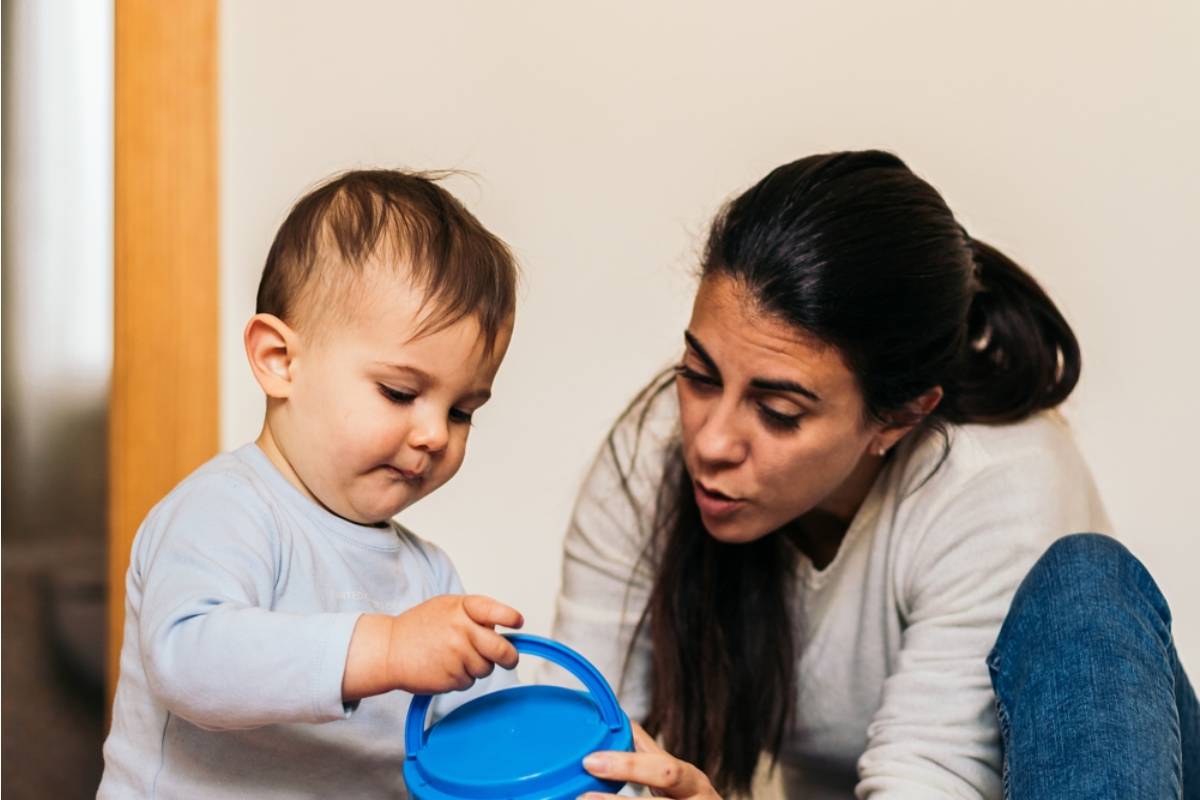
The thought became even more emotional that night when the mom watched her seven-year-old daughter playing pretend with her two-year-old brother. The older child was completely engaged, happily entering whatever imaginary world they had invented together. Her toddler brother was still at the age where almost anything could become part of a game. Watching them together made the mother appreciate the moment in a way she hadn’t expected.
There was something especially touching about seeing a seven-year-old willingly meet a two-year-old on his level. Instead of dismissing his silly ideas, she joined him and made them part of their own little story. The mom knew those scenes wouldn’t last forever, and that knowledge suddenly made an ordinary evening feel precious. She began wondering whether there was a specific age when children simply closed that door behind them.
She Couldn’t Remember Her Own Turning Point
The strange part was that the mom couldn’t remember exactly when she stopped playing pretend herself. Childhood had clearly changed at some point, but there was no memorable day when imagination suddenly disappeared. There hadn’t been an obvious final game followed by an announcement that she was officially too old. It had probably happened slowly, mixed in with school, friends, hobbies, and the growing awareness of what other people considered cool.
That uncertainty made her even more curious about other families. She wanted to know whether children truly stopped pretend play at a certain age or whether it simply changed shape. Perhaps a child stopped playing with dolls but started inventing stories. Maybe toy adventures became elaborate games with friends, creative writing, art, or even imaginary characters that adults could barely see from the outside.
The Mom Had More Experience With Pretend Play Than Most
There was another detail that made the conversation especially interesting. The mom works full-time as a speech therapist, primarily with children from birth to five years old, so pretend play wasn’t just something she occasionally watched her kids do. It was also a major part of her professional world. She had spent years seeing how children use imaginative play to communicate, explore ideas, and make sense of experiences.
That background gave her a different perspective on what might look like ordinary silliness. She understood how much could happen inside a child’s imaginary world, even when the game seemed simple from the outside. Instead of seeing pretend play as something children should eventually abandon, she saw it as something that could evolve. Her concern wasn’t really that her daughter would grow up, but that she might one day feel pressured to stop being imaginative.
Then Came a Story About Childhood Trauma
The mom also remembered a presentation from a professional conference that had stayed with her for years. The presentation described a young girl who had seen frightening news coverage of the Oklahoma City bombing and later experienced nightmares. The girl reportedly used pretend play to create a different explanation for what had happened. In her version of events, the children at a nearby daycare had been away on a field trip when the bombing occurred.
Somehow, acting out that imaginary version of the event helped the child process what she had seen. Her nightmares stopped after she worked through the experience through pretend play. The story had remained with the mom because it demonstrated how imagination could be far more powerful than adults sometimes realize. Pretend play wasn’t simply about pretending to be a princess or running a pretend restaurant.
One Adult Said the Imagination Never Really Left
A response from a person offered perhaps the most reassuring perspective of the entire discussion. At 38 years old, the person said role-playing games had remained one of their biggest hobbies. The form of pretend play had changed dramatically over the years, but the imaginative part never disappeared. Instead of toys and childhood games, the adult now had different platforms for creating stories and characters.
That idea quickly became a theme throughout the responses. Several people pointed out that adults still spend enormous amounts of time pretending, even if nobody calls it that anymore. Tabletop role-playing games, theater, storytelling, writing, gaming, and even elaborate fictional universes all require people to step outside ordinary reality for a while. The difference is often the packaging, not the imagination itself.
A Seven-Year-Old Was Already Changing the Rules
Another person shared that their seven-year-old son still played pretend, although his games no longer looked like toddler games. He interacted with recurring characters his parent had created almost by accident, treating them as though they were real people. Those characters had gradually developed their own histories and personalities because the child kept asking for them to return.
His imagination also appeared in the things he built. A cardboard house wasn’t simply a cardboard house anymore because he invented reasons for every feature it contained. A car ramp could become part of a larger world, and even something built inside Minecraft could come with a detailed story about the imaginary people who lived there. Pretend play hadn’t vanished at seven; it had simply become more sophisticated.
Another Person Turned Imagination Into Writing
A response from a person in their early thirties described a similar transformation. They said they had never really stopped playing pretend, but eventually began expressing it through writing fanfiction. The imaginary characters that once might have existed in physical games were now being developed through words and stories. Even years later, the person still found themselves acting out dialogue around the house.
The funny part was that this adult still tested character voices while doing everyday chores. They wanted to hear whether certain lines sounded natural for the personalities they had invented. From the outside, an adult casually practicing fictional dialogue while cleaning the house might sound unusual. In reality, it was simply another form of the same imaginative impulse that children use when they turn a stuffed animal into a talking character.
Teenagers Hadn’t Necessarily Left Pretend Behind
One parent said her 14-year-old daughter still played pretend, although she sometimes asked her mother to leave so she could do it without feeling judged. That small request said a lot about how social pressure can change before imagination itself disappears. The daughter still had an active imaginary world, but she was becoming more conscious of how other people might perceive it. Her nearly 17-year-old child also admitted to occasionally pretending.
Interestingly, some of those games involved scenarios built around things the teenagers didn’t want to do. Chores could become part of a fictional scenario, turning something boring into a game. The parent remembered doing something similar as a teenager, which made the habit seem less childish and more like a long-running human trick for making ordinary life more entertaining. The imaginary play was still there, only hidden behind a thicker layer of self-awareness.
Growing Up Could Make Children Reject What They Love
The same parent also described watching one of her children go through a phase of rejecting anything that seemed childish. One daughter eventually got rid of a beloved toy collection during a period when she desperately wanted to appear older. Later, she regretted that decision, proving that growing up doesn’t always mean wanting to leave every childhood interest behind forever. Sometimes children simply feel that they are supposed to leave those interests behind.
A younger daughter went through a similar stage in middle school, suddenly deciding she was no longer a little kid. Her wardrobe shifted toward brown and beige, as though her personality had been replaced with the most serious color palette imaginable. Then, during one summer, pink and purple suddenly returned in full force. She eventually admitted that she had never actually stopped loving unicorns.
For Some Kids, Pretend Play Ends Much Earlier
Not every child follows the same timeline, and one parent explained that clearly. Her oldest child was naturally more serious and seemed to lose interest in pretend play around age seven or eight. Another child, now 13, occasionally joined pretend games with younger siblings, while her nine-year-old preferred experiments, art, and writing. None of those interests necessarily meant a lack of imagination.
A response from a person gently pushed back on the idea that being “mature” automatically meant having less imagination. The original parent clarified that her older child simply had interests that moved beyond traditional pretend games. He was more serious by nature and gravitated toward other forms of creative thinking. That distinction mattered because children can stop pretending without stopping their imagination.
Siblings Might Change the Timeline
The older-sibling theory came up again in another response. One parent said her oldest child played pretend until around age 10, while a younger child in the same family stopped around age six. The two siblings had a gap of more than six years, which meant the younger child was constantly exposed to someone much older. That could make a young child feel pressure to identify with older interests sooner.
The parent had even started encouraging the middle child to play pretend with the youngest sibling. The goal wasn’t to force anyone to act younger than they felt. It was simply an attempt to preserve something enjoyable for a little longer. The idea was less about stopping development and more about letting childhood last at its own pace.
Some Children Took Pretend Play Into Middle School
Another person said their child had continued pretend play until roughly 11, although the games had become much more elaborate. Instead of simply acting out small scenes with toys, the child and friends created complicated games together. Even a 14-year-old sometimes joined when the theme was interesting enough. One memorable example involved a dramatic “stuffy court” involving stuffed animals.
Another parent said her 11-year-old mostly needed other kids to participate, while her nine-year-old was perfectly happy inventing games alone. That difference showed how much personality affects the form of imaginative play. One child might need a whole group to build a fictional world, while another can spend hours creating one independently. Neither version is necessarily more imaginative than the other.
Sometimes Imagination Simply Changes Its Clothes
A daughter who had just turned 12 provided another clue about what happens next. Her parent said she had largely stopped pretend play around the previous year and become more interested in digital games and art. That could sound like the end of imaginative play, but digital games and creative projects can involve plenty of invented worlds and storytelling. What changes is often the tool being used.
Another person admitted that they had stopped traditional pretend play around age 12 or 13 while playing with their sibling. That timing was close to what several others described, but it was hardly universal. Some children left earlier, some held on much longer, and some appeared to leave only to come back later in a different form. There was no single magic birthday when imagination packed its bags.
One Child Had Never Understood Pretend Play
Perhaps the biggest twist came from someone who never really enjoyed pretend play in the first place. As a child, they didn’t understand what friends were trying to do when they played games such as “house” or invented elaborate fictional scenarios during recess. Instead, they preferred decorating dolls, dressing up Barbies, and making crafts. For them, imagination had always existed, but it had taken a completely different form.
Now that person had a four-year-old daughter who was beginning to invent little stories with dolls and toys. The parent happily played along, seeing firsthand how differently the next generation could enjoy something they once found confusing. It was a reminder that there isn’t one correct way to be imaginative. Some kids act out stories, others build them, write them, draw them, or simply construct strange little worlds in their heads.
Maybe Pretend Play Doesn’t Actually End
One response summed up the whole discussion with a laugh, suggesting that after about age eight, personality starts playing a much bigger role. Some children stop, some continue privately, and some apparently grow up to become theater kids. That joke landed because it captured the strange truth hiding underneath the original question. Childhood imagination doesn’t always disappear when childhood ends.
The mom had started the conversation wondering when her daughter would stop playing pretend, but the responses offered a much more complicated answer. There might not be a final day at all, because imagination can simply change its costume. A stuffed animal courtroom can eventually become a role-playing game, a story, a video game world, a novel, a performance, or a character someone invents while doing dishes.
The Question Was Never Really About Age
By the end of the conversation, the most interesting realization was that age might not be the best way to measure the end of pretend play. Some children stop at six, some at eight, some at 12, and some apparently never stop. Other children seem to stop one activity only to redirect the exact same creative energy somewhere else. The real shift may be less about losing imagination and more about learning which forms of imagination feel socially acceptable.
The mom’s seven-year-old daughter was still happily pretending with her two-year-old brother, and that simple scene suddenly carried much more meaning. She wasn’t just watching two siblings play; she was watching one child teach another that imagination could still be fun. The twist was that the thing she feared losing might not disappear at all. It might simply grow up alongside her daughter, becoming harder to recognize but never completely leaving.