The CPSC Says Stop Using 393,000 Power Quick Pot Pressure Cookers Sold at Walmart and Amazon After 24 Reports of Serious Burns, and Tristar Has Declined to Recall Them

Federal safety regulators are telling owners of about 393,000 Power Quick Pot pressure cookers to stop using them and throw them away. The U.S. Consumer Product Safety Commission said on Oct. 15, 2026, that the lid on the 6-quart cooker can open while the pot is still pressurized, and it has received 24 reports of hot food and liquid being expelled, causing serious burns.
The importer, Tristar Products, has declined to recall the cookers or offer customers a remedy, which is why the warning came from the agency alone.
The cooker covered by the warning
The CPSC warning (No. 27-030) covers the Power Quick Pot 6-Quart Pressure Cooker, model Y6D-36. It is an electric cooker with a stainless-steel body, a black pressure lid, button controls and a digital display for temperature and cooking functions. The words “Power Quick Pot” are printed on the front, and the model number is on a label on the back of the unit.
The cookers were sold on Walmart.com, Amazon.com, Ebay.com and through other retailers nationwide from about July 2018 to November 2023, for $44 to $160. They were made in China and imported by Tristar Products Inc. of Altamonte Springs, Florida.
Because sales ran for more than five years and ended nearly three years ago, many of these cookers may now sit in the back of a cabinet, in a relative’s kitchen or on a thrift store shelf. The model label on the back is the quickest way to tell.
How the burns happen
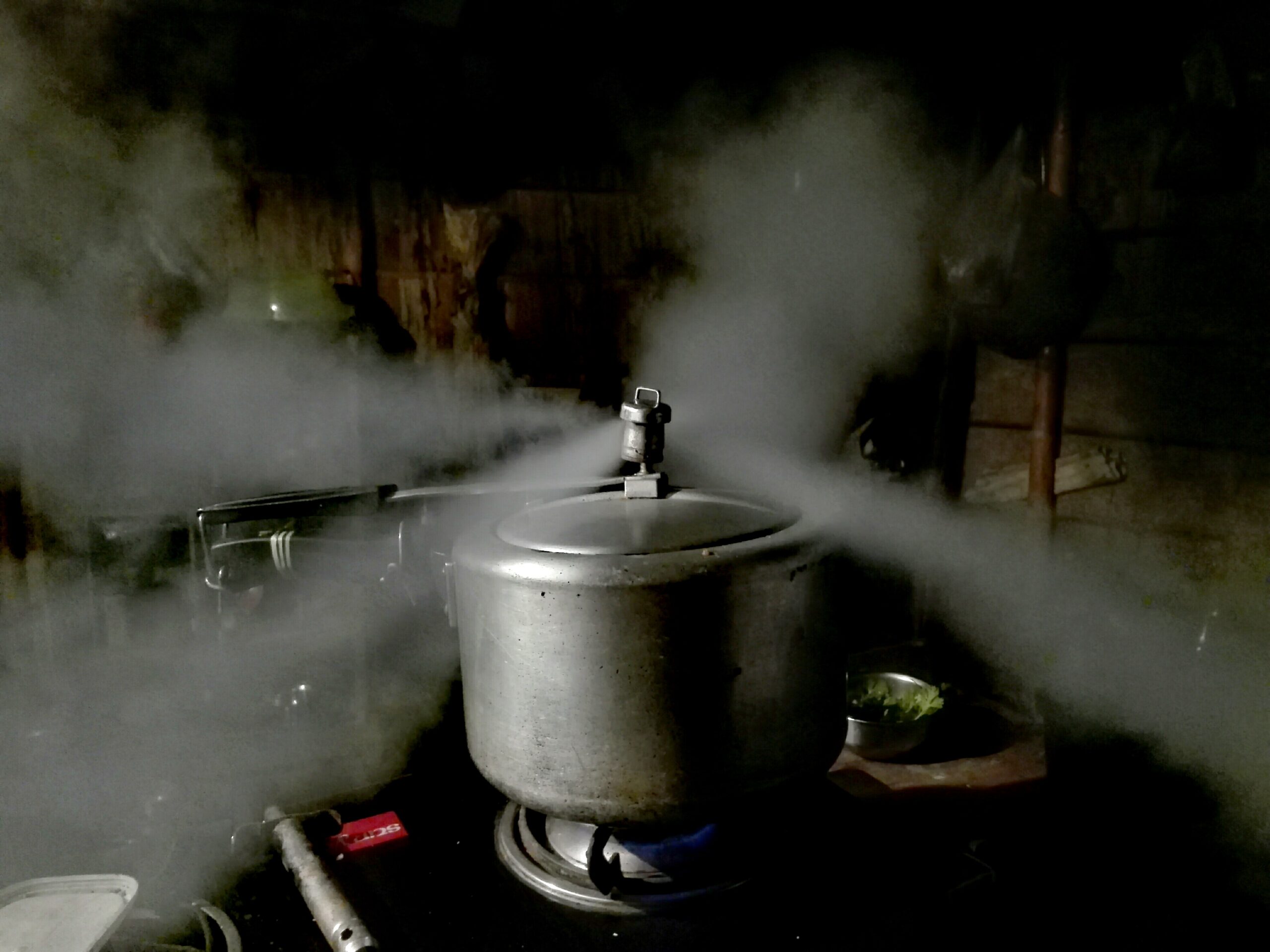
A pressure cooker works by sealing steam inside the pot so food cooks faster at a higher temperature. The lid is supposed to stay locked until the pressure drops. On the Power Quick Pot, the CPSC said, the lid can be opened while the contents are still under pressure, which can send scalding food and liquid out of the pot without warning.
That is the hazard behind all 24 reports the agency has received, each involving hot contents expelled unexpectedly and serious burn injuries. The notice does not say where the incidents happened, when they were reported or whether any involved children. A sudden burst of boiling soup or chili can reach anyone standing near the counter.
The same general hazard has led to other recalls. In October 2023, Best Buy recalled about 930,000 Insignia pressure cookers after incorrect volume markings led people to overfill the inner pot. Best Buy received 31 reports of contents expelled under pressure, including 17 reports of burns, some of them second-degree or severe. In that case, owners were offered a free replacement inner pot and floating locking valve, a remedy that does not exist for Power Quick Pot owners because Tristar has not agreed to one.
What the CPSC wants owners to do
The agency’s instruction is short. Owners should stop using the cookers immediately and dispose of them. They should not sell them or give them away, because passing one along simply moves the risk to another household.
Burns or other problems with the cookers can be reported at SaferProducts.gov. The CPSC’s hotline is 800-638-2772 (TTY 800-638-8270), staffed from 8 a.m. to 5:30 p.m. Eastern time.
There is no refund, repair or replacement attached to this warning. Families who bought one will have to absorb the cost of a new appliance if they want to keep pressure cooking.
Why there is a warning instead of a recall
Most product recalls are announced jointly by the CPSC and the company, which agrees to offer a refund, repair or replacement. When a company will not agree, the agency can still warn the public on its own. A February 2025 analysis by the law firm Morrison & Foerster explained that these unilateral warnings are issued under Section 6(b) of the Consumer Product Safety Act.
That section of federal law, 15 U.S.C. 2055(b), generally requires the CPSC to notify a company at least 15 days before it publishes information that identifies the company’s product, and to give the company a chance to comment. A company can go to federal court to try to block a release if it believes the agency did not take reasonable steps to make sure the information is accurate.
Such warnings used to be rare. The same Morrison & Foerster analysis said the CPSC issued only two of them between 2011 and 2019 but nine in 2024. A follow-up from the firm in June 2025 reported that the agency issued 28 recalls and warnings in a single week in May 2025, a one-week record, and that all of the warnings that week were issued without the companies’ approval.
Tristar’s response so far
The CPSC notice states that Tristar “has refused to recall the products or offer consumers a remedy.” News coverage of the warning, including a report by Kelly Broderick of WMAR 2 News in Baltimore, did not include a statement from the company.
The Power Quick Pot warning is one of several product alerts families have seen this fall, alongside a run of baby product recalls in 2026 and the gripe water recall tied to unlisted alcohols.
For parents who rely on a pressure cooker for fast weeknight meals, the practical step is to check the label on any Power Quick Pot in the house. If it reads Y6D-36, the CPSC’s advice is to stop using it now, unplug it and get it out of the kitchen for good rather than donating it.
Get stories like this by email. Sign up for The Parent Diaries Letter.
This article was produced with AI assistance and edited for accuracy against the sources linked above.
Image: “Pressure cooker releasing water vapor” by Nayan j Nath, CC BY-SA 4.0, via Wikimedia Commons