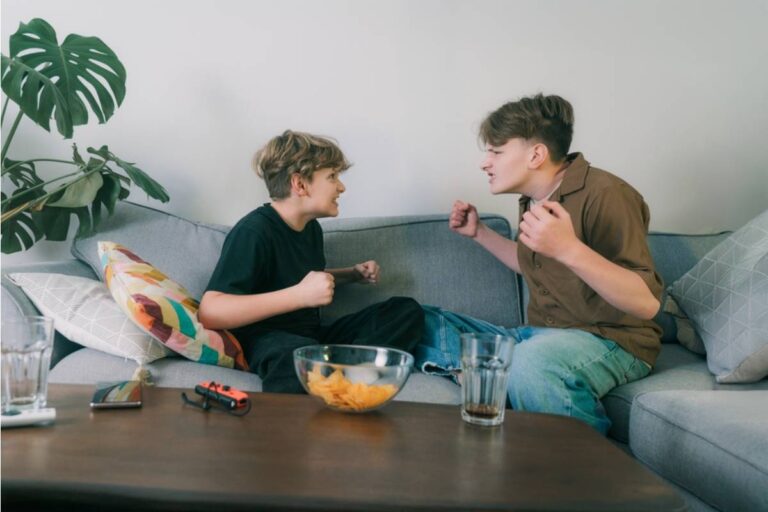
A Mom Says Her 8-Year-Old Cries Every Sunday Because He Refuses to Go Sailing, Then Comes Home Saying It Was His Best Day Ever

A person shared his story about his eight-year-old son, who had developed an unusual routine around almost every activity he was supposed to attend. The strangest example happened every Sunday, when the boy was scheduled to go sailing, something he had been doing for several years and supposedly loved. Yet two hours before class, he would begin insisting that he absolutely wasn’t going.
His protests weren’t casual complaints about being tired or wanting to stay home. He would become genuinely upset, sometimes crying while repeatedly telling his parents that they couldn’t make him go. The family had heard the speech so many times that they eventually stopped arguing with him about it and simply helped him get ready.
Sailing Was Supposed to Be His Favorite
There was one enormous problem with the boy’s argument: he actually loved sailing. His parents lived near a lake, and sailing had become a regular part of his life through weekly classes. Nothing about his behavior once he arrived suggested that he was secretly miserable or being forced into something he couldn’t stand.
Instead, he would arrive at class and immediately transform. He was loud, enthusiastic, and clearly having an excellent time, with his parents able to see from a distance that the child who had been crying at home was nowhere to be found.
Then Came the Complete Turnaround
Once the class was over, the contradiction became almost comical. The same child who had recently declared that he wasn’t going sailing would suddenly announce that sailing was his best sport ever. He would insist that he wasn’t quitting and was definitely coming back the following week.
His parents weren’t even getting a reluctant, “Fine, that wasn’t so bad.” They were getting enthusiastic declarations that sailing was wonderful and that he couldn’t wait to do it again. Then, somehow, the next Sunday would arrive and the entire performance would begin from the beginning.
His Parents Realized It Wasn’t Just Sailing
Eventually, the family noticed that sailing wasn’t actually the common denominator. The boy behaved similarly before plenty of other things, including activities he had repeatedly enjoyed. A playdate at the pool with his best friend could trigger the same resistance, even though the friend was someone he genuinely wanted to see.
Beach trips produced the same reaction as well. The family could spend several days at the beach, meaning there wasn’t even a long gap between visits, and he could still become distressed about going outside to enjoy himself.
The Pattern Made No Sense to Him Either
His parents sometimes pointed out the obvious contradiction. They reminded him that he always enjoyed the activities once he actually started them, hoping that seeing the pattern might help him understand what was happening. Instead, the boy would confidently reject the evidence.
His favorite response was essentially that this time would be different. He would tell them that perhaps he really would hate the activity this time, even though his own history suggested otherwise.
A Response From a Person Offered a Clue
A response from a person suggested that the boy might not actually be struggling with the activities themselves. The difficult part could be the transition from whatever he was currently doing into something else. From that perspective, the sailing class was only the destination, while the real battle was getting out the door.
The person wondered whether the child also struggled when plans changed in other parts of everyday life. Something as ordinary as changing dinner plans, for example, could reveal whether unexpected transitions were generally difficult for him.
The Problem Might Be Leaving the Comfortable Moment
That idea gave the strange pattern a different shape. At home, the boy knew exactly what he was doing and was probably comfortable with the current situation. Going sailing meant stopping that activity, getting dressed, gathering his belongings, leaving the house, traveling to the lake, and switching his attention to something else.
For some children, the hardest part isn’t the new activity at all. It’s saying goodbye to the familiar one, even when the replacement is objectively more exciting.
Another Person Admitted the Same Thing
A response from a person offered a surprisingly relatable comparison by admitting that they still experienced something similar as a middle-aged adult. They joked that they could be sitting around watching paint dry, only to complain if someone suddenly announced that they were heading to Disney World. The problem, apparently, might be that the person was already invested in the paint.
That response made the boy’s behavior seem slightly less mysterious. Adults can understand that something exciting isn’t automatically appealing when it requires abandoning whatever they are currently doing. A child may simply experience that resistance much more dramatically.
His Parents Still Had Questions
Even with the transition theory, there were other possibilities that the family couldn’t completely ignore. A response from a person asked whether the boy had ever been verbally or physically bullied during any of his activities. That question introduced a completely different possibility because children don’t always explain what is bothering them directly.
The boy’s behavior didn’t appear to match that explanation perfectly because he seemed genuinely thrilled once he arrived. Still, the question highlighted why his parents were paying attention rather than simply assuming he was being difficult.
Another Family Had Seen the Same Pattern
A response from a person described having a child who behaved in a remarkably similar way. Their child would complain about getting out of pajamas on a cold day to go to fencing, only to arrive and have a fantastic time. The repeated cycle made the parent suspect that something deeper was happening around motivation and transitions.
They eventually established a simple rule that their child needed to participate in one physical activity. The child could choose which activity it would be, but the expectation remained that something active would happen.
The Parents Had Already Stopped Negotiating
The boy’s parents had independently reached one useful conclusion: arguing with him wasn’t accomplishing much. Once they recognized the behavior as a recurring pattern, they stopped getting dragged into lengthy debates about whether sailing was enjoyable. They simply helped him get ready and went.
That approach removed some of the fuel from the argument. Instead of spending two hours trying to convince him that he would have fun, they treated the protest as something that happened before the activity and kept moving.
The Boy’s Own Behavior Was the Biggest Clue
Ironically, the strongest evidence came from the boy himself. His behavior after each activity repeatedly contradicted his predictions before it began. He wasn’t merely surviving sailing, pool visits, or beach trips and then pretending to enjoy them afterward.
He was enthusiastic enough that his parents could see the change immediately. The child who had been certain he would hate the activity would become the child who wanted more of it, making the pre-activity distress look increasingly like a problem with anticipation rather than enjoyment.
Even Adults Recognized the Feeling
The responses showed that the experience wasn’t necessarily exclusive to children. One person described having the same instinct as an adult, while another parent recognized it from their own child’s fencing routine. What looked bizarre from the outside could therefore be a more familiar human reaction turned up to maximum volume.
The difference was that an eight-year-old might not yet have the ability to say, “I don’t want to transition away from what I’m doing right now.” Instead, the feeling could come out as, “I hate sailing, I’m never going, and you can’t make me,” even when none of those statements accurately described what he actually wanted.
The Twist Was Waiting at the Lake
The most amusing part of the story was that the parents didn’t need to convince their son that sailing was fun. The lake did that job for them every single Sunday. The real challenge happened beforehand, when the boy’s certainty that he would hate something temporarily became stronger than years of evidence proving otherwise.
And that was the twist in the entire pattern. The child wasn’t spending every Sunday being dragged toward an activity he secretly hated; he was repeatedly fighting his way through the transition toward something he genuinely loved. By the end of the day, the argument had vanished, sailing had become his favorite sport again, and the family was left knowing that next Sunday, somehow, the exact same battle would probably begin all over again.