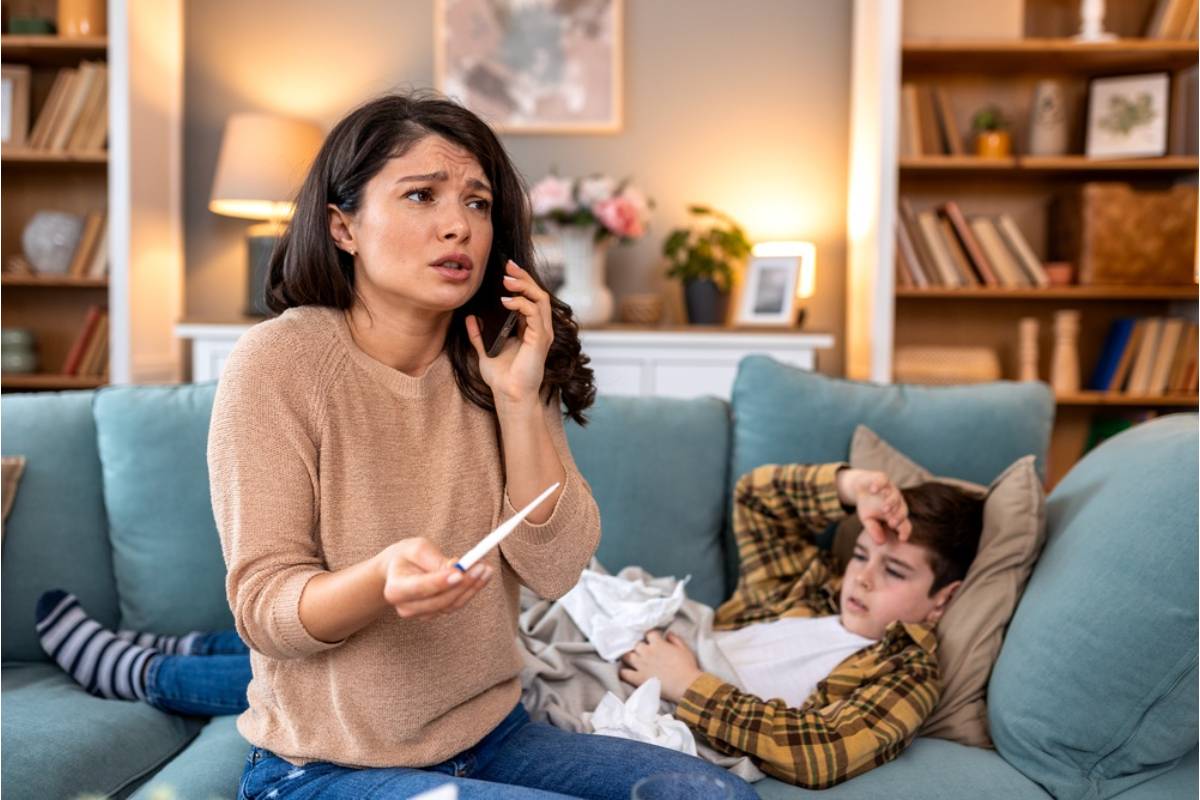
A Mom Says Her Eight-Year-Old Finally Recovered From a Fever, but Her School Still Wants a Doctor’s Note She Can’t Get

A person shared his story about a frustrating school situation involving his eight-year-old daughter. She had developed a fever that lasted for several days, so the family kept her home while she was sick and waited for her to recover. By the time the situation became a school paperwork problem, the girl was already feeling fine again.
The parent assumed that getting her back into class would be the easy part. Instead, the school said a parent’s note was only enough for a limited number of days, and anything beyond three absences required documentation from a doctor. Suddenly, a child who was healthy enough to return to school was stuck in the middle of an appointment scheduling problem.
The Pediatrician Had an Awkward Appointment Date
The biggest problem was that the family’s pediatrician couldn’t see the girl for more than a week. The appointment they were offered would arrive long after the fever had disappeared. To the parent, showing up days later seemed pointless because the doctor would no longer be examining the child during the illness the school wanted documented.
That left the family caught between two systems that weren’t lining up very well. The school wanted proof that the child had really been sick, while the pediatrician’s schedule didn’t provide a timely way to produce that proof. The parent was essentially asking how other families handled a problem where the paperwork outlasted the illness.
The First Response Was Surprisingly Simple
A response from a person said they simply wouldn’t get the note. Their reasoning was that a few unexcused absences weren’t the end of the world, especially when the child had genuinely been sick. They also didn’t want to spend money or use a medical appointment slot just to satisfy a school requirement.
Another response from a person agreed and pointed out that taking a sick child to an unnecessary appointment could also be unfair to someone who actually needed medical care. The argument turned the problem upside down. Instead of asking how the parent could somehow obtain the note, they asked whether the note was worth all the effort in the first place.
But Some Parents Had Found Easier Workarounds
Other responses suggested contacting the pediatrician’s office directly before giving up. One person explained that some doctors will write a note based on information provided through the patient portal or a phone call. That could save the family from waiting more than a week for an appointment that was no longer medically necessary.
Another person suggested telehealth as a practical alternative. Some insurance plans provide virtual visits, and a quick consultation could potentially address the documentation issue without requiring the child to sit in a waiting room. Suddenly, the problem had several possible exits instead of one giant appointment-shaped roadblock.
The Fever Itself Raised Another Question
A response from a person focused on how long the fever had lasted. They pointed out that a fever continuing for several days might have prompted a medical visit anyway, regardless of what the school needed. That observation introduced an important distinction between needing medical care and needing paperwork.
If the child had been seriously ill or the symptoms had been concerning, the school note would have been the least important part of the story. But the person sharing the situation said the daughter was fine now, suggesting the family’s main concern was proving what had already happened. The more responses came in, the clearer it became that different parents were drawing the line in different places.
Urgent Care Became the Backup Plan
Several responses immediately suggested urgent care. The idea was straightforward: if the pediatrician couldn’t see the child in time, another medical provider might be able to document that she had recently been sick and provide the required paperwork. It wasn’t necessarily the most convenient option, but it could solve the school problem quickly.
Another response from a person admitted that this felt ridiculous but said the parent could simply tell urgent care that the child needed clearance to return to school. The frustration was obvious because the girl was already better. Still, for parents facing strict attendance policies, convenience sometimes takes a back seat to getting the documentation demanded by the school.
One Parent Had a More Direct Strategy
A response from a person suggested calling the doctor’s office and explaining the whole situation in detail. They recommended providing a record of the child’s temperatures, what treatment had been given and why she had stayed home. The parent could then ask whether the physician would write something based on the information without requiring a new appointment.
That suggestion had one major advantage. It respected the pediatrician’s medical judgment while also acknowledging that scheduling a full appointment after the illness was already over might not make sense. It also gave the office enough information to understand that the parent wasn’t simply trying to manufacture an excuse for missing school.
Someone Suggested Using a Nurse Advice Line
Another response introduced a different option that many parents might not immediately think about. If the family’s health plan offered a nurse advice line, the parent could call and explain the situation. The nurse’s guidance could potentially provide useful documentation, especially if the advice included keeping the child home while she had a fever.
The person suggested asking whether the call could be documented and whether the family could submit that information to the school. It was an interesting middle ground between a full doctor’s appointment and simply accepting an unexcused absence. The parent would at least have a record showing that medical guidance had been sought.
Not Everyone Was Willing to Fight the School
A few responses took the most relaxed approach possible. They basically suggested sending the child back once she was healthy and letting the school decide how to classify the missed days. From that perspective, arguing over whether the absence was technically excused wasn’t worth the stress.
One response from a person said they would spend essentially no effort on the issue. The child had been sick, the child was now better, and the parent had already done what a reasonable parent should do by keeping her home. In their view, the paperwork battle belonged to the school rather than the family.
Then Attendance Rules Entered the Conversation
The situation became more complicated when people started discussing attendance thresholds. A response from a person explained that some districts begin paying closer attention after a certain number of absences, with further consequences if the pattern continues. That meant the impact of one or two unexcused days could vary dramatically depending on the family’s location and attendance history.
Another response from a person said their local rules were much more relaxed and that legitimate absences rarely caused trouble. The contrast showed why there wasn’t one universal solution. What felt harmless in one school district could potentially become a significant issue in another.
Someone Had a Rather Creative School Strategy
One response described an unusual approach involving the school nurse. The parent had previously brought a sick child to school, not to attend class, but to see the nurse and have the child’s temperature checked before going home. The nurse’s documentation then served as a record of the illness.
The strategy sounded strange, especially because bringing a sick child around school raises obvious practical concerns. Still, the person argued that the school nurse was already part of the district’s health system and could verify what was happening. It was a clever example of how parents sometimes find unconventional solutions when school policies collide with real life.
The Temptation to Fake a Note Appeared
As the discussion continued, someone jokingly suggested creating a fake doctor’s note. Another person immediately pushed back, warning that doing so could amount to fraud. The exchange may have been brief, but it highlighted how quickly a frustrating bureaucratic situation can tempt people toward shortcuts.
The sensible responses pointed back toward legitimate alternatives instead. Calling the doctor’s office, using telehealth, visiting urgent care or accepting the unexcused absence were all inconvenient in different ways. Faking medical documentation, however, could turn a minor school attendance issue into a much bigger problem.
Then the Question of School Policy Became Important
A response from a person asked whether the school was public or private, because the rules could depend heavily on the specific institution and location. That was another reminder that the parent couldn’t necessarily assume the school’s requirement was universal. Policies governing excused absences can differ, and what one family considers unreasonable might be completely standard somewhere else.
The parent therefore had a practical decision to make before spending money or making another appointment. They could first ask the school exactly what forms of documentation were acceptable and whether a telehealth visit, nurse documentation or physician message would qualify. A little clarification could potentially prevent a lot of unnecessary running around.
The Illness Was Gone, but the Paper Trail Wasn’t
The irony of the whole situation was that the fever had ended, but the administrative consequences were still hanging around. The child had done the only thing that mattered medically by getting better, yet the family was now worrying about proving the illness had happened. The school needed evidence for an event that couldn’t easily be observed anymore.
That disconnect was what frustrated so many of the responses. A doctor couldn’t go back in time and examine the child at the height of her fever, and dragging her to an appointment days later didn’t necessarily provide better information. The paperwork system wanted certainty at precisely the moment when certainty was hardest to produce.
The Best Advice Was to Start With the Doctor’s Office
After all the different suggestions, one option stood out as the simplest first move. The parent could contact the pediatrician’s office, explain that the child had already recovered and ask whether the doctor or nurse could provide a note based on the reported symptoms. There was no need to assume a full appointment was the only way documentation could exist.
If the office couldn’t help, then the family could consider telehealth, urgent care or accepting the absence as unexcused. That order of operations avoided unnecessarily taking up a medical appointment for a healthy child while still giving the school a chance to receive the documentation it wanted. It also kept the decision grounded in what was practical rather than what was most frustrating.
The Twist Was That the Sick Child Was No Longer the Problem
What began as a simple question about an eight-year-old with a fever turned into a surprisingly broad debate about schools, doctors, insurance, truancy and common sense. Nearly everyone agreed that keeping a genuinely sick child home was reasonable. The disagreement was about what should happen after the child recovered and the paperwork machine demanded proof.
The twist was that the family’s biggest obstacle wasn’t the fever at all. It was the mismatch between the timing of an illness and the timing of the healthcare system, with the school sitting in the middle demanding documentation after the fact. In the end, the problem wasn’t how to make the child healthy again, but how to prove she had been sick without creating an even bigger problem in the process.