A Mom Says Her Kids Started Asking Her to Pretend With Their Toys Every Evening, and She Finally Realized the Problem Wasn’t Them

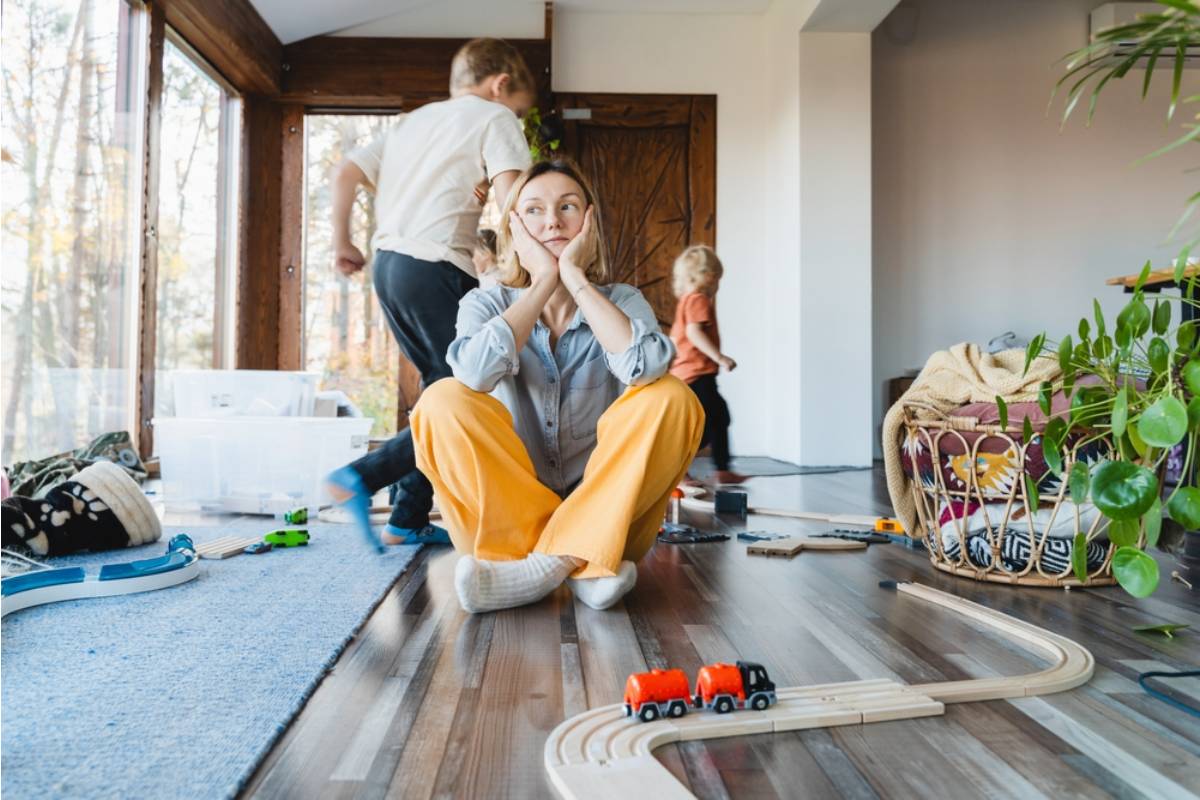
A mother of two young children had reached a point she never expected to admit out loud: she did not want to play with her kids anymore. She loved her children fiercely and said she would do anything for them, but the thought of sitting on the floor and pretending toy cars had feelings made her want to escape into the laundry room. What frightened her most was not the play itself, but the guilt that came afterward.
Her children were three and a half and five and a half, old enough to entertain themselves for longer stretches than before. They could build things, invent little games, and disappear into their own worlds without needing an adult every second. Still, every so often one of them would appear beside her with the familiar question, and she would feel her energy drain before the game had even started.
When Play Stopped Feeling Like Fun
She remembered a time when things had been completely different. When her children were toddlers, she had happily invented characters, stories, games, and ridiculous little adventures for them. She could spend hours crawling around beside them and somehow never wonder what else she could be doing.
Now the same activities felt strangely exhausting. She could think of a dozen household chores she would rather tackle, which made her feel like the world’s least enthusiastic parent. Even when she agreed to play, she sometimes felt as though she were completing an unpleasant obligation instead of sharing a happy moment with her children.
The Difference Between Loving Them and Loving Pretend Play
The mother eventually realized that she had been mixing two completely different things together. Loving her children was effortless, but enjoying every activity they enjoyed was another matter entirely. She adored cuddling them, taking them places, helping them learn, and being there when they needed her.
Pretend play was simply different. There was something about having to invent dialogue for imaginary characters, follow an elaborate storyline, and repeat the same scene over and over that made her brain want to quietly leave the building. The more she tried to convince herself that a loving parent should enjoy it, the worse she felt.
A Person Shared His Story
A person shared his story about struggling with the same kind of play, especially when it happened too frequently. He explained that getting everyone out of the house for an activity felt much easier than sitting indoors and pretending for hours. His child loved things such as cars and tools, while his own childhood interests had been completely different.
That response gave the mother something she had been missing: permission to recognize that parents have different strengths. Some adults are natural storytellers on the living-room floor, while others are better at adventures, crafts, cooking, puzzles, or simply talking. Parenting did not suddenly require every adult to become an enthusiastic toy-character actor.
Another Parent Had a Different Solution
A response from a person offered an even simpler idea: stop trying to force a type of play that nobody actually enjoys. Instead, the parent suggested choosing activities both parent and child could genuinely tolerate or enjoy, such as puzzles, baking, card games, music, or drawing.
The idea sounded almost suspiciously simple. If a child asked for an imaginary restaurant game and the parent hated imaginary restaurant games, there was no reason the only alternatives had to be pretending or rejecting the child entirely. There could be a third option where the parent said no to that particular game and then offered something they could actually enjoy together.
The Monster Truck Problem
Another parent described the exact nightmare the mother had been experiencing. Their young child would ask them to make monster trucks talk, and before long the adult would be staring at the toys wondering how the same vehicles had somehow become the stars of the same story for the hundredth time.
Someone else admitted that their child loved imaginary play so much that the adult had to follow a very specific script. The moment the parent said the wrong thing, the child corrected them, forcing them to perform the same scene again. Ten minutes later, the adult was mentally begging for an emergency exit.
Maybe She Was Better at Other Things
The mother began thinking about everything she did with her children that had nothing to do with toy characters. She took them to parks, planned activities, hugged them at bedtime, read with them, and made sure they knew they were loved. She was present in plenty of ways; she simply did not enjoy sitting on the floor pretending that a plastic figure had just opened a bakery.
That distinction changed something inside her. She realized that her children did not need a mother who was brilliant at every form of childhood entertainment. They needed a mother who connected with them somehow, and there were many ways to build that connection without forcing herself to become someone she wasn’t.
The Parent Who Preferred Adventures
One response came from a parent who had never been good at pretend play but was excellent at taking children on adventures. Parks, swimming, outings, music, dancing, and exploring were much more enjoyable than pretending to be a character in a toy kingdom.
The mother immediately understood that feeling. She could happily plan an outing and spend hours experiencing something together, while the idea of sitting beside a doll and creating a fictional family drama made her exhausted just thinking about it. Maybe her version of play had never disappeared; perhaps it had simply changed shape.
The Laundry Room Wasn’t the Enemy
For a while, she had secretly believed that choosing laundry over play meant something terrible about her priorities. But then she considered what her children were learning when they saw her doing ordinary things around the house. They could see that adults had responsibilities, interests, chores, and moments when they needed to concentrate on something else.
A response from a person made a similar point, explaining that children do not necessarily need adults to entertain them constantly. Independent play can be valuable, and children can learn that their parents are people with their own needs and interests. Suddenly, the laundry room no longer felt like a symbol of failure.
She Still Had to Say Yes Sometimes
Of course, none of this meant she could simply refuse every invitation to play. Her children were still young, and sometimes what they really wanted was not the game itself but the feeling of having their mother enter their world. She understood that there would be moments when she would have to put aside her reluctance and join them.
The difference was that she no longer believed she had to do it endlessly. She could give them ten minutes of focused attention instead of pretending for two hours while secretly watching the clock. Then she could tell them she needed to finish something and encourage them to continue the adventure themselves.
The Ten-Minute Compromise
One response from a person described a similar arrangement. The parent gave the child a short period of pretend play and then returned later for another brief check-in. Between those moments, the parent stayed nearby when necessary but allowed the child to continue playing independently.
The idea immediately appealed to the mother because it did not turn the situation into a battle. Her children could still feel heard and included, while she could preserve enough energy to remain patient afterward. Instead of asking herself whether she could survive an entire afternoon of pretend play, she only had to decide whether she could be fully present for ten minutes.
She Started Inviting Them Into Her World
Then she tried something unexpected. Instead of always entering her children’s imaginary world, she began inviting them into hers. They helped fold laundry, assisted with simple kitchen tasks, drew beside her while she worked, and joined her for little household projects.
Something surprising happened. The children did not seem nearly as disappointed as she had imagined. They were fascinated by ordinary adult activities because they were doing them alongside their mother. What she had considered boring suddenly became another way for them to spend time together.
The Guilt Was Harder Than the Games
The strangest part was discovering that the guilt had been consuming more energy than the actual problem. She had spent so much time asking whether she was a bad mother that she had overlooked how many things she already did well. Every time her children hugged her, showed her something they built, or climbed into bed beside her, there was evidence that their relationship was much bigger than pretend play.
A response from a person even pointed out that some parents are naturally better at nurturing and teaching while others are better at energetic play. Families often balance those differences without realizing it. She began to wonder whether being a good mother had ever required her to enjoy every single thing her children enjoyed.
Then She Remembered Her Own Childhood
She thought back to her own childhood and realized that she barely remembered adults sitting on the floor and pretending with her. What she remembered instead were conversations, outings, small adventures, being driven places, helping with things, and simply having adults around.
That memory softened something in her. Children may remember the feeling of being loved more strongly than whether their parents successfully acted out the fiftieth imaginary dinosaur scene. Maybe the goal was not to create a perfect childhood filled with constant entertainment, but to create a childhood where the children knew they mattered.
The Question Came Again
A few evenings later, one of her children appeared holding a toy and asked the question she had come to dread. “Will you play with me?” the child asked, already preparing to launch into another elaborate imaginary story.
For a second, the old irritation returned. Then the mother looked at the toy, looked at her child, and realized she did not have to choose between pretending for an hour and saying no without explanation.
She Tried Something New
She sat down and played for ten minutes. She gave the toy a ridiculous voice, followed the child’s storyline, and even laughed when the plot became completely absurd. When the timer she had quietly set went off, she told her child that she was finished playing but would stay nearby while they continued.
Her child accepted it far more easily than she expected. There was no dramatic disappointment, no accusation that she was a terrible mother, and no family crisis over the imaginary character’s departure. The child simply picked up another toy and continued the story alone.
The Twist Wasn’t About the Children
The mother had spent weeks wondering whether her children’s changing interests had somehow made her less loving. She eventually discovered that the bigger change had happened inside her, not inside them. She had become more aware of her limits, and she had mistaken those limits for a lack of love.
The twist was that she did not need to become the mother who loved pretend play again. She only needed to become the mother who knew how to connect with her children in ways that worked for all of them.
She Stopped Measuring Love in Minutes
After that, she stopped counting how long she could sit on the floor before becoming irritated. Instead, she paid attention to the moments when she genuinely enjoyed being with her children. Sometimes that meant puzzles, sometimes an outing, sometimes baking, and sometimes simply lying beside them at bedtime.
She still disliked pretend play. That part never magically changed, and she eventually accepted that it didn’t have to. What changed was the story she told herself about that dislike: she was not a horrible parent, she was simply a parent who had finally learned that loving her children did not mean loving every game they invented.
The House Became Quieter
Over time, the children became increasingly comfortable playing without her. They invented stories together, built strange little worlds, and occasionally wandered over to show her what they had created. Instead of feeling guilty when they played independently, she began to see it as something beautiful.
She was still there when they needed her. She still joined them sometimes, still hugged them, still planned adventures, and still listened when they excitedly explained something that made absolutely no sense to her. The imaginary games had not disappeared, but they had finally stopped being the test she used to measure whether she was a good mother.