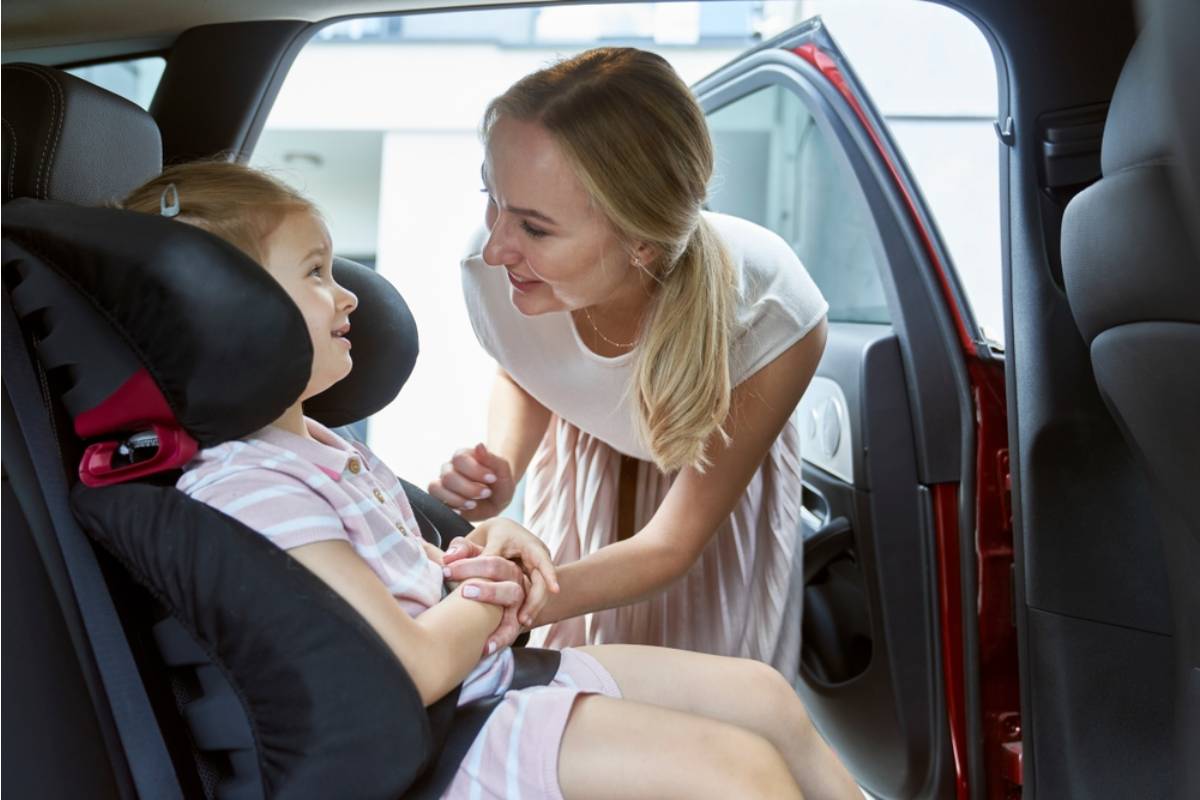
A Mom Says Her MIL Gets Offended Every Time She Buckles Her Toddler Into a Car Seat, Even After Losing a Baby in a Crash Years Ago

A person shared his story about a long-running struggle with his mother-in-law, explaining that car seats were only one piece of a much larger pattern. After his daughter was born, he quickly realized that his mother-in-law had some very different ideas about infant health and safety. Suggestions that sounded shocking to the parents were apparently delivered with complete confidence.
She had previously suggested things like putting the baby to sleep on her stomach with blankets and even giving a three-month-old apple juice. The biggest problem, however, was not simply that her advice was outdated or different. She became visibly offended whenever the parents calmly explained that they were going to do things another way.
Her Advice Never Came With an Off Switch
According to the person who shared his story, disagreeing with his mother-in-law could turn a simple parenting conversation into an emotional standoff. She apparently did not react as though someone had chosen a different preference at the grocery store. Instead, she treated the disagreement like a personal insult.
That dynamic became especially obvious whenever safety was involved. The parents could explain their reasoning, repeat the recommendation, and make their decision without raising their voices. Somehow, the mother-in-law still managed to find a reason to be offended by the fact that they were actually sticking to it.
Then Came the Car Seat Battle
Among all their disagreements, one topic seemed to bother her more than everything else combined. She could not stand the fact that the couple insisted their daughter, who was 20 months old, travel in a car seat. The mother-in-law apparently made a point of talking about how she never used car seats for her own children.
She even talked proudly about breastfeeding while driving with her children in the car. Her son, the child’s father, apparently had no memory of ever being secured in a car seat either. To the parents, these stories were not funny family anecdotes, especially considering what had happened years earlier.
The Family History Made Everything Darker
The person explained that his mother-in-law had lost her first baby in a car accident. According to his account, the baby’s death could have been prevented had the child been properly secured, although the tragedy happened in the mid-1980s. He said he could understand that safety guidance and awareness were different at the time, but he struggled to understand why his mother-in-law remained so hostile toward car seats decades later.
The strange part was that the tragedy seemed like the kind of event that might make someone especially determined to protect children. Instead, the subject appeared to trigger anger whenever the family used a car seat. What had once been a safety device had somehow become a source of conflict.
A Rear-Facing Seat Made Her Even Angrier
The situation became particularly tense whenever the toddler’s seat was installed rear-facing. The mother-in-law would apparently roll her eyes, groan, and make it clear that she strongly disapproved. At times, she even attempted to turn the seat around despite being told why the parents wanted it positioned that way.
That was the point where the parents stopped viewing the disagreement as harmless commentary. A grandparent expressing a different opinion was one thing, but physically trying to change the child’s setup was something else entirely. The mother and father were not interested in debating their daughter’s safety while standing beside a car.
Every Car Ride Turned Into a Small Showdown
The family rarely traveled in the mother-in-law’s car because the parents already kept their contact with her limited. Even so, on the occasions when they did ride with her, the same routine appeared to happen. The car seat would come out, the adults would install it, and the eye-rolling would begin.
It was almost as though the seat itself had become a character in the family drama. The parents were not asking for applause or praise, just a quiet ride from one place to another. Instead, they seemed to get a front-row seat to their mother-in-law’s latest complaint about their parenting choices.
Then the Airport Ride Put Everything on Display
The latest incident happened when the mother-in-law offered to pick up the family from the airport. The parents apparently knew before the ride even started that the car seat issue would probably come up again. Sure enough, the moment they positioned the toddler’s seat rear-facing and buckled their daughter in properly, the tension returned.
This time, however, the mother-in-law’s reaction went beyond a few dramatic sighs. She became so visibly upset that she refused to speak to the mother for the rest of the drive home. A simple trip from the airport had somehow turned into a silent protest over a car seat.
The Silence Was Almost Its Own Statement
The person who shared his story seemed less angry about the silent treatment than genuinely baffled by it. He could understand someone disagreeing about screen time, snacks, toys, or bedtime routines. Being furious because a toddler was safely strapped into a vehicle felt like an entirely different level of strange.
There was also something almost absurd about the contrast. The parents were doing one of the most ordinary safety tasks imaginable, while the grandmother sat beside them treating it as a personal grievance. By the time the car reached home, nobody had changed their mind, but everyone had certainly learned how strongly she felt.
A Response From a Person Raised an Obvious Question
A response from a person cut straight to the practical side of the argument by asking whether the grandmother refused to wear a seatbelt too. It was a simple question, but it captured how extreme the situation sounded from the outside. If basic restraints were being treated like an insult, the family’s larger safety habits naturally came into question.
Other responses from people focused less on the seat itself and more on what it might represent. Several suggested that the car seat could be tied to the grandmother’s unresolved grief over the child she lost. They emphasized that this was only an interpretation, but it offered one possible explanation for why an ordinary safety device seemed to provoke such a powerful reaction.
Some People Thought Guilt Was Hiding Under the Anger
A number of responses from people suggested that the grandmother might be struggling with guilt surrounding the earlier tragedy. Their reasoning was that accepting the importance of car seats could force her to confront painful questions about what might have been different. Rejecting the value of car seats, under that interpretation, would allow her to avoid facing that possibility.
One person described the situation as if the grandmother had built an emotional structure around avoiding that painful conclusion. Seeing her granddaughter properly secured could then feel like a challenge to that structure, even though the parents never intended it that way. Again, nobody outside the family could know exactly what was happening in her mind, but several responses noticed the same troubling connection between the old loss and the new obsession.
Others Remembered That Car Seats Were Not Exactly a New Invention
Responses from people who grew up during the same general era pushed back on the idea that child restraints were completely unheard of in the 1980s. Some recalled using car seats themselves as children, while others remembered hospitals, doctors, or family members emphasizing the importance of proper restraints. Their recollections varied, but they generally agreed that the concept was certainly not some brand-new invention.
That added another layer to the family’s confusion. The mother had apparently raised her own children without the precautions she now criticized in her daughter-in-law. Whatever the historical details surrounding her first baby’s death, the family was left with the same basic problem: she still wanted her views about restraints to carry more weight than the parents’ decision for their own child.
The Parents Had Already Drawn a Firm Line
The person who shared his story made one point especially clear: the grandmother was never allowed to drive the toddler anywhere alone. That boundary apparently existed because the parents did not trust her to respect their safety rules when they were not present. In their minds, it was better to avoid the possibility completely than to discover later that she had decided to do things her own way.
That boundary also explained why the airport incident mattered so much. The mother-in-law could complain, sulk, or refuse to speak, but she still could not overrule the parents. The car might have been hers for the ride, but the child was theirs, and the safety decisions remained theirs too.
The Mother-in-Law Seemed to Take Everything Personally
The person described his mother-in-law as someone who was almost perpetually offended, which made the car seat fight feel less like an isolated disagreement and more like the latest episode in a familiar pattern. She apparently interpreted ordinary parenting decisions as criticism of her own choices. Every boundary seemed to land as though the parents were personally attacking her.
That made the situation exhausting because the parents were not trying to win an argument. They were simply trying to raise their daughter according to their own standards and keep her safe. Yet every time they installed the car seat, another emotional battle appeared to be waiting in the back seat.
The Most Important Detail Was Sitting Quietly in the Middle of the Argument
For all the drama surrounding the adults, the toddler herself remained the central reason the parents refused to compromise. She did not need to understand the disagreement between her grandmother and parents. She simply needed the adults around her to make sensible safety decisions.
In the end, that may have been the biggest twist in the entire story. The mother-in-law could become offended, roll her eyes, groan, lecture, or even spend an entire drive in silence, but none of it changed what happened when the car door closed. Her granddaughter was buckled in, the seat stayed where her parents wanted it, and the ride home continued without the argument getting the final word.
The Family May Never Agree on What the Car Seat Represents
The parents appeared to see the car seat as exactly what it is to them: a basic part of protecting their daughter. The grandmother, based on her behavior and the interpretations offered by others, may attach a much more painful meaning to it. That difference makes the conflict far more complicated than a simple argument over parenting preferences.
For now, the parents seem to have chosen consistency over endless explanations. They can acknowledge that their mother-in-law has strong feelings without allowing those feelings to determine how their toddler travels. And perhaps the strangest part of the whole story is that a little plastic, padded seat managed to expose four decades of family history without saying a single word.