
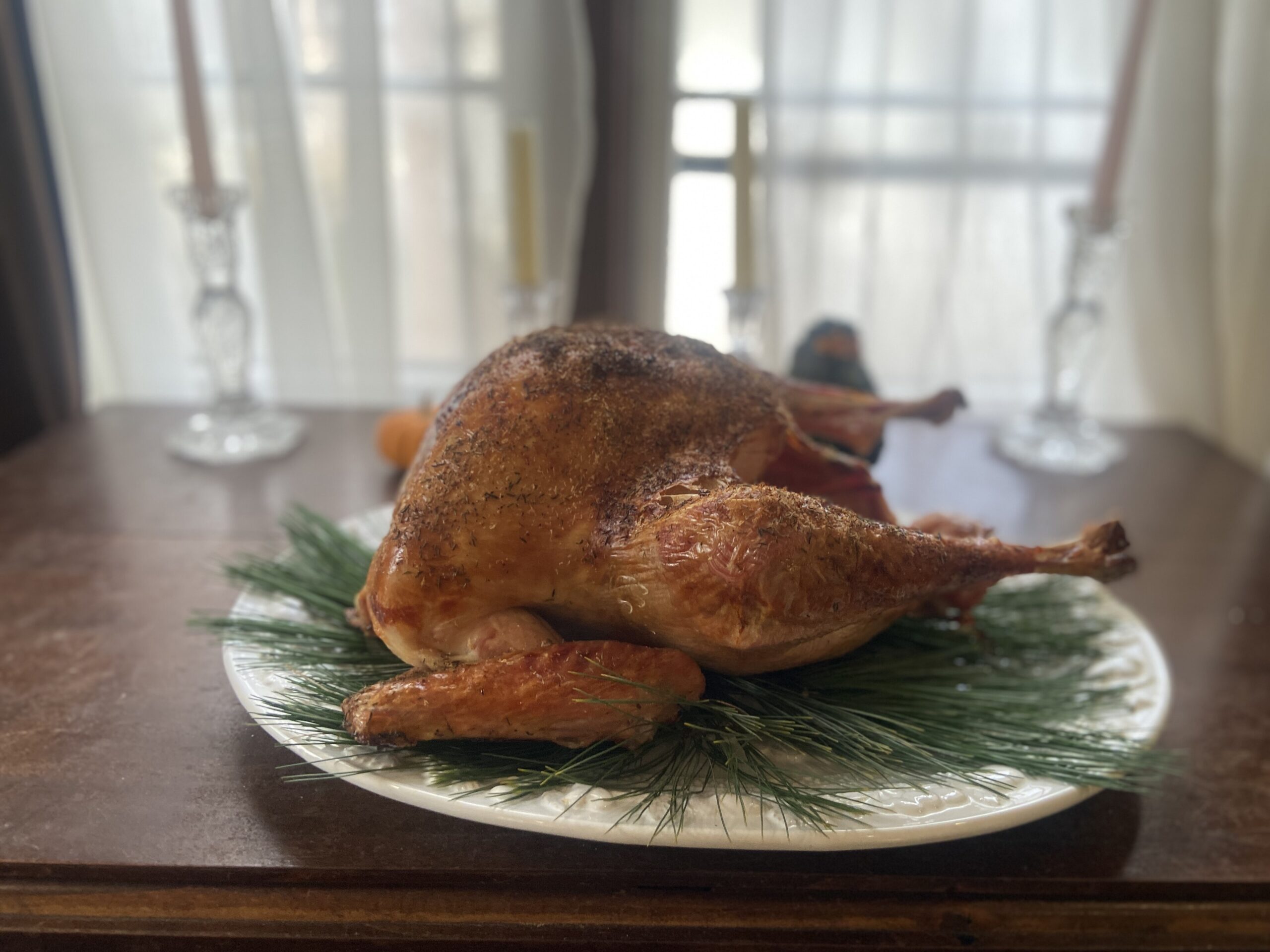
Turkey in Strips Two Fingers Wide and No Honey Before Age 1 Are Among the Thanksgiving Rules Feeding Experts Give Parents of Babies

Thanksgiving falls on Thursday, Nov. 26 this year, and for families with a baby at the table the holiday menu comes with its own set of rules about size, ingredients and timing. Feeding educators and a pediatrician agree on a short list: cut turkey in strips about two adult fingers wide, keep honey off the plate until a child is 12 months old, throw out food that has sat out for more than 2 hours, and stay alert to choking in any child under 4.
The guidance below draws on Solid Starts, whose holiday guide was updated Oct. 26, 2026, along with Stanford Medicine Children’s Health, the U.S. Department of Agriculture, KidsHealth and the American Academy of Pediatrics.
Turkey, Cut Into Strips About Two Adult Fingers Wide
Turkey is the centerpiece of the meal and, for most babies, the easiest dish to adapt. Solid Starts says to offer meat in strips about two adult fingers wide rather than in small chunks or shreds. A baby can grip a strip in a fist and gnaw on it, and the size makes it harder for a piece to slip to the back of the throat.
The same guide says a drumstick can work if the cartilage, loose fat and skin are removed first. A firm, non-brittle bone with the loose cartilage stripped off can even serve as a teether, according to Solid Starts. Fresh ham follows the same two-finger rule, but Solid Starts specifies freshly cooked, honey-free ham rather than cured, deli or glazed varieties, which it says carry a higher risk of foodborne illness.
Gravy is a useful add-on. Solid Starts suggests drizzling it over finger foods, stirring it into mashed potatoes or setting it out as a dip. Because gravy can contain milk, soy or wheat, the guide advises checking the ingredients against the allergens a baby has already tried.
Joelle McConlogue, a pediatrician at Stanford Medicine Children’s Health, explains why size matters so much at this age. In a Stanford Medicine Children’s Health article on holiday choking hazards, she said children under 4 and children with developmental delays face the highest risk. Young children mouth objects as they explore and do not yet have molars to chew food well, and their airways are smaller than an adult’s, so small pieces can block them. Her stated concern is choking in younger kids.
Stuffing, Cranberry Sauce and Mashed Potatoes
The side dishes are where hidden hazards tend to sit. Solid Starts says stuffing is fine to share only when it is soft rather than crispy and free of sausage chunks, dried fruit and nuts. If those cannot be picked out, the guide says to hold off. Stuffing may also contain milk, egg, sesame, soy, tree nuts or wheat, so it counts as a mixed-allergen dish.
Cranberries need a similar check. Fresh whole cranberries are a choking hazard, Solid Starts says, but cooked cranberry sauce, whether store-bought or homemade, is fine because the berries are soft.
Mashed potatoes are among the simplest options. The guide says to cook the potatoes until soft, and butter, milk or cheese can be added. A baby can scoop the mash with hands or a spoon. Green beans and Brussels sprouts also make the list, as long as they are cooked until soft. Solid Starts says to serve green beans whole and to halve or quarter the largest sprouts.
For older toddlers, the American Academy of Pediatrics has long named the usual suspects. In a Nationwide Children’s Hospital summary of the AAP’s choking policy statement, hot dogs, grapes, popcorn, nuts, hard candy, seeds and raw carrots are listed as hazards. The summary says grapes should be cut into quarters and other round, firm foods into very small pieces for children under 4. Solid Starts also advises skipping whole nuts, dried fruit, marshmallows and large meat chunks at the holiday table.
Another tip from the Solid Starts guide concerns seating. It recommends placing a baby on a lap or in a high chair pulled up to the table, which keeps the child inside the meal and within an adult’s reach.
Pie and Glazed Dishes, Where Honey Can Hide
The honey rule is the one most likely to catch a host off guard, because honey shows up in glazes, baked goods and some pies. Solid Starts says not to serve anything made with honey before 12 months, and it ties the rule to infant botulism.
KidsHealth, the children’s health site from Nemours, says in its guide to honey and botulism that babies younger than 1 year old should not be given honey, because honey can contain Clostridium bacteria that cause infant botulism. The site explains that as children get older, their more mature digestive systems move the spores through the body before they can cause harm. KidsHealth also says to avoid processed foods that contain honey, such as honey graham crackers, until after the first birthday. The signs of infant botulism it lists include poor sucking, a weak cry, constipation and floppiness.
Solid Starts offers a workaround: honey-free glazes, such as maple-glazed Brussels sprouts, are fine. Honey-free pie is also acceptable, and the guide recommends offering the soft filling. Pecan filling is acceptable only if the nuts are finely chopped. Sticky filling can be thinned with water or milk, and crumbled crust can be mixed in, but thick, firm chunks of crust should be avoided.
Sweet potato casserole needs a quick edit. Solid Starts says to serve large cooked wedges or mashed sweet potato, and to take out marshmallows, sugar crumbles and nuts before a baby gets any. Before the meal, it recommends introducing common allergens such as cow’s milk, egg, wheat and tree nuts on their own, rather than meeting them for the first time inside a prepared dish.
The guide’s advice for allergy families is to talk to the host a few weeks ahead and consider bringing one or two safe dishes. It also says to use separate utensils and cutting boards, serve the baby first, read every label even on familiar foods because recipes change, and pack emergency medications when visiting someone else’s home.
Leftover Turkey and Gravy, Watched by the Clock
The last rule runs on a timer. Solid Starts advises avoiding food that has been at room temperature for more than 2 hours, and the federal rule is the same. The U.S. Department of Agriculture’s Food Safety and Inspection Service says in its leftovers guidance that perishable food should be refrigerated within 2 hours of cooking, or of being taken out of a warming appliance, and that anything left out longer should be discarded. Cold perishable food should stay at 40 degrees Fahrenheit or below.
On a crowded holiday, 2 hours can pass quickly, so the clock is worth starting when the platters hit the table. Solid Starts also says to avoid cured meats and undercooked proteins for babies at the table.
The same USDA page covers what happens next. Leftovers should be reheated to 165 degrees Fahrenheit, measured with a food thermometer, and sauces, soups and gravies should reach a rolling boil. Refrigerated leftovers last 3 to 4 days, and the freezer keeps them safe for longer, with best quality for 3 to 4 months. In a microwave, the agency says to cover the food, rotate it and check several spots for cold areas.
Dietitians who spoke for the Academy of Nutrition and Dietetics add one more pointer. Amy Reed, a registered dietitian nutritionist, said in the Academy’s Thanksgiving tips for children that younger children do well with soft, cooked vegetables cut into pieces about one-half inch in size to reduce choking risk. Solid Starts takes a relaxed view of the rest: sodium and sugar are fine occasionally, and the focus should be on the experience rather than on how much a baby eats.
Put together, the checklist for the Thursday, Nov. 26 meal is short. Cut the turkey into strips two fingers wide, keep every honey-containing dish away from a child under 12 months, remove nuts, marshmallows and dried fruit from the sides, and put leftovers in the refrigerator before 2 hours are up. A baby can sit at the table and join in, provided the food is the right size and the clock is being watched.
Get stories like this by email. Sign up for The Parent Diaries Letter.
This article was produced with AI assistance and edited for accuracy against the sources linked above.
Image: Myotus – CC BY 4.0/Wikimedia Commons


