As Thanksgiving Break Nears, the AAP Says to Revisit the Family Media Plan, While KidsHealth Still Suggests Preschoolers Get No More Than 1 Hour of Screens a Day

When the Thanksgiving break opens a few days of unstructured time at home, screens tend to fill the gaps, and pediatric guidance says that is the moment to look at the household’s media rules again. The American Academy of Pediatrics (AAP) says the beginning of each school year and summer and holiday breaks are good times to review a family media plan. The AAP’s newest policy no longer sets hour counts, though, while KidsHealth still gives preschoolers a one-hour target.
That second point matters for how this guidance gets read. A headline-friendly “cap” of one hour a day for preschoolers comes from older AAP advice and from KidsHealth, not from the AAP’s current policy statement. What follows lays out what each source actually says, grouped by the age of the child.
Babies and Toddlers Under 2
For the youngest children, the guidance is the most cautious. KidsHealth, the Nemours children’s health site, tells parents of children under 18 months to try to avoid screens other than video calls with family and friends. For children 18 to 24 months, it says a little screen time can be fine if a parent watches along and helps explain what is on the screen.
The AAP’s own parent-facing summary of its 2026 policy points the same way. HealthyChildren.org, the AAP’s site for families, says infants under 18 months learn best from real-world interactions and warns that heavy solo screen use can affect language and social skills.
A holiday break can make this harder in practice. Travel days, relatives in the house and a busy kitchen are all moments when a tablet is within reach. A family media plan gives a household something to point to in those moments: video calls with grandparents are fine, and the rest of the day is built around play, reading and being held.
Preschoolers, Ages 2 to 5
This is the group the one-hour figure belongs to. KidsHealth’s guide to screen habits says preschoolers should aim for no more than one hour a day of high-quality programming, with a parent watching along when possible. A separate KidsHealth page on preschoolers, marked as reviewed in October 2026, recommends less than one hour a day of good-quality shows or apps and treats video chats with grandparents as an exception because they involve real interaction.
The AAP itself moved away from that kind of number this year. The group’s January 2026 policy statement, titled “Digital Ecosystems, Children, and Adolescents,” was released on January 20 and published in the February issue of the journal Pediatrics. Its early-childhood section covers ages 0 to 5 together and does not give numeric limits, according to the AAP’s release. Lead author Dr. Tiffany Munzer said the group chose to frame guidance as boundaries for families to set rather than fixed limits, according to The 74, an education news outlet, which reported that the policy “does not include duration-based screen time limits.”
In practice, then, the one-hour figure is best read as a long-standing pediatric rule of thumb that KidsHealth still publishes, rather than a current AAP cap. The AAP’s 2016 policy statement, as Healio reported at the time, did recommend limiting digital media for children ages 2 to 5 to one hour a day, and many family guides still repeat it.
KidsHealth adds some practical habits for this age. It suggests scheduling screen-free time every day for moving, exploring, reading, sleeping and time with people, and turning devices off at least an hour before naps and bedtime. It also advises against using a screen to soothe upset feelings, suggesting a hug, quiet music, a book or a walk first so a child can practice coping skills.
School-Age Kids and Teens
For older children, the shift away from hour counts is clearer. KidsHealth still describes 1 to 2 hours of entertainment screen time a day, not counting homework, as a reasonable starting point for ages 5 to 18. The AAP’s current materials do not repeat a number. HealthyChildren.org says the academy wants families to move beyond simple screen-time limits and focus on quality, context and conversation, in a page last updated on June 3, 2026.
Education outlet EdSurge, covering the release, described the new approach as having no set screen time limit, in contrast with the 2016 guidance that suggested limiting children to two hours a day. In its place, the AAP points families to tools such as a family media plan, device-free meals and alternatives to screens.
The AAP’s family media plan page lists the kinds of rules a household can write down. Examples include screen-free times and places such as the dinner table, homework time and bedtime, a “one screen at a time” rule, and turning off autoplay and notifications. The page also suggests choosing apps and shows that teach, inspire creativity or encourage connection, checking privacy settings, and talking with kids about ads and influencer marketing.
The plan is meant for every member of the household, including adults. The AAP’s page says parents model digital habits, so a plan that applies only to the kids is less likely to hold. It also says plans should change as a child grows, which is why a holiday break, with its different routines, is a natural time to revisit what was set earlier.
The AAP does not prescribe a holiday schedule, but its advice translates easily to a break at home. Meals stay screen-free. Bedrooms stay free of devices at night. The same policy page suggests starting with bedrooms and mealtimes, especially keeping screens away in the hour before bed.
KidsHealth recommends keeping books, puzzles, games and crafts wherever devices tend to land, and suggesting non-screen options such as playing outside. For families hosting Thanksgiving, that might mean setting out a puzzle table or a craft basket before guests arrive, so the easy option is not the one with a screen.
Parent Diaries has also covered why screen time limits alone fall short for kids and how Gen Z parents are approaching screen time.
Content still counts alongside time. KidsHealth suggests checking ratings, reading reviews such as those on Common Sense Media, and previewing anything new, especially for younger children. Watching together and asking questions about what is on screen turns a show into a shared activity, a habit both KidsHealth and the AAP encourage.
Get stories like this by email. Sign up for The Parent Diaries Letter.
This article was produced with AI assistance and edited for accuracy against the sources linked above.
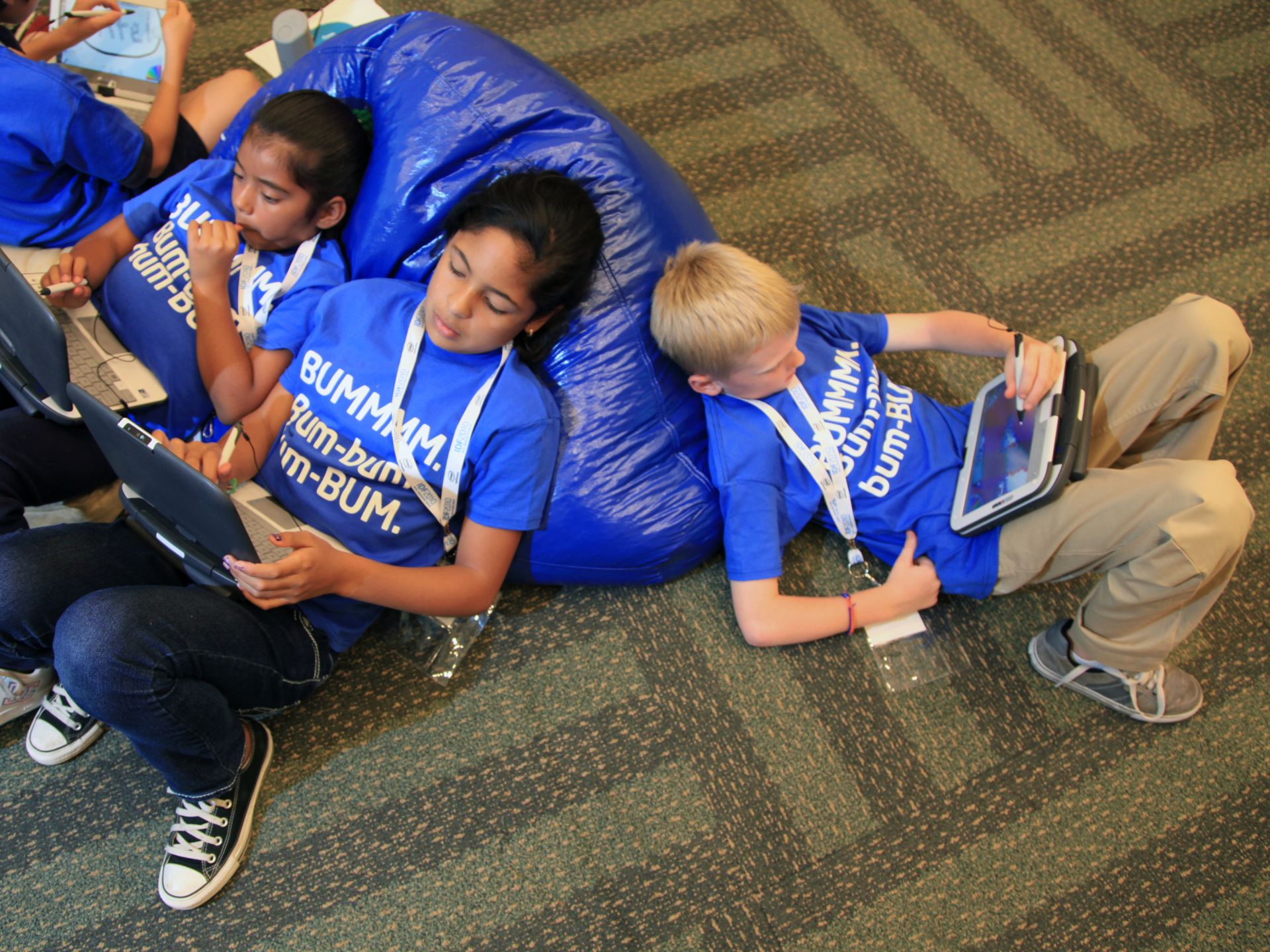
Image: Intel Free Press – CC BY-SA 2.0/Wikimedia Commons