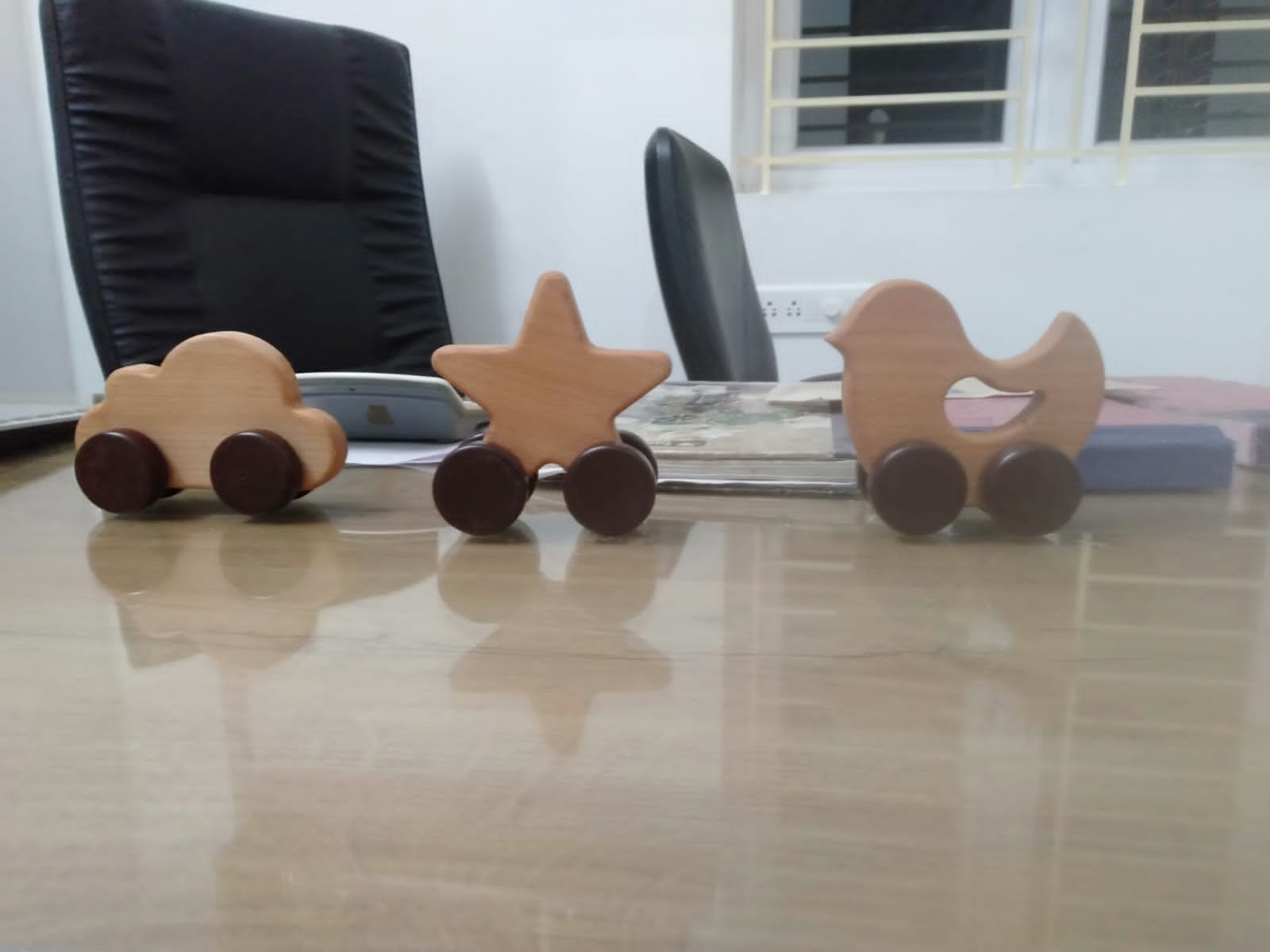
Strings Longer Than 7 Inches and Parts Smaller Than a Child’s Mouth Top the Toy Checks Johns Hopkins and the AAP Give Holiday Shoppers

A cardboard toilet paper roll doubles as a toy-safety tool. Johns Hopkins emergency physicians say it works as a small-parts tester: if a toy, or any piece that could come off it, fits inside the tube, it is too small for a young child. The advice comes from Johns Hopkins Medicine’s holiday toy tips, from Leticia Ryan, MD, MPH, of Johns Hopkins Children’s Center and Joseph Perno, MD, of Johns Hopkins All Children’s Hospital, and it lines up with guidance from the American Academy of Pediatrics and the Consumer Product Safety Commission as holiday shopping picks up.
A toilet paper roll stands in for a small child’s throat
Ryan and Perno advise against toys with small parts for young children, and they point to the cardboard tube as a quick check. The tube is about the width of a child’s windpipe, they say, and a toy that fits inside the roll is too small. Loose pieces are worth checking for, too.
The idea mirrors the federal standard. The CPSC’s guidance on small parts for toys and children’s products bans small parts in products intended for children under 3. An object counts as a small part if it fits, without compressing and in any orientation, entirely into a test cylinder, which the agency says approximates the size of the fully expanded throat of a child under 3. The commission says a small part can be a whole toy, a separate part of a toy, or a piece that breaks off during testing that simulates use or abuse by children.
The AAP words the rule more broadly. Its guide to buying safe toys says to make sure all toys and parts are larger than a child’s mouth to prevent choking. The same page says to read the label for the ages a toy is safe for and how to use it, and to show the child how to use the toy correctly.
Cords and strings over 7 inches are a choking risk
Parts are only one of the checks on the Johns Hopkins list. Cords or strings longer than 7 inches can pose a choking risk, according to the hospital’s physicians.
The AAP’s buying guide makes a related point about stuffed toys. It recommends well-made ones with secure seams and parts, a machine-washable label, and no loose ribbons or strings. It also says to avoid stuffing made of bean-like pellets.
For babies, the AAP warns that hanging toys in the crib can strangle an infant, and it advises keeping soft objects, loose bedding and hanging toys out of the crib. Mobiles and crib gyms should come down when the baby first pushes up on hands and knees, or at 5 months, whichever comes first.
Sharp edges appear on the Hopkins list as well. Ryan and Perno say to skip toys with sharp edges or points, including thin, hard plastic or metal attached to an item. The AAP echoes that, advising sturdy plastic because thin plastic can break into sharp pieces.
Magnets and button batteries cause harm after they are swallowed
The Johns Hopkins physicians go a step beyond caution with two items: they say not to buy toys that contain magnets or button batteries. Swallowing multiple magnets can cause them to attach to one another inside the body and do serious harm, they explain, and button batteries can cause severe internal burns.
The AAP’s position is slightly more conditional. It says to avoid toys with small button or lithium coin batteries, or high-powered magnets, unless they are secured, because younger children who get hold of loose ones may put them in the mouth, nose or ears and suffer serious injury.
The CPSC’s holiday shopping reminder says to ensure that high-powered magnets and button cell or coin batteries are kept away from young children. Its toys page links to separate resources on the dangers of button cell and coin batteries.
The AAP adds that the electric toys it recommends should be labeled “UL Approved,” and says hobby kits and chemistry sets are best avoided for children under 12 because they can cause fires or explosions and may contain dangerous chemicals.
Labels, balloons and wrapping set the age limits
The Johns Hopkins physicians say to follow the age recommendations on the box. The AAP explains that those recommendations help judge safety, such as choking hazards, along with whether a child can understand how to play with the toy and whether it fits the child’s developmental stage. On the federal side, the CPSC says toys must have age labels if they are a choking hazard for children under 3.
The commission’s toy tips set two more age lines. It says to keep small balls and toys with small parts away from children younger than 3, and to keep deflated balloons away from children younger than 8. It also advises discarding plastic wrappings and other packaging on toys immediately once gifts are open.
For riding toys, both the commission and the Johns Hopkins physicians recommend protective gear. Ryan and Perno say balance-based toys such as bikes, scooters and skateboards should be bought together with safety equipment, and the CPSC says helmets and other gear should come with scooters and other riding toys.
Two final checks cover older toys. Johns Hopkins says older painted toys may contain lead and are best avoided. The AAP says recalled toys should be removed right away, notes that the CPSC issues recalls for hazards such as lead, choking or fire, and advises asking a child’s doctor about blood lead testing if exposure to lead from a toy is a concern.
Supervision rounds out the advice. The Johns Hopkins physicians say young children should be supervised during play and that in an emergency, families should call 911 or go to the nearest emergency department.
Get stories like this by email. Sign up for The Parent Diaries Letter.
This article was produced with AI assistance and edited for accuracy against the sources linked above.
Image: LakshanaRamasamy, CC0, via Wikimedia Commons