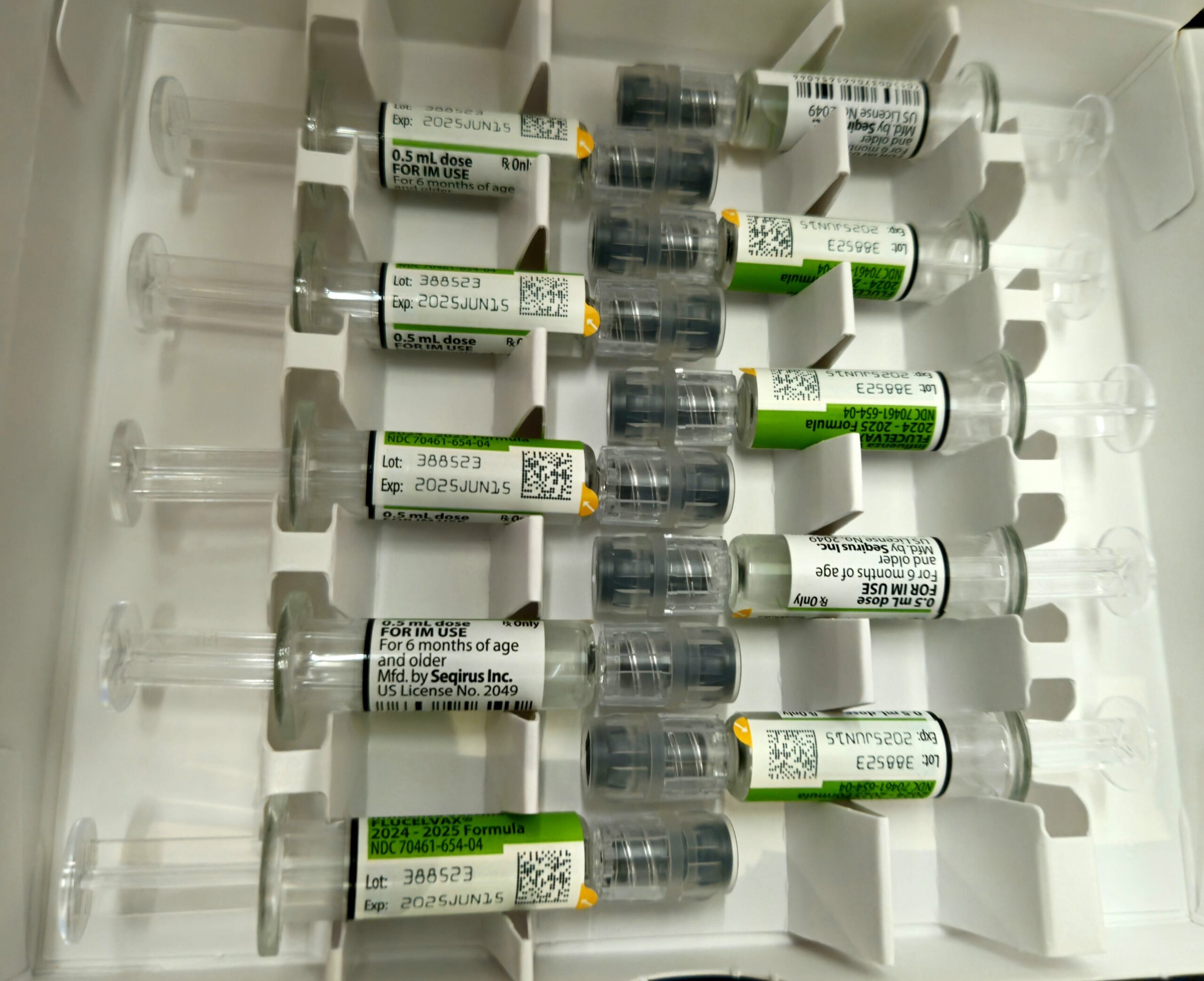
Kids Under 9 Getting a Flu Shot for the First Time Need Two Doses, and KidsHealth Says Getting Them After the October Target Still Beats Skipping

The end-of-October target for flu shots has now passed, and for many families the calendar has simply moved on to November with a child’s first shot still on the to-do list. The answer from KidsHealth, the Nemours children’s health site, is that a later dose is better than none. For children under 9 who have never been vaccinated, that also means planning for two doses rather than one.
Why does a child under 9 need two flu doses this season?
The extra dose is about building protection in an immune system that has not met the vaccine before. KidsHealth says children under 9 need two doses if they have never had a flu vaccine or have had it only once in a past season. Children 9 and older need just one.
The Centers for Disease Control and Prevention puts the same rule in terms of age. Its vaccine information statement says children 6 months through 8 years “may need 2 doses during a single flu season,” while everyone else needs one dose each season. “Under 9” and “6 months through 8 years” describe the same group.
The number of doses is not decided by age alone. The American Academy of Pediatrics (AAP), in its 2026-27 flu recommendations published Aug. 10, 2026, says the count depends on the child’s age at the first dose and on the child’s flu vaccination history. It also noted that the number of doses recommended for children is unchanged from the previous season.
How does a parent know whether one dose or two is needed?
The CDC’s clinical considerations for the 2026-27 season give the test that doctors’ offices use. A child aged 6 months through 8 years needs two doses unless he or she received at least two doses of flu vaccine, at least 4 weeks apart, before July 1 of this year. If the history is unknown, the child gets two doses.
The Immunize.org dosing guide, adapted from the AAP’s 2026-27 recommendations, lays it out as a yes-or-no question. If the child had two or more doses of any flu vaccine before the most recent July 1, one dose is enough. If the answer is no or unknown, the child gets two.
Those earlier doses do not have to come from back-to-back winters. The Minnesota Department of Health notes that the two doses “do not need to have been received during the same or consecutive seasons.” A child who had one dose two years ago and one last winter has already finished the series, while a child with a single past dose still needs two this year.
A child whose history is unknown is treated the same as a child who has never been vaccinated, according to the CDC, so the pediatrician’s records are the place to start.
How far apart do the two doses have to be?
The CDC says the two doses must be at least 4 weeks apart, and the Immunize.org guide repeats the same minimum of “at least 4 weeks apart.” KidsHealth uses the same 4-week spacing when it describes children who already finished a two-dose series in earlier seasons.
The spacing is why the October target exists for children in this group. According to the CDC, the first dose should be given as soon as possible, even in July or August when vaccine is available, so that the second dose can be given ideally by the end of October. The AAP likewise says vaccine should be offered as soon as it is available, “especially to those recommended to receive two doses.”
A child getting a first shot today, Nov. 2, could receive the second on or after Nov. 30, since 4 weeks is the minimum gap. The CDC adds that it takes about 2 weeks after vaccination for protection to develop.
Parents who want more background on how this season has looked for families can read Parent Diaries’ earlier piece on what the data says about kids and flu.
Is a shot in November still worth getting after the October target?
KidsHealth says the vaccine is best given by the end of October, but “getting a flu vaccine later in the season is better than not getting it at all.” The AAP guidance describes the end of October as the point for “optimal protection,” which makes it a target rather than a cutoff.
The CDC’s season guidance is even more direct. Vaccination should continue after October and throughout the season, it says, “as long as influenza viruses are circulating and unexpired vaccine is available.”
The AAP does not prefer one product over another. Its recommendation covers any licensed influenza vaccine that is appropriate for the child’s age and health status, for all children 6 months and older who have no medical contraindications.
On side effects, KidsHealth says the flu shot most often causes soreness, redness or swelling where the needle went in, and rarely a low fever or body aches. The nasal spray can cause mild cold-like symptoms such as a runny nose, sore throat or tiredness. Serious allergic reactions are very rare with either form.
The nasal spray is not right for every child. KidsHealth lists children with weakened immune systems, some health conditions, a cochlear implant, or aspirin use among those who should not get it. A child who has had a severe or any allergic reaction to a previous flu vaccine, or who has had Guillain-Barre syndrome, should talk to a doctor before the next shot.
For the many families who missed the October date, the practical step is to book the first dose now and put the second on the calendar before leaving the office.
Get stories like this by email. Sign up for The Parent Diaries Letter.
This article was produced with AI assistance and edited for accuracy against the sources linked above.
Image: Epolk – CC BY-SA 4.0/Wikimedia Commons