Hours After Winning the Nobel Prize, Stanford’s Karl Deisseroth Took a 6:30 a.m. Break From Interviews to Pack His Kids’ School Lunches

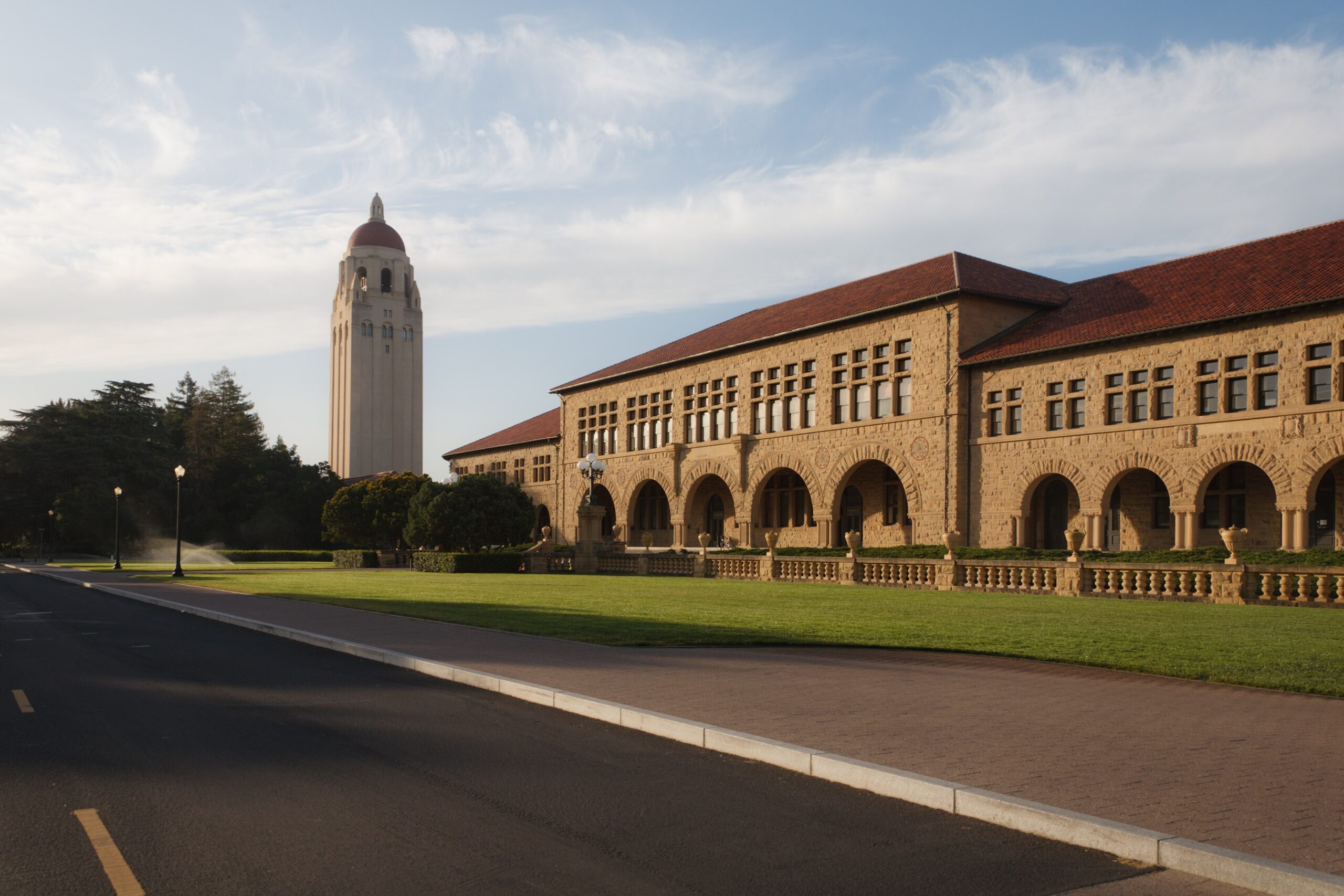
The call from Stockholm reached Karl Deisseroth’s house on the Stanford campus at 12:27 a.m. Pacific time on Monday, Oct. 5, 2026, according to the Stanford Daily. By 6:30 a.m., after hours of phone interviews and congratulations, the new Nobel laureate in physiology or medicine had a request for the university staff gathered in his home: an hourlong break to make his children’s school lunches.
The Associated Press account, carried by News4Jax, described the pause as a small, ordinary task set against one of the biggest mornings of his career. Deisseroth, 54, is a Stanford professor and practicing psychiatrist, and the father of five.
12:27 a.m.: A Missed Call and a Second Ring
The Nobel committee first called at 12:27 a.m. Pacific time, the Stanford Daily reported, and Deisseroth missed it. A second call came to his wife’s phone, asking to speak with him. He was so surprised that he could not speak for about half a minute, the student paper wrote.
The AP said he had just lain down when the call from the Nobel Assembly in Stockholm came through. He told the AP it took a minute or two to recover his words, and that no real sleep followed. He is a self-described night owl who often works past midnight, the AP noted, and had spent the evening reviewing papers and emailing students.
The prize is shared with Peter Hegemann of Humboldt University of Berlin and Georg Nagel of the University of Würzburg. The Nobel Assembly at Karolinska Institutet honored the three scientists “for their discoveries concerning light-gated ion channels and optogenetics,” the Stanford Daily reported. The Simons Foundation, which supported some of his earlier work, described optogenetics as a tool that lets scientists turn brain cells on or off using light. Hegemann and Nagel found channelrhodopsin, an algae protein that opens an ion channel in blue light, and Deisseroth’s work applied it to nerve cells in rats and later in living mice.
3:30 a.m.: Halloween Decorations and a Photographer at the Door
Around 3:30 a.m., an AP photographer arrived at the house and found Halloween decorations outside, the AP reported. He worried he had the wrong address before working up the courage to knock.
Deisseroth’s wife, Dr. Michelle Monje-Deisseroth, answered the door and let him in. She is a Stanford pediatric neuro-oncologist, and the Stanford Daily lists her as the Milan Gambhir Professor in Pediatric Neuro-Oncology. According to the AP, she stayed at her husband’s side when she was not making coffee for the Stanford communications staff who had come to help with the interviews. Deisseroth was surprised by the prize, the AP said. His wife was not.
When a staff member wondered aloud whether the neighbors would mind the commotion, she noted that the family lives in faculty housing, where Nobel winners are not rare, the AP reported.
The children were asleep in the family home through all of it, the AP said, while their father took calls from the couch.
6:30 a.m.: One Hour Off for Lunches
The break came at 6:30 a.m. Deisseroth told the Stanford staff he needed an hourlong pause, beginning at that time, because his children would soon be waking up and would need lunches before leaving for school, the AP reported.
It was not a one-off gesture. Good Morning America, citing details Stanford shared, said he makes sandwiches for his three youngest children. One child gets ranch dressing, cheddar, salami and turkey. Another gets ranch, cheddar and meat. A third gets almond butter, honey and cinnamon on raisin bread.
The contrast with the night behind him was large. He had learned hours earlier that he would share a prize worth 12 million Swedish kronor, about $1.2 million, split equally among the three laureates, according to the Deseret News. The task in front of him was a few sandwiches.
Later That Morning: Telling the Kids
With the lunches made, Deisseroth told his children. Stanford shared a video of the moment on Instagram, and Good Morning America described it as about a minute and a quarter long. In it he tells his daughters, Sophie, 10, and Emma, 13, who react with delight and hug him. Sophie tells him he has won all the prizes, Good Morning America reported. He then tells his son, who is stunned and then calls the news awesome.
The Deseret News reported that Deisseroth thanked his family for sticking by him through the years of work behind the prize. He has said he is a physician-scientist who cares about patients with autism and depression and about the hope the work brings, the AP reported.
The Stanford Daily noted that he earned his Ph.D. in 1998 and his M.D. in 2000 at Stanford and started his own lab there in 2004. A 2005 paper from the lab showed that pulses of blue light could make genetically engineered rat neurons fire with millisecond precision. Stanford says he is its 37th Nobel laureate, Good Morning America reported.
By the time the school day began, the lunches were packed, the phone calls were still coming, and a household that had been awake for most of the night was headed for an ordinary Monday.
Get stories like this by email. Sign up for The Parent Diaries Letter.
This article was produced with AI assistance and edited for accuracy against the sources linked above.
Image: King of Hearts – CC BY-SA 3.0/Wikimedia Commons