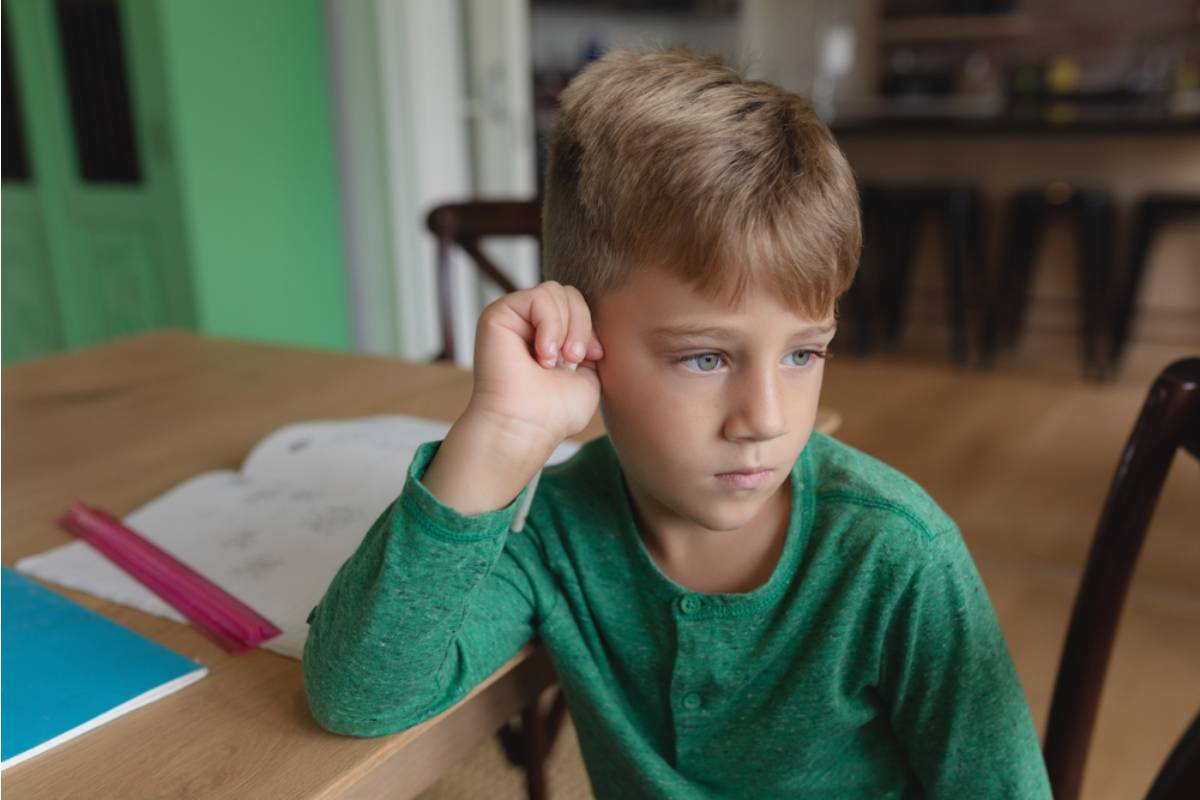
A Mom Says Her Son Came Home and Told Her He Pretended to Forget His Book Report Was Due Because He Didn’t Want Anyone to Hear What He Wrote About His Family

Melissa Turner had barely finished unpacking groceries when her eleven year old son, Ethan, quietly placed his backpack by the kitchen table instead of racing outside to meet his friends. Something about his expression made her stop what she was doing.
He usually talked nonstop after school, filling the house with stories about recess, funny classroom moments, or whatever science experiment had gone wrong that day.
This afternoon he kept his eyes on the floor and picked at a loose thread on his sweatshirt. When Melissa gently asked how school went, he took a long breath before admitting he had pretended to forget his book report because he could not bear to read it in front of his classmates.
A Confession That Changed Everything
Melissa frowned, surprised by what she had just heard. Ethan had always been responsible about homework, so forgetting an assignment sounded unlike him. She asked if he had simply run out of time to finish it.
He slowly shook his head. “I finished it three nights ago,” he whispered. “I just couldn’t let anyone hear it.” His voice cracked enough for Melissa to realize there was far more behind the story than a missing presentation.
The Pages Stayed Hidden
Ethan reached into his backpack and carefully pulled out a neatly folded packet. Every page had been typed, highlighted, and placed inside a clear folder as if he had taken great pride in the project. Melissa noticed there were handwritten corrections in the margins where he had carefully improved his work.
“I didn’t forget,” he admitted. “I hid it under my notebook when Mrs. Sanders asked for volunteers.” He said he even acted surprised when the teacher reminded him it was due because pretending seemed easier than reading the words aloud.
An Assignment With Personal Rules
The class had been asked to choose a book that reflected an important part of their lives. Students were encouraged to explain why they connected with the story instead of simply summarizing the plot. Ethan had selected a novel about a boy trying to hold his family together during difficult times.
His teacher praised students for choosing meaningful books. She wanted everyone to speak honestly because she believed personal connections made reading more memorable. Ethan thought he could do that until he imagined twenty classmates staring back at him.
The Real Story Was Between the Lines
Melissa sat beside him and quietly began reading the report. At first it looked like a thoughtful analysis of the novel’s main character. Then she reached a section where Ethan explained why the story felt familiar.
He described how his father had moved into another apartment after the divorce. He wrote about pretending everything was fine at school because he hated answering questions from classmates. Melissa felt tears gather in her eyes because Ethan had never spoken so openly at home.
Fear Replaced Pride
When Melissa finished reading, she looked at her son with a mixture of pride and sadness. The report was beautifully written, but every paragraph revealed feelings he had hidden for months. Ethan admitted he worried other kids would laugh or treat him differently.
“I don’t want them feeling sorry for me,” he said. I just wanted to write something real.” Those words stayed with Melissa because they sounded far older than an eleven year old should.
A Teacher Notices Something Missing
The following morning Melissa emailed Mrs. Sanders asking if they could meet after school. The teacher responded almost immediately, saying she had been concerned because Ethan’s behavior had seemed unusual. She explained that he rarely avoided participating in class.
During their meeting, Mrs. Sanders admitted she initially assumed he had forgotten the assignment. She never imagined the reason involved something so personal. Melissa handed her the report without saying much, allowing the teacher to read it herself.
Silence Filled the Classroom Memory
Mrs. Sanders finished reading and carefully placed the pages back inside the folder. She remained quiet for several moments before looking at Melissa. “This isn’t just a book report,” she softly said. “This is a child trying to explain something important.”
She confessed that she had encouraged personal storytelling without considering how vulnerable some students might feel. While her intentions had been good, she realized she should have offered another option for children uncomfortable with public speaking.
An Honest Conversation at Home
That evening Melissa sat with Ethan at the dining room table instead of bringing up homework. She asked whether he wished he had chosen another book. Ethan surprised her by saying no.
“I like what I wrote,” he answered. “I just don’t like everyone knowing those things.” Melissa realized his fear was never about the assignment itself. It was about losing control over who knew the hardest parts of his life.
A Different Opportunity Appears
Mrs. Sanders contacted Melissa two days later with an idea. Instead of reading the report aloud, Ethan could meet privately with her after school to discuss the book. His grade would be based on the same standards as everyone else.
When Ethan heard the suggestion, relief spread across his face. He agreed immediately because he wanted his work evaluated without feeling exposed. For the first time all week, Melissa saw him smile without forcing it.
A Conversation That Opened New Doors
During the private discussion, Mrs. Sanders asked thoughtful questions about the novel instead of focusing only on Ethan’s personal experiences. As they talked, Ethan gradually became more comfortable explaining why certain scenes affected him.
Near the end of the meeting, he admitted that writing the report had actually helped him understand his own emotions. Mrs. Sanders thanked him for trusting her enough to share that. She assured him he never had to reveal personal details to prove he had learned something.
Other Students Begin Speaking Up
A few days later Mrs. Sanders quietly changed how future presentations worked. She announced that students could choose between presenting to the class, recording a video, or discussing their work privately. She explained that learning should challenge minds without forcing anyone to reveal personal experiences they wished to keep private.
Several students looked visibly relieved. One later admitted she hated speaking in front of groups because of severe anxiety. Another said he worried classmates would make fun of his accent. Ethan realized he had not been the only student carrying invisible fears.
An Unexpected Classroom Discussion
Without mentioning Ethan or his assignment, Mrs. Sanders led a class conversation about respecting personal boundaries. She reminded students that stories often came from real experiences, and no one should pressure classmates to share more than they wanted.
The discussion became surprisingly thoughtful. Students talked about privacy, empathy, and the difference between curiosity and kindness. Ethan listened quietly, feeling understood without ever becoming the center of attention.
Looking at the Report One Last Time
Several weeks later Melissa found the report tucked neatly inside Ethan’s bedroom bookshelf instead of hidden at the bottom of his backpack. She asked why he kept it there. Ethan smiled before answering that it reminded him he could tell the truth, even if not everyone needed to hear it all at once.
Melissa realized the assignment had become much more than a school project. It had opened a conversation their family should have started long before. Ethan had learned that honesty did not always require a microphone, and Melissa learned that the quietest moments after school sometimes revealed the most important things her son had been carrying all along.