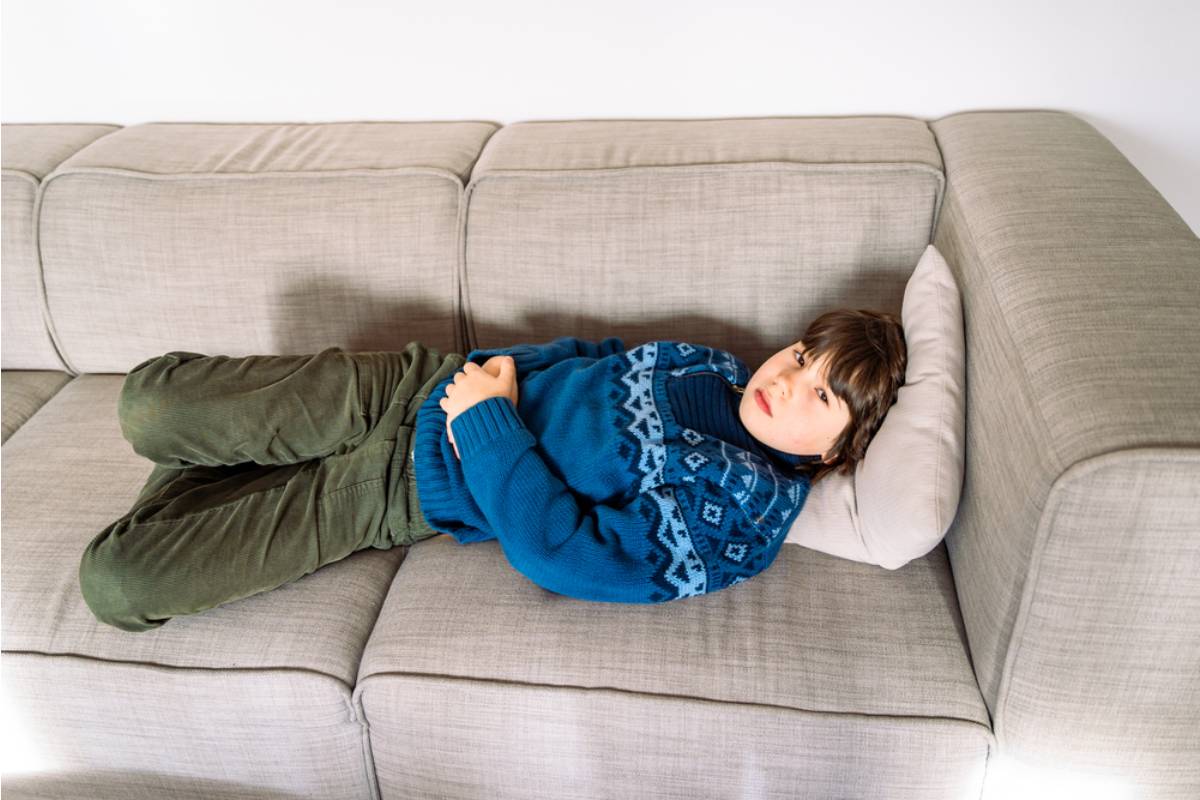
A School Nurse Says a Student Told Her He Pretends His Stomachaches Are Real Because Real Ones Get Him Sent Home and Home Is the Only Place He Feels Like He Can Breathe

Some stories stay with people long after the school day ends. I worked as a school nurse for years, and I heard every excuse imaginable from students hoping to skip a math test or avoid gym class. Most of the time it was easy to tell who was exaggerating and who truly needed medical attention.
Then one quiet fourth grader changed the way I looked at every child who walked into my office. What started as another complaint about a stomachache slowly uncovered something no one in the building expected.
A Familiar Face Walked Through My Door Again
Ethan had become one of my regular visitors by the middle of the school year. Every Monday and several afternoons each week, he would shuffle into my office holding his stomach with the same worried expression. His temperature was normal, his pulse was steady, and there were never any signs of illness. After resting for fifteen or twenty minutes, he usually said he felt a little better.
His teacher apologized every time she sent him down. She explained that Ethan would become pale, stop participating, and quietly ask if he could visit the nurse. None of his classmates teased him or questioned him because everyone believed he was simply a child with frequent stomach problems.
His Medical Records Raised More Questions
I checked with his parents several times to ask whether his pediatrician had found anything concerning. His mother always answered politely and explained that every medical test had come back normal. She sounded frustrated because they had already visited specialists who could not identify a physical cause.
His father usually picked Ethan up whenever the school called. He never complained about leaving work early, even though it happened more often than most families could manage. Their willingness to respond quickly made me think they were doing everything they could.
One Conversation Changed Everything
One afternoon Ethan was lying quietly on the cot instead of asking when he could go home. I sat nearby finishing paperwork and asked whether his stomach still hurt. He stared at the ceiling for several seconds before answering with a sentence I never expected.
He whispered, “Sometimes I pretend it’s worse than it is because if I go home, I can finally breathe.”
I stopped writing immediately. I did not interrupt him or rush to ask questions. I simply waited because children often reveal the most important things after someone gives them enough silence.
He Explained What Breathing Really Meant
Ethan looked embarrassed after speaking. He quickly added that he was not trying to trick anyone. He said his stomach sometimes hurt a little, but he made it sound much worse because being home felt safe.
When I gently asked what made school so difficult, he shrugged. “Everybody wants something from me here,” he said. “At home nobody keeps watching me.”
Those words sounded far older than a nine year old should have spoken.
Nothing About His Behavior Matched Bullying
The first possibility that crossed my mind was bullying. I quietly spoke with his teacher, the school counselor, and the assistant principal. None of them had noticed anyone targeting Ethan. He had friends at recess and was never isolated during group activities.
His teacher described him as bright, respectful, and eager to please. She admitted he seemed unusually anxious whenever assignments became challenging, even though his grades remained excellent. She had assumed he simply wanted everything to be perfect.
His Classroom Told a Different Story
I arranged to observe Ethan without announcing why. Sitting quietly in the back of the classroom allowed me to notice things everyone else had accepted as normal.
Every time the teacher asked a question, Ethan froze before raising his hand. If another student answered first, he relaxed instantly. Whenever someone corrected his work, he apologized repeatedly even when he had made only a tiny mistake.
The room was supportive, but Ethan acted as though every small error carried enormous consequences.
His Parents Were Surprised by What We Shared
We invited both parents to meet with the school counselor and me. They arrived looking nervous because they assumed we had discovered another medical concern.
Instead, I repeated Ethan’s words as carefully as I could. His mother immediately covered her mouth with her hand. His father leaned back silently and stared at the table for several moments.
Neither parent became defensive. Instead, they looked heartbroken that their son had been carrying such heavy feelings without telling them.
An Unexpected Family Pattern Came to Light
As we continued talking, Ethan’s parents described life at home. His older sister had recently been diagnosed with a serious medical condition that required frequent appointments. The family schedule revolved around hospital visits, medication reminders, and constant uncertainty.
His parents admitted they had unintentionally begun praising Ethan for being “the easy child.” They expected him to handle homework alone, stay patient during long evenings, and avoid creating additional problems because they already had so much to manage.
They believed they were complimenting his maturity. Ethan had quietly interpreted those compliments as pressure to never struggle.
The Weight He Carried Was Invisible
Children often express emotional stress through physical symptoms. Ethan was not inventing every stomachache. His anxiety created real discomfort that became stronger as each school day continued.
When he said home was the only place he could breathe, he was describing relief from the pressure he felt to be perfect everywhere else. Home represented safety because he could curl up on the couch beside his father without worrying about grades, participation, or disappointing anyone.
His parents listened carefully as the counselor explained how emotional strain can appear as genuine physical pain.
A New Plan Replaced Constant Trips Home
Instead of immediately calling his parents every time Ethan visited my office, we created a different routine. He received a short break in the counseling office whenever anxiety became overwhelming. There he could color, read quietly, or practice calming exercises before returning to class.
His teacher also stopped praising only perfect work. She intentionally celebrated effort, curiosity, and persistence instead. If Ethan made a mistake, she treated it as something ordinary instead of something needing immediate correction.
Small adjustments began changing the atmosphere around him faster than anyone expected.
His Parents Changed Their Evenings Too
At home, Ethan’s parents made one important promise. Every evening one parent would spend uninterrupted time with him, even if it lasted only twenty minutes.
During that time there would be no discussions about homework, chores, or his sister’s appointments. They played card games, built small projects, or simply talked about whatever Ethan wanted to share.
His father later admitted those conversations helped him realize how many worries his son had been hiding behind polite smiles.
The Visits Became Less Frequent
Weeks passed before I noticed something remarkable. Ethan no longer appeared every Monday morning. Then an entire month passed without a single stomach complaint.
When he finally visited my office again, it was because he had scraped his knee during recess. As I cleaned the small cut, he grinned and said, “This one is actually real.”
We both laughed, and it felt like the first carefree laugh I had heard from him all year.
One Final Conversation Stayed With Me
Near the end of the school year, Ethan stopped by before catching his bus. He was carrying a stack of artwork and wanted to show me a drawing he had finished in class.
Before leaving, he quietly said, “I still get nervous sometimes, but now I know I don’t have to escape every time.”
After he walked away, I realized that his most important healing had never involved medicine. It came from adults finally recognizing that a child can appear calm, successful, and well behaved while struggling to carry invisible emotional weight.
Since then, whenever a student tells me something hurts, I remember Ethan. Sometimes the pain is exactly where they point. Sometimes it begins somewhere words have not yet reached. Listening carefully can make all the difference because the sentence that sounds the smallest may reveal the biggest truth hiding underneath.