A Teacher Says a Student Asked Her if Teachers Ever Have a Favorite and When She Said No He Said He Already Knew the Answer He Just Wanted to See What She Would Do

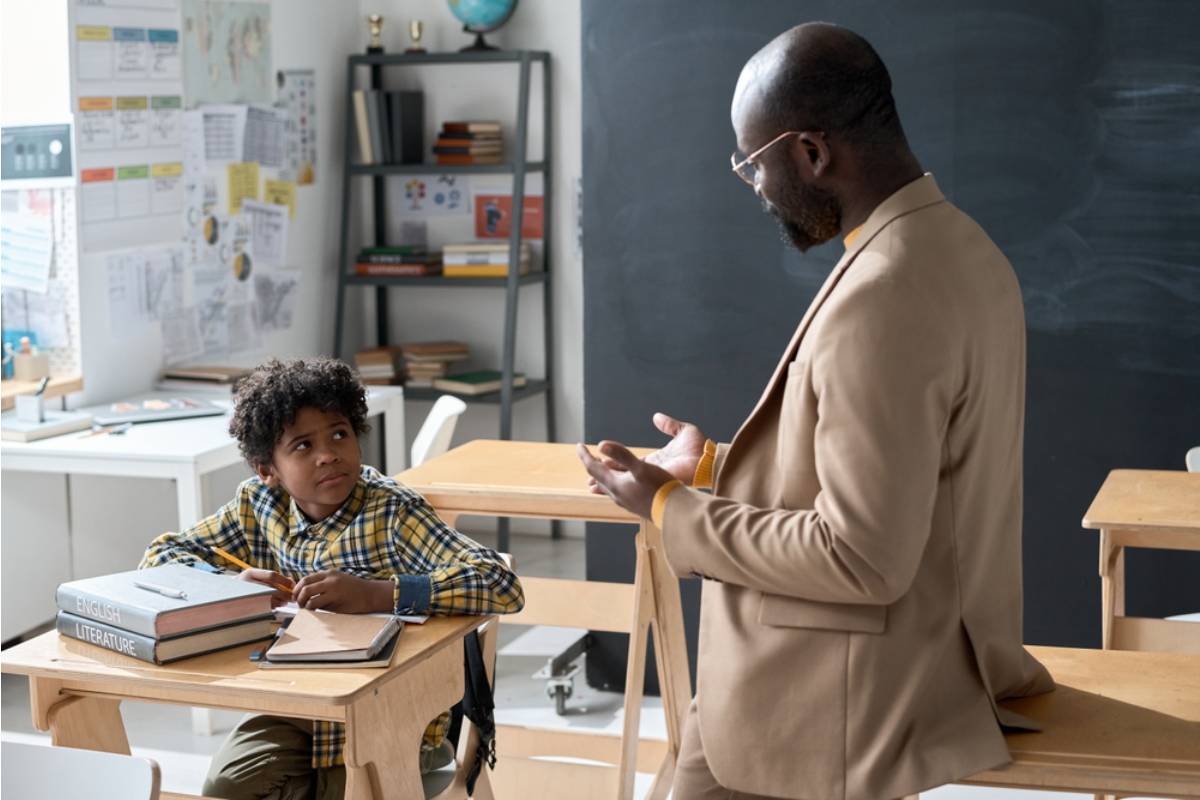
I thought it was going to be one of those harmless questions students ask when they are trying to avoid starting an assignment. A boy in my fifth grade class raised his hand with a serious expression and asked whether teachers ever had a favorite student.
I smiled and gave the answer I always gave, explaining that teachers care about every student and try to treat everyone fairly. Instead of nodding and moving on, he leaned back in his chair and quietly said, “I already knew you were going to say that. I just wanted to see what you would do.” The room suddenly became much quieter.
Every Pair of Eyes Turned Toward Me
Several students stopped writing and looked back and forth between us. The boy did not sound angry or sarcastic. He sounded like someone waiting for an experiment to finish. I realized that whatever came out of my mouth next mattered more than I had expected. This was no longer just a casual classroom question.
A Name He Could Not Ignore
He pointed toward another student across the room and asked why that classmate was always chosen to hand out papers, demonstrate projects, or help visitors. Before I could answer, a few other students quietly admitted they had noticed the same thing. The student being discussed looked embarrassed and stared down at his desk. I suddenly understood that something small had been growing into a much bigger perception.
Looking at My Own Habits
After school I replayed the conversation in my mind. The student they mentioned was dependable, organized, and almost always volunteered before anyone else reacted. Without realizing it, I had started relying on him because it made the day run more smoothly. Convenience had slowly turned into routine. Routine had started looking like favoritism.
A Notebook Full of Tallies
The next morning the boy asked if he could show me something privately. From his backpack he pulled out a small notebook filled with neat tally marks. For nearly three weeks he had tracked who answered questions, who received compliments, and who got classroom responsibilities. I expected the numbers to prove nothing. Instead, they revealed patterns I had never consciously noticed.
The Data Was Not Perfect
His notebook was not entirely accurate. He had missed several moments and misunderstood a few situations. Even so, the overall pattern was impossible to ignore. One handful of students, including the dependable volunteer, appeared far more often than everyone else. I thanked him for showing me instead of dismissing his observations.
A Class Discussion I Never Planned
Rather than pretending the conversation never happened, I decided to address it openly. I asked the class how people decide whether something feels fair. Students quickly realized fairness did not always mean everyone receiving the exact same thing. It also meant everyone believing they had a genuine opportunity to participate. That distinction changed the entire conversation.
A Different System Took Shape
Together we created a rotating list for classroom jobs. Instead of automatically calling on the fastest hand, I added random selection activities and small group discussions before choosing volunteers. Students who rarely spoke suddenly found themselves participating. Even the quieter children started raising their hands more often because they believed their voices mattered. The classroom atmosphere shifted within days.
The Student Nobody Expected
One afternoon I randomly selected a girl who almost never volunteered to demonstrate a science activity. She nervously walked to the front of the room and explained the experiment so clearly that several classmates applauded when she finished. Later she admitted she had always assumed I preferred hearing from other students. I realized she had been quietly counting herself out long before I ever noticed.
A Parent Shared Another Piece
A week later the boy’s mother requested a meeting. I worried she might be upset about the classroom discussion. Instead, she thanked me for taking her son’s question seriously. She explained that he had attended another school where he believed certain students could do no wrong, and the experience had made him skeptical of adults claiming everyone was treated equally. Suddenly his question made much more sense.
The Boy Finally Explained Himself
After class one day, he admitted he had not been trying to embarrass me. He simply wanted to know whether I would ignore him, become defensive, or actually think about what he had said. He smiled and said most adults immediately insisted they were right. Seeing me change something surprised him more than any answer I could have given. That comment stayed with me long after he left the room.
The Student at the Center of It All
The dependable student I had unknowingly relied upon eventually approached me as well. He confessed he had started feeling uncomfortable because classmates teased him about being the teacher’s favorite. He never wanted special attention and often wished someone else would be chosen. I apologized for putting him in that position without realizing it. He looked relieved just to have someone acknowledge it.
The Lesson That Lasted Beyond the School Year
By the end of the year our classroom looked very different from where it had started. More students participated, more voices were heard, and classroom responsibilities belonged to everyone instead of the same few people. On the last day of school, the boy who had asked the original question handed me a folded note before leaving. It simply said, “You didn’t prove teachers never have favorites. You proved good teachers are willing to notice when they’re wrong.” I still keep that note because it reminds me that sometimes the most important lessons are the ones teachers never expect to learn themselves.