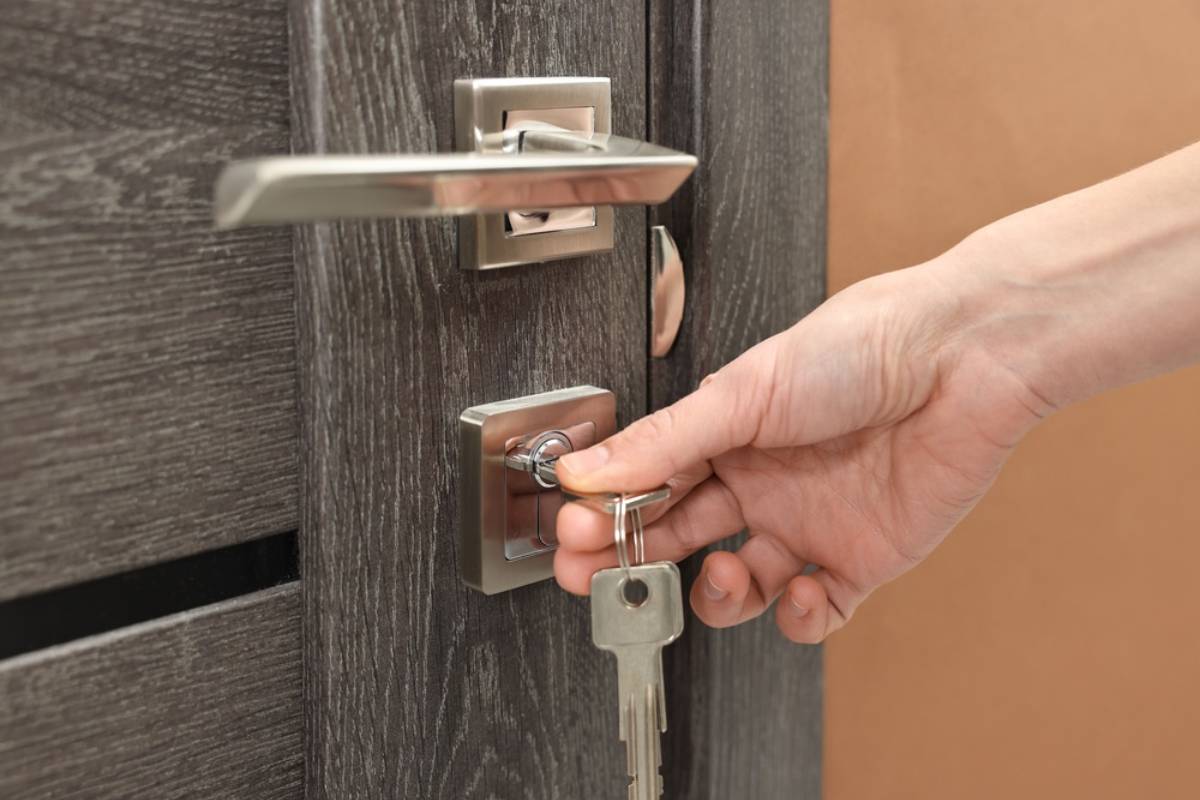
A Woman Says Her Neighbor Tried to Unlock Her Apartment After She Once Trusted Him With Her Keys, and His Explanation Only Made Things More Suspicious

A person shared her story after an unsettling incident turned an ordinary evening in her apartment into a night she could not stop thinking about. She was a single woman living alone, enjoying a movie and expecting nothing more eventful than a relaxing night with her dog. Everything seemed perfectly normal until she suddenly heard someone trying to unlock her back door. Within seconds, the peaceful atmosphere disappeared, and she found herself wondering who was trying to enter her home.
At first, she listened carefully, hoping there was a harmless explanation for the strange noise. Then she heard a voice from inside the apartment say something that immediately raised her alarm. Her dog woke up and began barking, making it clear that whoever was there could no longer pretend nobody had noticed. She shouted toward the unexpected visitor in the scariest voice she could manage, demanding to know who was there and telling them to leave.
The Door Was Already Unlocked When She Checked
The woman never actually saw the person who had opened the door, which made the entire encounter even more unsettling. When she approached the back entrance, she discovered that the door was unlocked, and she felt confident that someone had successfully turned the lock. She was usually careful about securing it, so the possibility that a stranger had gained entry left her shaken. Even though she could no longer hear anyone inside, she had no way of knowing exactly what had happened.
Rather than immediately assuming everything was fine, she tried to protect herself while figuring out her next move. She dragged her kitchen table in front of the back door, creating a makeshift barrier while she calmed herself down. The simple action gave her a little peace of mind, but it did not explain how someone had managed to open the entrance. As she sat with her thoughts, one familiar person began to come to mind: the neighbor who lived directly upstairs.
Her Upstairs Neighbor Suddenly Became Part of the Mystery
Not long after the frightening incident, the woman heard her upstairs neighbor enter his own apartment. He was moving around noisily, and the timing made her wonder whether the sounds at her back door had something to do with him. She picked up her phone and sent him a direct message asking whether he had been the person trying to get into her apartment. Instead of receiving an immediate explanation, she was left waiting for a reply while the situation continued to bother her.
The silence gave her little reassurance, especially because she had already heard someone inside her home. She did not want to accuse a neighbor without knowing the facts, but she also could not ignore what she had experienced. Living alone meant that she had to take her own safety seriously, even if doing so risked making things awkward between them. With no clear answer available, she decided that contacting the police was better than simply hoping the incident had been harmless.
A Police Officer Arrived to Find Out What Happened
The woman called the police non-emergency line and explained what had happened at her back door. An officer was sent over to investigate, giving her an opportunity to report the incident rather than handle the uncertainty by herself. The officer checked with the upstairs neighbor and later returned with information that added another layer to the story. According to the officer, the neighbor was quite drunk and admitted that he had mistaken her door for his own.
That explanation offered a possible reason for why someone had tried to enter the apartment, but it did not automatically resolve every concern. Being intoxicated could explain confusion about which apartment belonged to him, yet the woman still needed to understand how the door had opened. She had been confident that she locked it, and she remembered hearing someone manipulating the lock before entering. What initially sounded like a straightforward case of mistaken identity was beginning to feel more complicated.
The Police Tested His Keys, and the Result Raised Questions
During the investigation, the officer tested the neighbor’s keys against the woman’s lock. According to the officer’s report to her, the keys did not work, which seemed significant because the neighbor had admitted to mistaking her apartment for his. If his ordinary keys could not open the door, it was unclear how he had managed to get inside. The test did not establish exactly what had happened, but it left the woman with an uncomfortable gap between the explanation and the evidence.
She did not want to jump to conclusions, yet she could not pretend that the result meant nothing. If the neighbor had simply confused the doors while drunk, why had someone successfully opened her entrance? There could have been another explanation, including a problem with the lock, but none had been confirmed. With her peace of mind already shaken, she decided to file a police report and arrange to have the locks changed the following morning.
An Old Favor Suddenly Felt Like a Serious Mistake
As the woman thought about the incident, she remembered that she had previously trusted her neighbor with her keys. She had given them to him so he could water her plants while she was away from home for an extended period. At the time, it had seemed like an ordinary favor between people who lived in the same building. Now, however, the fact that he had once possessed access to her apartment made the unexplained entry feel much more personal.
The woman also remembered that the neighbor had complained about having trouble with the keys and locking the doors during that period. He had described himself as a person who was particularly concerned about security, which she had found somewhat unusual but not especially threatening. Looking back, she wondered whether those earlier conversations had any connection to what had just happened. She had no proof that he had copied her key, but the old memory was enough to make her question how much she truly knew about the situation.
She Began to Wonder Whether He Had Made a Copy
The possibility that the neighbor might have copied her key became one of the woman’s biggest concerns. Since he had previously been trusted with the original keys, she could not entirely dismiss the idea that he might have made a duplicate without telling her. She made her suspicion clear to the police, even though she understood that suspicion was not the same as proof. For someone living alone, the uncertainty itself was frightening, because she could not know whether the person who had entered was capable of doing it again.
At the same time, she worried that she might be treating an embarrassing mistake as something far more sinister. Perhaps the neighbor had genuinely confused the entrances while intoxicated, or perhaps an issue with the lock had allowed the wrong key to work. Still, none of those possibilities changed the fact that she had heard someone entering her home without permission. She had to balance the possibility of a misunderstanding against the very real need to feel secure inside her own apartment.
Then the Neighbor Finally Responded to Her Message
After the police had become involved, the neighbor eventually replied to the woman’s earlier message. His response introduced a detail that made the situation even more confusing: he claimed that his key had worked on her lock. That statement seemed to support the idea that he had indeed unlocked her door, although it did not establish whether he had copied her key or why he had entered. More importantly, it appeared to conflict with what the officer had told her after testing the neighbor’s keys.
The woman was left trying to make sense of two explanations that did not seem to fit together neatly. The officer had reportedly found that the keys the neighbor presented did not work, yet the neighbor himself said one had opened her door. Neither statement, on its own, explained exactly how the incident unfolded. What had started as a frightening intrusion now included a second mystery: why did the neighbor’s account appear to differ from the result of the police test?
A Response From a Person Pointed Out the Contradiction
A response from a person suggested that the mismatch between the neighbor’s claim and the officer’s test deserved serious attention. If the keys he presented to the police could not open the woman’s door, that person reasoned, the neighbor’s later statement created an obvious question about which key he had actually used. One possibility raised was that he might have possessed a separate copy and had not presented it during the test. However, that remained speculation rather than an established fact, and the woman had no confirmed evidence proving that a duplicate existed.
Other people also cautioned her against treating the contradiction as proof of a particular motive. The neighbor might have been confused because he was drunk, or the lock itself might have been worn or behaving unpredictably. Even so, the difference between the two accounts was enough to justify taking precautions. The woman did not need to solve every part of the mystery before deciding that she no longer felt comfortable giving him access to her home.
Some People Thought It Could Have Been an Honest Mistake
Not every response treated the neighbor’s behavior as evidence of deliberate wrongdoing. Some people pointed out that intoxication can lead to confusion, especially in apartment buildings where doors may look similar. Others suggested that an older or worn lock can sometimes behave unexpectedly, although nobody in the discussion could verify that this had happened in her case. From that perspective, it was possible that a combination of alcohol, confusion, and an unreliable lock had created a frightening misunderstanding.
Still, even those more forgiving explanations did not make the woman’s reaction unreasonable. She had heard someone trying to unlock her door, heard a voice inside her apartment, and discovered that the entrance was no longer secured. She had no obligation to gamble with her personal safety simply to avoid offending a neighbor. Whatever his intentions had been, the incident had given her a practical reason to reconsider who should have access to her home.
Others Warned Her Not to Ignore the Situation
Several responses emphasized that a person’s safety should come before the fear of appearing rude or overly suspicious. They encouraged her to change the locks, stop asking the neighbor to water her plants, and document any further concerning interactions. Some also suggested that she consider appropriate security measures for her apartment, including checking the entrances and reviewing whether additional protection was needed. These suggestions were precautions, not proof that the neighbor had done anything beyond what had already been reported.
One response from a person also shared an experience in which an apparent wrong-door incident had escalated into something much more frightening. That account served as a reminder that an innocent-sounding explanation cannot always be verified immediately. It did not establish that the woman’s neighbor had similar intentions, but it reinforced why people urged her not to dismiss the incident. For those responding, calling the police and arranging to change the locks were sensible decisions, not overreactions.
The Woman Confirmed That She Had Locked the Door
As the discussion continued, people asked whether the woman was absolutely certain that the back door had been locked before the incident. It was a reasonable question because an unlocked entrance could have offered a different explanation for how someone got inside. She explained that she was very confident it had been secured, since she routinely used the back door to take her dog outside in the morning and made a habit of locking it. She had also heard the person fiddling with the lock, which further convinced her that the entrance had not simply been left open.
That detail made it harder for her to shake the feeling that something unusual had occurred. She understood that memory can sometimes be imperfect and that locks do not always behave predictably, but she was familiar with her own routine. The fact that the door was a little sticky from the outside provided one possible detail to consider, though it did not explain who had opened it. She still lacked a definitive answer, and that uncertainty was precisely why she wanted the locks replaced instead of relying on assumptions.
The Neighbor’s Explanation Left Her With More Questions Than Answers
The claim that the neighbor’s key worked on her lock became the detail she could not stop revisiting. If he was telling the truth, perhaps the door or key had some unusual issue that allowed it to open, meaning a copied key was not necessarily involved. If he was mistaken or withholding information, however, the woman’s concerns about unauthorized access remained unresolved. There was no confirmed evidence establishing which explanation was correct, and she was unwilling to make a definite accusation based on speculation alone.
She eventually acknowledged that the neighbor’s statement did not give her much comfort. The police had reportedly tested the keys he showed them and found that they did not work, making his later claim difficult for her to understand. She was not sure whether she was dealing with an intoxicated person who had made a terrible mistake or someone whose explanation did not tell the full story. Rather than continuing to chase an answer she could not verify, she decided to focus on the decisions that were within her control.
Changing the Locks Became Her First Priority
The woman planned to have the locks changed the following morning, regardless of whether the neighbor had made a copy of her key. It was a straightforward way to regain some control after an incident that had left her feeling unsafe inside her own home. She also intended to avoid relying on him for favors in the future, particularly anything that required handing over access to her apartment. Whatever their relationship had been before that night, the experience had changed how comfortable she felt around him.
She still felt uneasy about accusing him, especially because they lived so close to one another and might continue crossing paths. But she had not invented the sound of someone trying to unlock her door, and she had not called the police merely to create trouble for a neighbor. She had reacted to a situation that frightened her, reported what she knew, and made plans to secure her home. In the end, the biggest unanswered question was not whether she had been wrong to seek help, but what had really happened at that back door and why the neighbor’s explanation did not match what she had been told.