A Woman Says a Man Told His Child to Stand on Her Concert Seat, Then Asked ‘Why Are You So Special?’ She Was Four Months Out From Brain Surgery.

The JVKE tickets were a birthday gift for Cyntianna C. Ledesma Ortega’s youngest daughter, who was turning 11. The concert was also the Miami writer’s first outing since brain surgery. In a personal essay published on BuzzFeed on Oct. 21, 2026, she describes how a man in the VIP section told his child to stand on her seat, and how he responded when she said no.
The essay was first published on HuffPost and reshared as part of a “Best Of” series. Photo captions in it place the concert in August 2023 and the surgery in April 2023, so the night it describes is a few years old. It is a first-person account, and the other man’s side is not part of it.
The seat that took numerous phone calls
According to the essay, Ledesma Ortega needed a cane and noise-reducing earplugs to get through a loud show. She made numerous calls to the venue, which the essay does not name, to arrange an ADA seating accommodation.
What she was given was a metal bench attached to the back of a barricade that separated the VIP section from general admission. She sat facing away from the stage, with her head about level with the elbows of the standing crowd.
At the time of the concert, she was about four months into her recovery. As the VIP area filled up, she stood to see the show.
A question about being “so special”
That is when a man in the VIP section told his child to stand on her seat. Ledesma Ortega says she told him the child could not stand there, because it was her seat.
The man answered by asking why she was so special. She says she told him she had had brain surgery.
Her husband, Humberto, stepped between them and explained her situation. The man backed off, but she writes that he stayed a few feet away for the rest of the night and glared at her.
The essay says she spent the rest of the concert feeling watched and judged, and wondering whether she was allowed to dance or smile.
A disability that does not look like one
Ledesma Ortega writes that her disability is invisible, variable and situational. She says overstimulation, poor sleep and noisy events can leave her exhausted for a day or two. After the concert, she describes a “hangover” in which her brain felt too heavy for her skull, and she spent the next day in bed.
She also writes that she hesitated to call herself disabled, expecting some formal welcome that never came. She says she has since learned to advocate for herself. She now requests accommodations such as a low table, carries earplugs, naps and declines some activities. In her words, her right to advocate is not contingent on another person’s sympathy.
Her surgery removed a cerebral cavernous malformation from the right frontal lobe of her brain, according to the essay. MedlinePlus Genetics, a National Library of Medicine resource, describes these malformations as collections of small, enlarged and irregular blood vessels in the brain whose thin walls tend to leak. It says about 25 percent of people never have related health problems, while others may have headaches, seizures, paralysis, hearing or vision loss, or bleeding in the brain.
Her essay describes years of unexplained symptoms before the diagnosis, including dizzy spells, fatigue and anxiety. She writes that doctors attributed them over the years to stress, an autoimmune disorder or her weight.
What federal guidance says about hidden disabilities and seats
The CDC’s disability overview says more than 1 in 4 U.S. adults, or 28.7 percent, have some type of disability, and that “some disabilities may be hidden or not easy to see.” The agency’s list of disability types includes those affecting movement, thinking, memory, hearing, vision and mental health.
The federal Americans with Disabilities Act bars discrimination based on disability, including at businesses open to the public. Its Title III covers businesses and nonprofits that serve the public, and the page lists restaurants, hotels, retail stores, movie theaters, gyms and doctors’ offices as examples. The ADA site states that “some disabilities are visible and some are not,” and lists conditions such as diabetes, epilepsy, PTSD and autism among non-apparent examples.
On the ticketing side, the ADA’s ticket sales guidance says venues cannot require proof of disability as a condition for buying tickets for accessible seats. Instead, venues may ask buyers to state that they or the person they are buying for need the features of an accessible seat. The guidance also says accessible seats must be sold during the same hours and through the same methods as other seats, and that a buyer of an accessible seat may purchase up to three additional contiguous seats in the same row for companions.
Those rules describe how accessible seats are sold, not how other fans behave around them, and the essay is a personal account rather than a legal complaint.
What stayed with her afterward
The essay closes with a photo of Ledesma Ortega and her husband at their eldest daughter’s quinceañera in February 2024. She writes that she now focuses on gratitude.
For many parents, the scene at the barricade will be a familiar one: a night built around a child’s birthday, a seat that took real effort to secure, and a stranger who could not see why it mattered. Ledesma Ortega’s answer to the man’s question, as she tells it, was that she was recovering from brain surgery.
Get stories like this by email. Sign up for The Parent Diaries Letter.
This article was produced with AI assistance and edited for accuracy against the sources linked above.
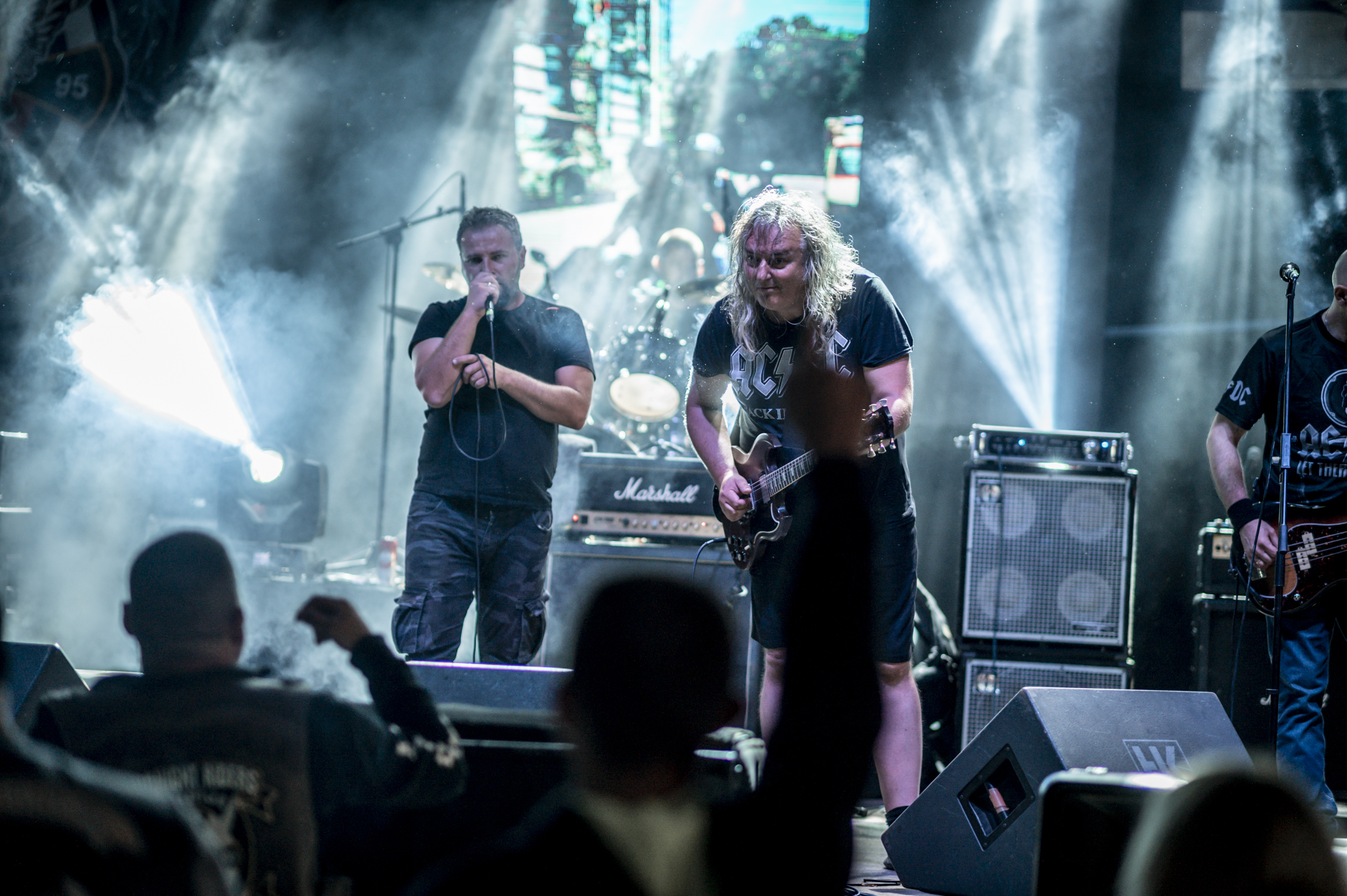
Image: Shixart1985 – CC BY 2.0/Wikimedia Commons