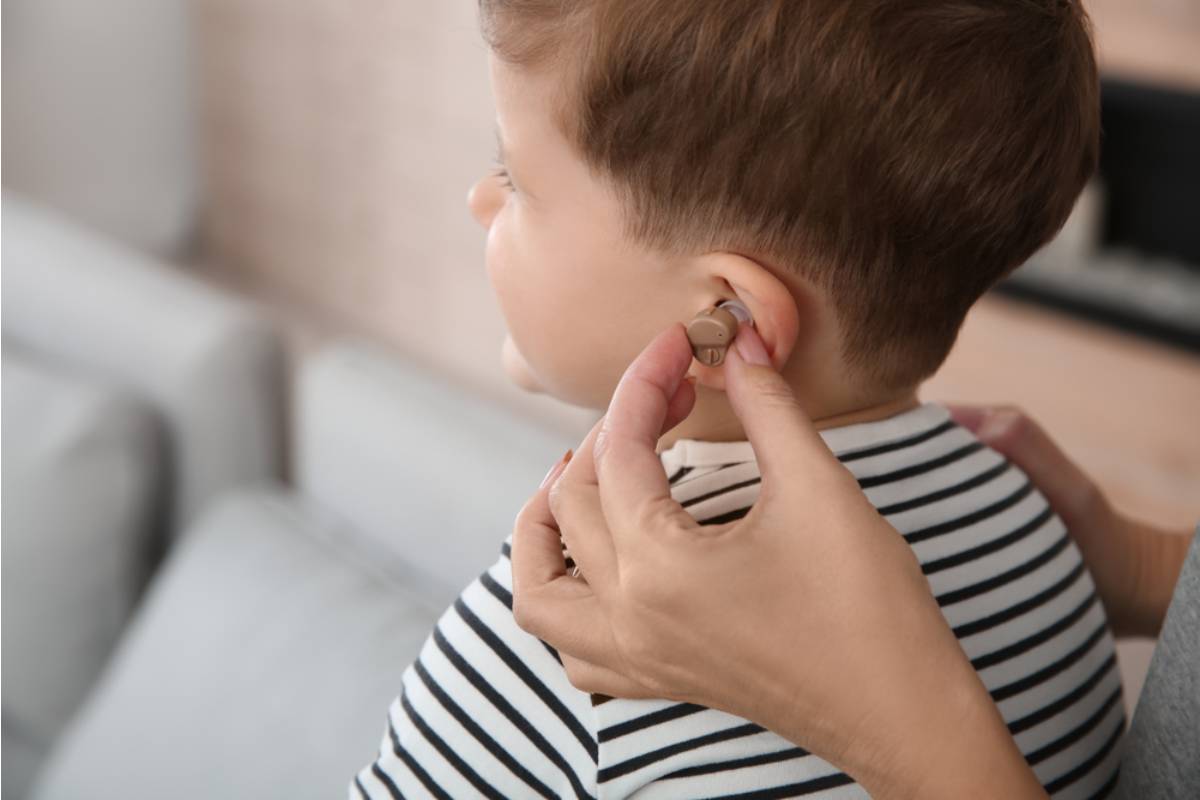
Dad Says He Refused to Let His Son’s Football Coach Bench Him for Having a Visible Hearing Aid, Calling It a “Liability on the Field”

When fourteen year old Lucas Bennett walked onto the football field wearing his new hearing aid for the first time, he expected questions from teammates. He did not expect an adult in charge of his team to suggest that the device made him a problem.
Lucas had spent years learning how to play sports while managing his hearing loss, and football had become the place where he felt most confident.
His father, Daniel Bennett, never imagined he would have to defend his son’s right to compete over something designed to help him participate. What happened during one practice changed the way the entire team viewed ability, fairness, and inclusion.
The Practice Where Everything Suddenly Changed
Lucas had joined the Westfield Middle School football team because he wanted to challenge himself and be part of something bigger. He had always loved the sport, even though hearing loss meant he had to work harder to follow plays and communicate with teammates. His new hearing aid allowed him to hear voices more clearly, especially during team meetings and practice drills. Lucas was excited because he finally felt like he had fewer barriers between himself and the game.
During the first week of wearing it at practice, most teammates reacted positively. Some asked how it worked, and others simply treated it like any other piece of equipment. Lucas appreciated that nobody made a big deal out of it. Then, during a defensive drill, Coach Mark Reynolds called him aside and looked closely at the device.
The Conversation Near the Sideline
Coach Reynolds asked Lucas if he had worn the hearing aid during previous seasons. Lucas explained that it was new and helped him hear instructions better. The coach nodded but looked concerned. He told Lucas he was worried about the device being damaged during contact and whether it could create a safety issue.
Lucas expected the coach to ask questions or discuss possible solutions. Instead, he heard something that immediately made him uncomfortable. Coach Reynolds told him that he might need to sit out during games until the team could “figure out what to do.” Lucas walked away quietly, but he knew the decision was not about football ability.
The Moment Lucas Told His Father
That evening, Lucas barely touched his dinner. Daniel Bennett noticed because his son usually talked nonstop about practice. When Daniel asked what happened, Lucas first said it was nothing. After a few minutes of silence, he finally explained what Coach Reynolds had said.
Daniel listened carefully and asked Lucas how he felt about it. Lucas admitted he was embarrassed because he worried his teammates would think he was not good enough. He said the hardest part was that he had worked so hard to prove himself, and now it felt like one part of him was being judged before anyone saw what he could do.
The Parent Who Refused To Stay Quiet
The next morning, Daniel contacted the school to request a meeting with Coach Reynolds and the athletic director. He did not want to create a fight, but he also did not want Lucas to believe that unfair treatment was something he had to accept. Daniel explained that his son’s hearing aid was not a weakness. It was a tool that allowed him to compete more effectively.
During the meeting, Coach Reynolds explained that his concern was about responsibility and safety. He said football involved intense physical contact and he did not want Lucas getting hurt. Daniel understood the concern but questioned why the first solution was removing Lucas from competition instead of finding ways to make it work.
The Equipment Question Nobody Had Asked
The athletic director suggested involving Lucas’s audiologist to better understand the device. Until that point, nobody from the coaching staff had spoken with a hearing specialist. They had made assumptions based on what they saw rather than asking what was actually possible.
Lucas’s audiologist explained that the hearing aid was designed for daily activity and that protective options were available for athletes. She also explained that many people with hearing devices participate in sports successfully when proper precautions are taken. The conversation changed the direction of the situation because the school finally moved from assumptions to solutions.
The Team Learned What Lucas Had Been Carrying
When Lucas returned to practice, he worried that everyone knew about the disagreement. He expected teammates to treat him differently. Instead, several players approached him and asked what they could do to help.
One teammate, Jordan, admitted that he had never thought about what it was like to play while dealing with hearing loss. He told Lucas, “I thought you were just really focused all the time. I didn’t realize you were working through something extra.” For Lucas, hearing that meant more than he expected.
The Coach Faced His Own Mistake
Coach Reynolds later asked Lucas to stay after practice. Lucas initially thought he was going to hear another explanation about why playing would be difficult. Instead, the coach apologized for making a decision before understanding the situation.
Coach Reynolds admitted that his first reaction came from fear of making the wrong choice. He said he should have talked with Lucas and his family before deciding what was possible. He told Lucas that earning a place on the team should depend on effort, preparation, and performance.
The First Game After The Decision
When Lucas played in his first game after the meeting, he felt more nervous than usual. He worried that every mistake would be blamed on his hearing aid. During the second half, his team needed a defensive stop, and Lucas made a crucial tackle that prevented a long run.
His teammates celebrated with him, and Coach Reynolds immediately praised his awareness and positioning. Lucas realized that once the game started, nobody cared about the device. They cared about whether he could do his job on the field.
The School Created New Conversations
After Lucas’s situation became known among parents and students, the school decided to hold a discussion about athletes with different needs. The goal was not to focus only on hearing devices but to help people understand that accommodations were about participation, not special treatment.
Daniel attended the meeting and shared how close Lucas came to losing confidence because of one conversation. He explained that children often remember the first moment someone makes them feel like they do not belong. He also shared that the right support can completely change how a student sees themselves.
Lucas Helped Another Student Speak Up
A few months later, a younger student approached Lucas in the hallway. The student had recently started wearing glasses and was nervous about being different from classmates. Lucas shared his own experience and told him that standing out did not mean he could not succeed.
Daniel noticed the conversation from a distance and realized how much his son had grown. Lucas was no longer only defending himself. He was helping someone else feel confident.
The Coach Changed How He Evaluated Players
Coach Reynolds later admitted that the experience changed the way he approached coaching. He began asking more questions before making judgments about athletes. He wanted his players to understand that every person might have challenges that are not immediately visible.
He also started including conversations about teamwork and respect during practices. He believed that building strong athletes meant teaching them how to support each other, not just how to win games.
The Season That Became More Than Football
By the end of the season, Lucas was no longer known as the player with a hearing aid. He was known as a reliable defender who worked hard and encouraged his teammates. The device that once made him feel singled out became something he barely thought about.
His father watched from the stands during the final game and remembered how worried Lucas had been at the beginning of the year. The difference was not that the challenge disappeared. The difference was that Lucas learned he had people willing to stand beside him.
The Lesson Everyone Took Away
Lucas’s experience showed the team that fairness does not always mean treating everyone exactly the same. Sometimes fairness means understanding what someone needs to have the same opportunity. A piece of equipment designed to help a person should never automatically become the reason they are excluded.
For Lucas, the most important victory was not a game score or a successful play. It was knowing that he belonged on the field because of who he was and what he could do. The moment that started with doubt ended with an entire team learning that ability should be measured by action, not assumptions.