The CDC Has Now Counted 4,588 Measles Cases in 2026, More Than Double All of 2025, as Pennsylvania’s Outbreak Passes 1,200 Cases and More Than 240 Hospitalizations

As of Oct. 22, 2026, the Centers for Disease Control and Prevention had confirmed 4,588 measles cases in the United States this year, with more than two months still left on the calendar. That is already more than double the 2,289 cases recorded in all of 2025, and Pennsylvania’s outbreak alone has passed 1,200 cases and 240 hospitalizations.
For parents, the numbers arrive as kindergarten vaccination rates continue to slip.
4,588 cases, 47 jurisdictions, three deaths
The CDC’s measles cases and outbreaks page, updated Oct. 23, shows 4,570 of this year’s cases were among U.S. residents in 47 jurisdictions, and 18 were among international visitors. The agency has counted 43 new outbreaks in 2026, and 96% of all cases this year, or 4,404, are tied to an outbreak. Of those, 1,384 came from outbreaks that began in 2025 and carried over into this year.
The CDC lists three measles deaths so far in 2026 and notes that the figure is subject to change. Its national counts include only confirmed cases that states and other jurisdictions have reported, so they can trail state tallies.
The country passed all of 2025’s cases by mid-July and topped 4,000 by early October, CBS News reported, making this the worst measles year in more than three decades. Last year’s total had already been driven up by a large outbreak in West Texas, where two children died.
Pennsylvania counts 1,317 cases and 251 hospitalizations
A large share of this year’s cases are in Pennsylvania. In an Oct. 21 update, the Pennsylvania Department of Health reported 1,317 confirmed cases this year across 43 counties, with 31 new cases since Oct. 19 alone. The department said 251 people have been hospitalized and five deaths have been associated with measles.
Only four of those 1,317 cases, less than 1%, were in people who had been vaccinated. Washington County was the latest county added to the list.
The outbreak has been concentrated in Lancaster County, where large Amish and Mennonite communities have low vaccination rates. Pennsylvania reported its first two measles-linked deaths in 35 years in August, both in Lancaster County and both in unvaccinated people. In September, the state asked the CDC for emergency support.
The state’s response has relied heavily on bringing shots directly to families. Department of Health nurses have given more than 10,000 MMR doses in 2026, including about 6,300 at 223 pop-up clinics in affected communities since late April. Across Pennsylvania, providers usually give about 25,000 MMR doses in a month. They gave more than 56,000 in September and more than 39,000 in the first three weeks of October.
Fewer kindergartners are fully protected
The surge comes as fewer children start school vaccinated. According to the CDC’s SchoolVaxView data, 92.4% of kindergartners received the MMR vaccine in the 2025-26 school year, and coverage fell for every reported vaccine compared with the year before. Exemptions from one or more required vaccines rose to 4.2%, up from 3.6%.
That 92.4% is below the roughly 95% level the American Academy of Pediatrics cites for measles herd immunity, the Association of Health Care Journalists noted in its review of the data. CBS News reported that MMR coverage among kindergartners was 95.2% in the 2019-20 school year, and only 10 states reached the 95% mark last year.
That gap is why public health officials watch the threshold so closely: herd immunity also shields babies who are still too young for their first routine dose.
The MMR schedule and the early dose for babies
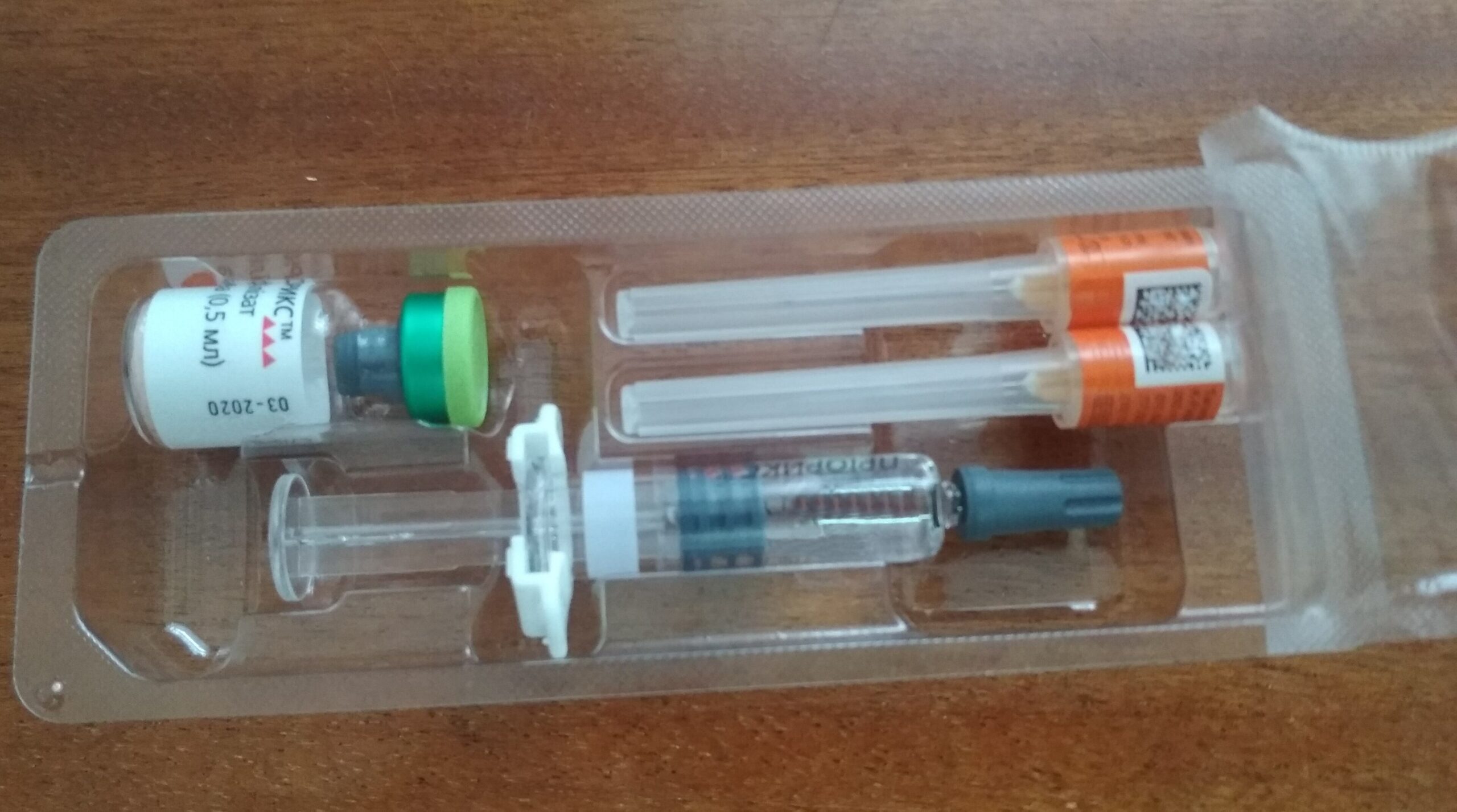
The CDC recommends two doses of MMR vaccine for every child, the first at 12 to 15 months and the second at 4 to 6 years. One dose is about 93% effective against measles, and two doses are about 97% effective. Children from 12 months through 12 years can get the combined MMRV shot instead, which adds chickenpox protection, though the CDC recommends separate MMR and chickenpox shots for the first dose in children 12 to 47 months old.
Babies are the most vulnerable because they are too young for the routine schedule. The CDC says infants 6 to 11 months old should get one MMR dose before international travel, and public health officials may recommend the same early dose during an outbreak. That early dose does not count toward the two routine doses, which are still needed after a child’s first birthday.
Pennsylvania has made that recommendation for families in counties with sustained community transmission. Its health department also advises that children 12 months and older who have had no doses get one now and a second at least 28 days later.
What parents can do this fall
The simplest step is to check a child’s vaccine record, whether through the pediatrician’s office, a school nurse or a state immunization registry. Children with two documented MMR doses do not need another, according to Pennsylvania health officials. Adults with only one dose, or with no records, are advised to talk with a health care provider or pharmacist.
The shots are available in many places. Pennsylvania health officials point families to pediatricians and other health care providers, Federally Qualified Health Centers, county and municipal health departments, state health centers and the federal Vaccines for Children program.
Parents who are weighing conflicting messages can read what doctors are saying about recent vaccine guidance headlines and bring questions to their child’s doctor.
Anyone who develops symptoms after a possible exposure should contact a health care provider, the Pennsylvania Department of Health advises. In Pennsylvania, residents can also call the Department of Health’s hotline at 877-PA-HEALTH (877-724-3258).
Get stories like this by email. Sign up for The Parent Diaries Letter.
This article was produced with AI assistance and edited for accuracy against the sources linked above.
Image: Dctrzl – CC BY-SA 4.0/Wikimedia Commons