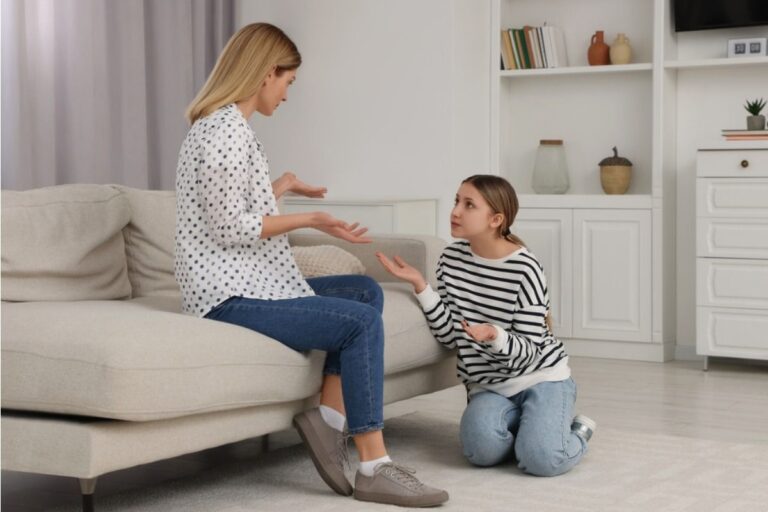
A Dad Found Out His Daughter Had Been Telling People at School Her Parents Were Divorced Because It Was Easier Than Explaining What Was Actually Happening at Home

I never imagined I would learn something so personal about my own family during a routine parent teacher conference. My daughter’s teacher casually mentioned how well she had adjusted after “the divorce.” I stared at her, completely confused, because my wife and I were still married and living under the same roof. The teacher immediately realized something was wrong and apologized for bringing it up. I left the meeting with a knot in my stomach, wondering what my daughter had been telling people and why.
A Quiet Ride Filled With Questions
She climbed into the car after school, smiling like any other afternoon. I decided not to confront her immediately because I wanted to understand before jumping to conclusions. We talked about homework, soccer practice, and a science project. Just before we reached home, I gently asked why her teacher believed we were divorced. The smile disappeared from her face almost instantly.
The Answer Came in a Whisper
She looked out the window and quietly said, “It was easier.” I asked what she meant, expecting there had been some misunderstanding. Instead, she admitted she had been telling classmates for months that her parents were divorced. She said people stopped asking questions after that. It was simpler than explaining what life at home actually felt like.
The House Never Felt Peaceful
My wife and I had been struggling for nearly two years. We argued often, sometimes over important things and sometimes over nothing at all. We always believed we were careful enough to keep those disagreements away from our daughter. Listening to her describe home as a place where everyone walked on eggshells made me realize how wrong we had been. Children notice far more than adults like to believe.
The Questions She Could Not Answer
She explained that classmates often asked why neither parent came to school events together anymore. They wondered why one of us always stayed in the car during pickup while the other came inside. Some even asked why she looked nervous whenever her phone buzzed after school. She grew tired of inventing different explanations every week. Saying her parents were divorced ended every conversation in seconds.
A Discovery Inside Her Backpack
That evening, while helping her organize school papers, she handed me a permission slip. Folded inside was an essay she had forgotten to turn in. The assignment asked students to describe their family. She had written three different openings, crossed each one out, and finally left the page unfinished. In the margin she had scribbled, “I don’t know which version is true anymore.”
My Wife Read Every Word
I showed the essay to my wife after our daughter went to bed. She read it twice before quietly sitting at the kitchen table. Neither of us spoke for several minutes. We had spent so much time arguing with each other that we had completely missed what our daughter was experiencing. That unfinished essay said more than any family discussion ever had.
Seeking Help Before It Got Worse
The next morning we contacted a family counselor. During the first appointment, our daughter admitted she hated inviting friends over because she never knew what mood the house would be in. She also confessed she had rehearsed excuses in case anyone asked difficult questions. The counselor gently pointed out that children often simplify complicated situations because they lack the words to explain them. Hearing that felt painfully accurate.
A Promise We Had to Earn
The counselor encouraged my wife and me to make one commitment we could realistically keep. We agreed that disagreements would no longer happen in front of our daughter and that we would schedule time to discuss difficult issues privately. Our daughter listened quietly but did not look convinced. She had heard promises before. This time she needed actions instead of speeches.
The Story Reached the School
A week later I received another call from her teacher. She wanted to let me know my daughter had asked to correct something during a classroom discussion about families. She stood in front of the class and explained that her parents were not divorced. Then she said family problems are sometimes hard to describe, and she had picked the easiest answer instead of the true one. Her teacher told me several classmates nodded with surprising understanding.
A Friendship We Never Knew About
One girl approached my daughter after class and quietly thanked her for being honest. She admitted her own family situation was complicated in a completely different way, and she also hated trying to explain it to people. The two of them spent lunch talking instead of sitting alone like they usually did. My daughter later told me it was the first conversation where she did not feel like she had to hide anything. That friendship began because she finally stopped pretending.
The Change Happened Slowly
Our home did not transform overnight. There were still difficult conversations and moments when old habits tried to return. The difference was that we recognized them sooner and handled them differently. My daughter gradually stopped watching every room for signs that another argument was about to begin. The tension that had become normal slowly started fading.
What She Told Me Months Later
Several months after everything changed, we were driving home from one of her soccer games when she surprised me. She said she no longer felt like she needed to invent a different family to make other people comfortable. Then she smiled and added, “Our house still isn’t perfect, but now it feels honest.” That simple sentence stayed with me because it reminded me that children are not looking for perfect parents. They are looking for a home where the truth is easier to tell than a made up story.