A Mom Says Her Daughter Asked Her Why Some Kids at School Seem Like They Were Born Knowing How to Have Friends and She Never Got That Lesson

Emily never expected one simple question during the drive home from school to stay with her for years. Her ten year old daughter, Sophie, usually filled the car with stories about recess, classroom jokes, and whatever book she had borrowed from the library.
That afternoon, however, she stared out the window for several minutes before finally speaking. Her voice was calm, but the question carried more weight than Emily realized at first. By the time they reached home, Emily understood they were no longer talking about school. They were talking about how a child learns to believe she belongs.
The Question That Changed Everything
Without looking away from the window, Sophie quietly asked, “Why do some kids seem like they were born knowing how to have friends? I never got that lesson.”
Emily gripped the steering wheel a little tighter. She wanted to answer immediately, but every response that came to mind sounded too simple. Instead, she asked Sophie what made her think that.
Sophie shrugged and said, “They just know what to say. They know when to laugh. They know how to walk into a group without looking scared.”
Watching From the Outside
That evening Emily replayed the conversation while making dinner. She realized Sophie had never complained about being bullied. She had classmates who were polite to her and teachers who praised her work.
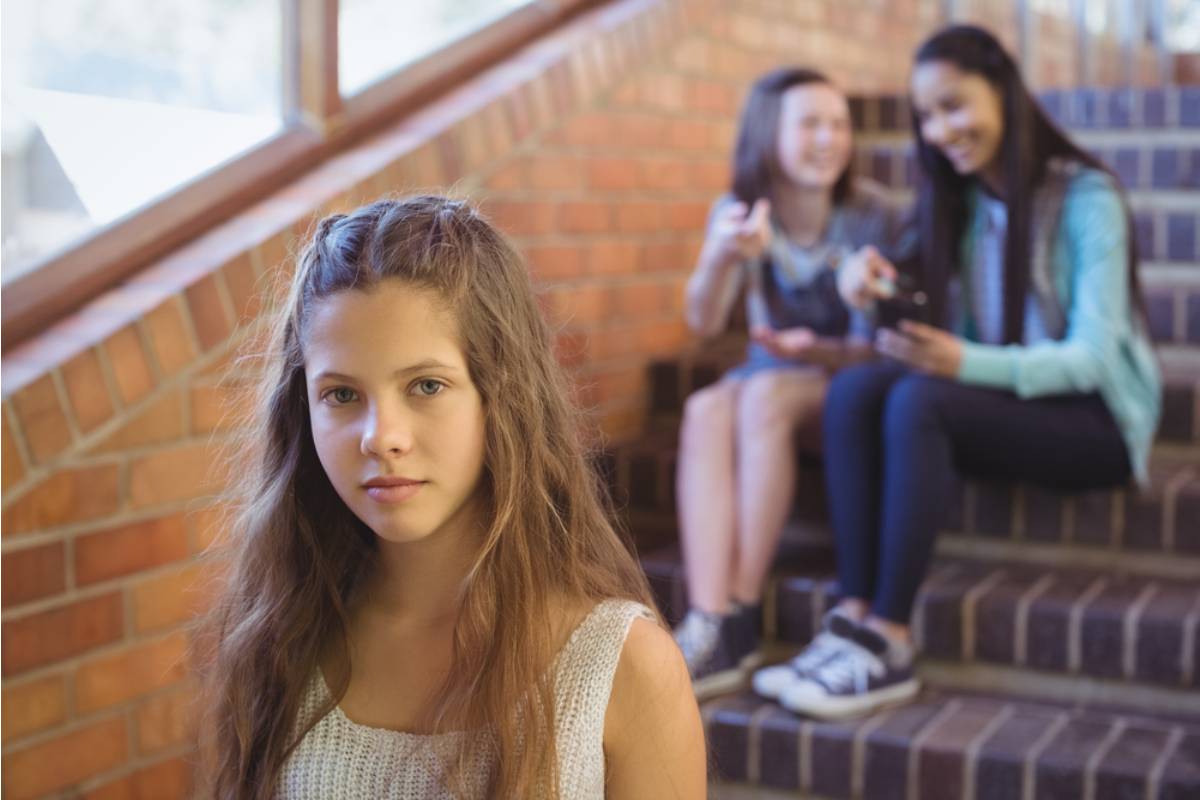
The problem was something quieter. Sophie always seemed close enough to friendships to see them, but never close enough to truly become part of them. She watched conversations begin and end without knowing how to step inside.
A Lunchroom Story Broke Her Heart
The next day Sophie shared something she had never mentioned before. During lunch, she usually sat beside other students, but they often started talking about birthday parties, sleepovers, and inside jokes she knew nothing about.
Nobody told her to leave. Nobody made fun of her.
She simply felt invisible while everyone else laughed together. She said the hardest part was pretending she was interested in her sandwich so nobody noticed she had nothing to add.
Looking for Answers at School
Emily arranged a meeting with Sophie’s teacher, Mrs. Bennett. She expected to hear that Sophie kept to herself, but the teacher described someone completely different.
Mrs. Bennett explained that Sophie answered questions confidently in class and eagerly helped classmates with assignments. She smiled often and was kind to everyone. Yet whenever free choice activities began, she almost always waited for someone else to invite her into a group.
The teacher admitted she had noticed the same pattern but never realized how deeply it affected Sophie.
A Small Classroom Moment Revealed the Truth
A week later Mrs. Bennett called Emily after school. During a science activity students had been asked to choose partners without any instructions.
Mrs. Bennett watched as children quickly paired off across the room. Sophie remained standing beside her desk with her notebook in her hands. She never asked anyone to work together. She simply waited until the teacher assigned her to the last remaining group.
When Emily heard that story, she realized her daughter was not afraid of people. She was afraid of hearing no.
Learning About Old Experiences
That night Emily sat beside Sophie’s bed instead of rushing through the bedtime routine. She gently asked whether something had happened before that made joining groups feel so difficult.
Sophie hesitated before answering.
She remembered being in first grade when she had asked if she could play a game at recess. One child replied, “Maybe later,” but later never came. She said nothing terrible happened after that, yet she stopped asking because she assumed people preferred each other anyway.
Emily’s heart sank. One small moment had quietly become a rule Sophie believed about herself.
Trying Something Different
Instead of giving long speeches about confidence, Emily decided to practice everyday conversations at home. They pretended to meet new classmates, start discussions, and ask simple questions.
Sometimes they laughed because the practice felt silly. Other times Sophie admitted she had never thought about how friendships often started with ordinary conversations instead of perfect ones.
Little by little, speaking first became less frightening.
An Unexpected Invitation
One Friday Mrs. Bennett announced a class project that required students to interview each other before forming teams. Sophie ended up talking with a girl named Ava who loved drawing graphic novels.
The conversation continued even after the assignment ended. They discovered they both checked out the same mystery books from the school library. For the first time in months, Sophie came home excited instead of discouraged.
Emily noticed the difference immediately.
When Things Almost Fell Apart Again
The following week Ava spent several days absent because she was sick. Sophie immediately assumed the friendship had already ended. She convinced herself Ava would return and forget about her completely.
Emily encouraged her not to make decisions based on fear before anything had actually happened.
When Ava returned, she walked straight over to Sophie before class and apologized for missing school. She even handed Sophie a comic strip she had drawn featuring two detectives solving a mystery together.
Sophie smiled so widely that her teacher noticed from across the room.
Understanding That Friendships Grow Slowly
Over the next month Sophie expected every conversation to become an instant friendship. Sometimes classmates chatted with her once and then moved on to someone else. Each time it happened she worried she had done something wrong.
Mrs. Bennett gently explained that most friendships grow through repeated moments instead of one perfect interaction. Seeing someone regularly, sharing interests, and showing kindness mattered more than saying exactly the right thing.
That idea relieved Sophie more than any reassurance she had heard before.
The Group Project That Tested Her Confidence
Near the end of the semester students were asked to present community improvement ideas in small groups. Before anyone else spoke, Sophie turned toward two nearby classmates and quietly asked if they wanted to work together.
They smiled and immediately agreed.
Mrs. Bennett later admitted she nearly cried watching the moment unfold. Not because Sophie had found a group, but because she had trusted herself enough to ask before waiting for someone else.
A Conversation With Another Parent
After a school event Emily met Ava’s mother while the girls explored a book display together. During their conversation, Ava’s mother laughed softly and shared something surprising.
She admitted Ava had spent the previous year feeling exactly the same way. The only difference was that Ava hid her worries behind nonstop talking, while Sophie became quieter whenever she felt uncertain.
Emily realized children often carry the same fears in completely different ways.
A New Understanding Began to Grow
One afternoon several neighborhood children gathered at the local park. Instead of waiting for someone to notice her, Sophie walked over carrying a basketball and asked if anyone wanted another player.
Nobody hesitated.
The game started within seconds, and by the end of the afternoon the children were making plans for another visit. Emily watched from a nearby bench and realized the hardest part had only been those first few words.
The Answer Became Clear
Months after asking her unforgettable question, Sophie climbed into the car after school with a different expression on her face. She smiled as she buckled her seatbelt and told her mother about a funny conversation she had shared with friends during lunch.
Emily reminded her of the question she had asked earlier that year.
Sophie laughed and shook her head. “I don’t think some kids are born knowing how to have friends anymore. I think they just practiced longer than I did.”
Emily smiled because that answer contained more wisdom than any advice she could have given. Her daughter had not discovered a secret lesson that everyone else received first. She had learned that friendship is rarely something people are born understanding. It is something built through courage, patience, awkward conversations, and the willingness to keep trying even after feeling left out. That realization changed far more than Sophie’s school experience. It changed the way she believed she belonged in the world.