A Mom Says Her Son’s School Nurse Called an Ambulance for a Minor Scrape Without Trying to Reach Her First, Now the Family Owes Thousands

A quick trip to the school playground turned into a nightmare that no one in the family expected. What began as a small scrape on a student’s knee became the center of an emotional dispute between parents, school staff, medical providers, and an insurance company.
The mother insisted that her son was never in danger and believed a simple phone call could have avoided everything that followed. Instead, the incident sparked weeks of unanswered questions, strained relationships, and unexpected financial pressure that left the family wondering whether anyone had handled the situation correctly.
A Playground Accident That Barely Seemed Serious
Ethan was an energetic fourth grader who treated recess like the highlight of every school day. While racing friends across the blacktop, he tripped over another student’s backpack and landed on one knee. His teacher helped him up, noticed a scraped knee and a small cut on his elbow, then walked him to the nurse’s office.
The other students continued playing because nothing about the fall looked unusual. Ethan was embarrassed more than hurt and even joked that his jeans had taken more damage than his leg. He expected to get a bandage and head back to class within a few minutes.
The Nurse Grew Concerned
Inside the health office, the school nurse cleaned the scrape and asked Ethan several questions. She noticed he looked pale and became concerned that he might be hiding pain somewhere else. Ethan admitted he felt dizzy for a moment after standing up, though he quickly said he felt normal again.
The nurse asked him to stay seated while she observed him. She later explained that dizziness after a fall could point to a more serious injury, even if there were no obvious signs. She believed it was safer to act cautiously than to overlook something important.
An Unexpected Decision Was Made
Instead of waiting longer, the nurse contacted emergency services. According to school records, she believed Ethan needed immediate medical evaluation because she could not confidently rule out a head injury.
At the same time, someone from the front office attempted to call Ethan’s mother using the emergency contact information on file. The call went directly to voicemail, and no message was left because staff immediately turned their attention to the arriving paramedics.
A Classroom Interrupted by Sirens
Students looked through classroom windows as the ambulance pulled into the school parking lot. Rumors spread almost instantly that someone had been badly hurt. Several children later told their parents they thought Ethan had broken multiple bones because of how quickly emergency responders appeared.
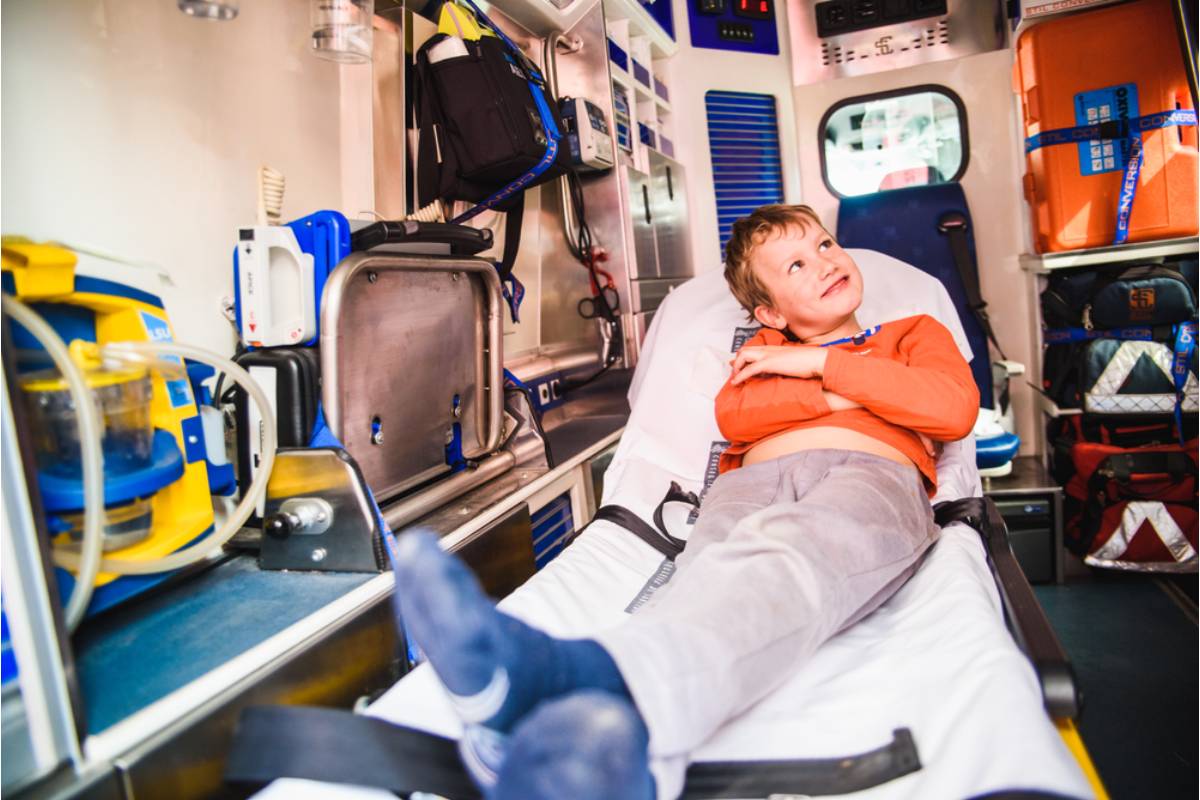
Ethan himself became frightened once he saw the stretcher. He repeatedly told everyone he could walk just fine, but the paramedics explained they wanted to be careful. They placed him on the stretcher anyway, making the situation appear much more serious than it actually was.
A Mother Learns the News Too Late
Sarah was finishing a meeting at work when she finally checked her phone. She noticed a missed call from the school but had no voicemail explaining why they called. Before she could return the call, another parent texted her after seeing the ambulance outside the school.
Her heart immediately sank. She rushed outside and called the school repeatedly until someone answered. Instead of hearing that her son was waiting in the nurse’s office, she was told he was already on the way to the hospital.
The Hospital Visit Brought More Confusion
Sarah arrived expecting to find doctors treating a major injury. Instead, Ethan was sitting upright, smiling, and asking for snacks. Doctors had cleaned the scrape again, checked his reflexes, examined him carefully, and determined he had no concussion or broken bones.
They discharged him after routine observation with instructions to rest for the evening. The physician even commented that Ethan seemed to be in excellent condition. Sarah was relieved her son was healthy, but she immediately questioned why an ambulance had been necessary.
Questions Turned Into Frustration
The next morning Sarah requested a meeting with the school’s principal and nurse. She calmly asked why no one had successfully reached her before calling emergency services. She explained that her office phone had been on silent during the meeting but that she always returned missed calls within minutes.
The nurse sympathized with Sarah’s frustration but defended her decision. She explained that school staff are trained to respond based on the child’s condition, not how quickly a parent might answer. From her perspective, delaying emergency care could have created greater risks if Ethan’s dizziness had signaled something serious.
Different Parents Took Different Sides
News of the disagreement spread through the school community within days. Some parents praised the nurse for putting student safety above everything else. They argued that schools should never hesitate when there is even a small possibility of a serious medical emergency.
Others strongly disagreed. They believed parents should be contacted first whenever a child has what appears to be a minor injury. Several wondered whether schools had become overly cautious because they feared legal consequences more than practical judgment.
The Bill Changed Everything
A few weeks later an envelope arrived in Sarah’s mailbox. Inside was a medical bill showing charges that insurance had only partially covered. The ambulance transport represented the largest portion of the remaining balance.
Sarah stared at the paperwork in disbelief. She had accepted that accidents happen, but she never imagined a scraped knee could lead to bills that placed real pressure on the family’s budget. Suddenly, the argument was no longer just about communication. It had become a financial crisis.
Searching for Answers
Sarah spent hours calling both the insurance company and the ambulance provider. Every conversation seemed to end the same way. Representatives explained that emergency responders documented symptoms that justified transport, making the charges difficult to dispute.
She asked whether parents have the right to refuse ambulance transportation before it happens. The representative explained that because Ethan was a minor and school staff acted under emergency protocols, the decision rested with those responsible for his immediate care until a parent could take over.
School Records Revealed More Details
Wanting the complete picture, Sarah requested copies of the incident report. The paperwork showed that Ethan had briefly reported dizziness, appeared anxious, and had become unusually quiet after his fall. Those observations convinced the nurse that immediate evaluation was the safest course.
Reading the report helped Sarah understand the reasoning, but it did not erase her frustration. Ethan later admitted he only felt dizzy because he became nervous after seeing blood on his knee. He insisted the feeling disappeared almost immediately.
A Community Meeting Sparked New Ideas
The incident eventually became a topic during a school board meeting. Several parents suggested updating emergency procedures so multiple phone numbers would be called before emergency transport whenever circumstances allowed.
Others proposed sending instant text alerts alongside phone calls. One father suggested allowing parents to preauthorize certain medical decisions at the beginning of each school year. While opinions differed, everyone agreed that communication could be improved without sacrificing student safety.
An Honest Conversation Changed the Tone
Several weeks later Sarah met privately with the nurse again. This time the discussion felt less defensive. The nurse admitted she wished she had been able to speak directly with Sarah before the ambulance arrived.
Sarah also acknowledged that she appreciated the nurse’s concern for Ethan’s wellbeing. Although she still believed the situation had been handled too aggressively, she recognized that the nurse had acted from genuine concern rather than carelessness. Both women left the meeting with greater respect for each other’s perspective.
The Family Found an Unexpected Resolution
Months later the financial dispute was finally reduced after numerous appeals and payment discussions. It was still an expensive lesson, but the burden became more manageable than Sarah originally feared.
The experience permanently changed how the family prepared for emergencies. Sarah added additional emergency contacts, updated every phone number on school records, and arranged with her employer to immediately forward urgent school calls. She also encouraged other parents to review their own emergency information because she never wanted another family to experience the same uncertainty. While the disagreement never completely disappeared, it inspired meaningful conversations throughout the community about balancing caution, communication, and parental involvement when unexpected accidents happen at school.