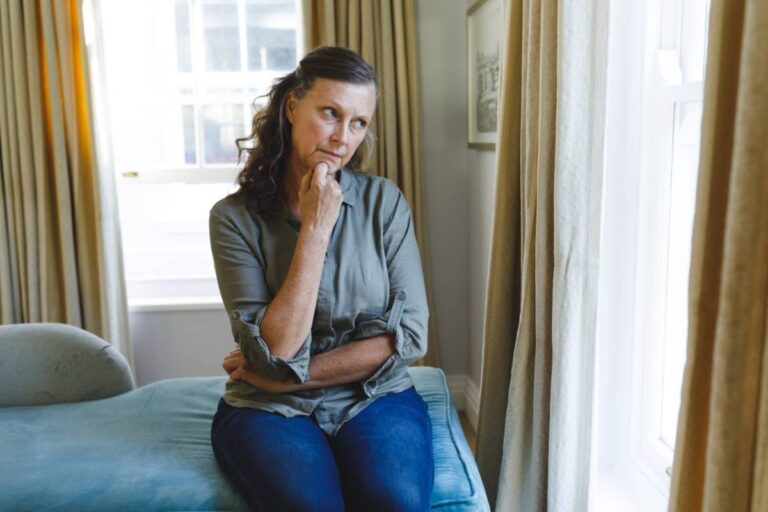
A Mom Says She Hasn’t Had a Moment Alone Since Her Third Child Was Born, Then Her Husband Told Her She Should Be “Grateful” for Staying Home

A mother of three said she had reached a point where even breathing felt like work. Her children were five, three, and eighteen months old, and every ordinary day seemed to demand more energy than she had left. She said she could feel herself becoming robotic, moving from one task to another without really feeling present.
She had always expected motherhood to be difficult, but she never imagined it would leave her feeling this completely empty. Getting the children dressed, loading them into the car, preparing meals, cleaning messes, and answering endless questions had become one long blur. What frightened her most was realizing that she no longer knew when she had last felt genuinely rested.
Three Little Kids Meant Three Different Kinds of Chaos
The oldest had just started the kindergarten journey, which should have been an exciting milestone for the family. Instead, it added another schedule to manage, another round of school preparations, and another reason to get everyone into the car. The middle child still needed constant supervision, while the youngest was too little to understand why Mom sometimes just wanted five quiet minutes.
She said the screaming had started getting to her in a way she could no longer ignore. Every spilled drink, argument, tantrum, and forgotten toy seemed to land harder than it once had. By the end of the day, even a simple request from one of the children could feel like the final straw.
There Was No Village Waiting Outside Her Door
She explained that she had no real support system nearby. There were no relatives regularly stepping in for an afternoon, no trusted person who could take the kids for a few hours, and no magical break appearing when she desperately needed one. Everything rested on her shoulders, even when those shoulders were already sore from carrying too much.
A response from a person suggested looking for free or part-time preschool options. She admitted she had already searched and found nothing available where she lived. That answer somehow made the situation feel even more hopeless because she had already checked the obvious escape routes.
Every Outing Became Another Job
She said even taking the children somewhere that was supposed to be fun felt exhausting before they had even left the house. Buckling three children into the car, packing food, gathering whatever everyone might need, and then doing the whole process again afterward had turned simple outings into major operations. The activities were advertised as entertainment, but to her they felt like another shift at work.
What made it worse was the social side of those activities. She said she hated feeling expected to make conversation with other parents while simultaneously watching three young children. Instead of getting a break, she felt as though she had been handed a new list of responsibilities and told to smile through them.
Money Had Become Another Source of Pressure
Then she revealed something that changed the tone of the entire story. Although she was a stay-at-home mother by arrangement, she said her husband gave her no money of her own. She also said she did not have access to his bank account, leaving her without independent control over household finances despite spending her days caring for their children.
At first, she explained that money was simply tight. But several responses from people pointed out that a lack of personal access to money was a separate issue from having a limited household budget. Suddenly, the conversation was no longer only about burnout, childcare, or exhaustion.
Someone Asked the Question She Had Avoided
One response from a person asked why she could not simply return to work and have her husband take responsibility for the cost of childcare. The suggestion sounded simple on paper, but her situation was much more complicated than finding a job and submitting an application. She had three young children, little time to herself, and barely enough energy to get through the day as it was.
Still, the question stuck with her. She had spent so long thinking of herself only as the person who stayed home that she had stopped asking what would happen if she needed something for herself. For perhaps the first time, she began considering that being a mother did not mean she had to disappear completely as a person.
Another Person Used a Word She Wasn’t Expecting
Then a response from a person described the financial situation as financial abuse. The phrase hit differently because she had never thought of her marriage in those terms. She had thought of herself as overwhelmed, under-supported, and unlucky, but not as someone whose lack of financial independence might be part of the problem.
She did not suddenly have all the answers after hearing it. In fact, the idea seemed to leave her even more emotionally exhausted because now there was another problem to understand. Yet sometimes the first step toward changing a situation is simply realizing that the situation has a name.
Her Body Had Become Another Battlefield
She also admitted that she was struggling with her appearance. Her clothes no longer fit comfortably, she felt unhappy with her weight, and she said she did not feel attractive anymore. She described herself as someone who barely had time to do her hair at home, let alone spend an hour feeling put together.
The treadmill she owned had stopped working, which might have sounded like a minor inconvenience to someone else. To her, it represented one more thing that had quietly disappeared from the life she wanted. She said she could not even leave the house alone for long enough to walk, so exercise had become another task she could not reach.
She Was Tired of Being Told to “Make It Fun”
There was a strange contradiction in her daily life. She was expected to create enriching experiences, prepare homemade meals, organize free activities, and keep three children entertained, yet almost none of that effort seemed to count as work. Everything was framed as something she should simply enjoy because she was their mother.
She explained that being told to entertain the kids for free sounded almost insulting when she was already giving them nearly every ounce of energy she had. There was no clock to punch out from, no lunch break, and no moment when someone officially said her shift was over. The job continued through breakfast, errands, tantrums, bedtime, and often beyond.
The Kindergarten Milestone Didn’t Feel Like a Celebration
She had imagined her oldest starting kindergarten as the beginning of a new chapter. Instead, the milestone arrived while she was already running on empty. Even something as ordinary as school drop-off felt like another item on a never-ending list.
She knew she should feel proud, and part of her did. But pride could not erase exhaustion, and excitement could not create energy she no longer possessed. She found herself wondering whether other mothers were secretly struggling this badly while pretending everything was completely normal.
One Response Asked Why She Had More Children
A response from a person bluntly asked why she had more children than she could handle with a husband who was not very supportive. It was not the gentlest question, and she could have easily dismissed it. Instead, her answer was surprisingly simple: she was overdue for a break.
That sentence revealed more than any long explanation could have. She was not asking for a luxury vacation, an expensive spa day, or a week away from responsibility. She was talking about the kind of break most people would consider completely ordinary, the kind where someone else takes over for a while and you are allowed to breathe.
She Had Stopped Thinking About Herself
As the conversation continued, the most heartbreaking part was how normal the exhaustion had become to her. She had slowly learned to place her own needs at the very bottom of the list. Food, sleep, exercise, clothes, hobbies, privacy, and even money had all become things she could worry about later.
The problem was that “later” never seemed to arrive. There was always another meal, another diaper, another mess, another school task, or another child calling for Mom. She had become so accustomed to putting herself last that she barely remembered what being first for even one moment felt like.
Then the Story Took an Unexpected Turn
What began as a simple confession about being exhausted turned into something much bigger. People were no longer discussing how to keep three children entertained or where to find inexpensive activities. They were questioning whether the structure of her entire household was contributing to the exhaustion that had nearly broken her.
The twist was not that she suddenly discovered a perfect solution. It was that she finally started looking at her situation from the outside, and what she saw was different from the story she had been telling herself. She had been calling it ordinary motherhood when, underneath the exhaustion, there were signs that she was carrying far more than one person should have to carry alone.
She Didn’t Need Another Activity, She Needed Help
By the end of the discussion, one thing had become painfully clear. The problem was never that she had failed to find enough free activities for her children. She did not need another craft, another outing, or another parenting trick to squeeze into an already impossible schedule.
She needed actual support, meaningful access to household resources, and time when somebody else was responsible for the children. Her final admission said it all: parenting and marriage had become the hardest thing she had ever done. And for once, instead of forcing herself to pretend she was fine, she had finally said out loud that she could not keep doing it exactly the same way.