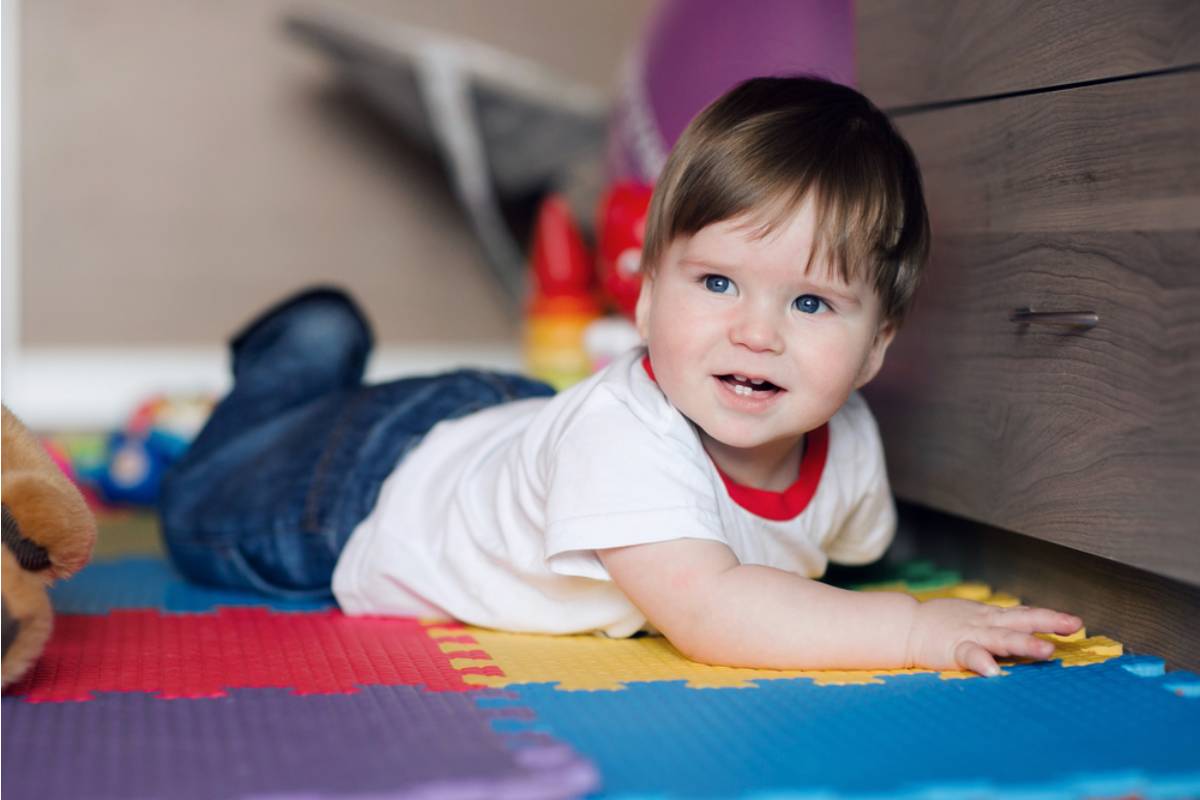
A Mom Tried Teaching Her Toddler That One Foam Mat Was for Sleeping and Another Was for Jumping, but Her Daughter Had a Completely Different Idea

A mom was trying to prepare her toddler for an upcoming transition to daycare, where children would nap on mats instead of in traditional beds. Because her daughter was used to falling asleep while being held, carried, or bounced by her mom, the idea of introducing a new sleeping arrangement seemed like a smart move. She decided to start practicing early rather than leaving the change entirely to daycare.
The plan sounded simple enough at first. She brought a foam quad mat into her daughter’s bedroom, added a pillow and blanket, and watched as the little girl calmly settled onto it. For one brief moment, everything seemed to be going exactly as planned, and then the toddler apparently remembered something very important about foam mats.
The Toddler Suddenly Remembered What Mats Were Really For
Only a minute after lying down, the toddler made a discovery that completely changed the mood of the room. She recognized the new mat as being similar to the one in the living room, where she was allowed to jump, and immediately switched from sleepy to energetic. What had looked like a cozy little bed became, in her mind, an invitation to bounce.
Her mom tried to stop the jumping, which led to a huge tantrum. The reaction made perfect sense from the toddler’s perspective, even though it created a frustrating problem for her mom. The child wasn’t deliberately refusing the new rule, but instead seemed to be applying the rule she already knew to a completely different situation.
Mom Realized She Had Accidentally Created a Toddler Logic Puzzle
The mom admitted that she had not even considered the possibility that her daughter would connect the bedroom mat with the play mat. She had assumed the differences between the two would be obvious because the mats looked different. One was a soft fabric mat featuring bears, while the new sleeping mat was a pink vinyl design decorated with princesses.
To the toddler, however, the differences apparently did not matter nearly as much as the shared feature. They were both large, soft mats sitting on the floor, and one of them had a very clear history of being a great place to jump. The mom suddenly found herself wondering how she could teach her daughter that the same basic object could have completely different rules depending on where it appeared.
The Bigger Question Was Whether Practice Was Even Necessary
A person shared her story while trying to figure out how best to handle the situation before daycare began. She wanted to help her daughter adjust ahead of time, especially because sleep had always been closely connected to physical contact with her mom. The unexpected jumping episode made her worry that she had created a problem instead of solving one.
The concern was understandable, but several responses from people suggested that she might be preparing for a problem that never actually appeared. Daycare would be a completely different environment, with different sounds, routines, expectations, and other children sleeping nearby. In that setting, the toddler might understand what the mat was for without needing weeks of rehearsal at home.
One Response Suggested Keeping the Rules Simpler
A response from a person offered a surprisingly simple way to explain the difference. Instead of trying to teach the toddler that one mat was for jumping and another mat was for sleeping, the parent could frame the rule around location. At home, the child sleeps in her bed, while at daycare, children sleep on mats.
That distinction seemed to make much more sense to the mom. Rather than introducing multiple sleeping mats with separate rules, she could give her daughter one consistent home routine and explain that daycare simply had its own routine. The idea immediately removed an entire layer of toddler-sized confusion from the situation.
Another Parent Had Seen the Same Surprise Happen at Daycare
A response from a person described a similar experience with a child who had always slept in a crib or while being held. That family had not practiced mat sleeping at home before daycare started, yet the child reportedly began napping there successfully after just a couple of days. The change happened despite having no previous experience with sleeping on a mat.
The difference appeared to be the environment itself. At daycare, the child could see other children lying down and sleeping, making the purpose of the mat much easier to understand. What had seemed like a complicated lesson at home became a simple matter of watching what everyone else was doing.
Mom Started Imagining the Power of Toddler Exhaustion
The mom had already considered another possibility on her own. She wondered whether her daughter might simply be tired enough at daycare to accept whatever sleeping arrangement was available. At home, the toddler had the familiar option of being picked up, carried, bounced, or cuddled by her mom.
Daycare would remove that particular option from the equation. If she became sleepy and everyone around her was lying quietly on mats, there might be little reason to continue fighting the situation. The mom joked that the jumping problem had suddenly made her think, “Oh no,” even though the bigger daycare environment might actually make the transition easier.
Some People Suggested Letting Daycare Handle Daycare
Another response from a person pointed out that practicing at home could potentially create even more categories for the toddler to keep track of. Instead of simply having a bed at home and a mat at daycare, the child could end up with a jumping mat at home, a sleeping mat at home, and another sleeping mat at daycare. For a young child, that might be more complicated than helpful.
The suggestion was to let daycare introduce its own routine when the time came. The daycare staff would already be familiar with children who struggled with naps, resisted new routines, or needed extra help settling down. What felt like a major challenge to the mom might simply be another ordinary adjustment for experienced caregivers.
A Simple Demonstration Could Still Help
Not everyone thought the answer was to do nothing. A response from a person suggested modeling the behavior directly by lying down on the bedroom mat and showing the toddler how it was supposed to be used. If the child jumped up, the parent could calmly say that it was time to lie down and guide her back to the mat.
The important part of that approach was consistency rather than a long explanation. The toddler might not understand an elaborate lesson about different rules for identical objects, but she could begin connecting a certain place and routine with quiet behavior. Repetition could eventually make the expectation familiar even if the first few attempts ended in dramatic protests.
The Tantrum Was Not Necessarily a Sign That the Plan Had Failed
The giant meltdown understandably left the mom questioning whether she had made a mistake. Still, a response from a person suggested that a tantrum did not mean the child was incapable of learning the new routine. It could simply mean the toddler strongly preferred the rule she already understood.
That distinction mattered. The child was not necessarily rejecting sleep or refusing to cooperate forever, and there was no indication that one failed practice session predicted what would happen at daycare. Toddlers often react strongly when an expectation changes, even when they eventually adapt surprisingly well.
Another Possible Trick Was Making the Sleeping Surface Feel Different
One response from a person proposed creating a separate “nest” using blankets and soft stuffed animals as a way to make the sleeping setup feel more distinct. The idea was to give the child a clear visual and physical signal that this particular space was associated with resting rather than bouncing. A different mattress, such as a futon-style surface, was also suggested as another way to make the sleeping setup harder to confuse with a play mat.
These suggestions were less about teaching a complicated rule and more about changing the environment around the rule. For a toddler, sensory details can sometimes communicate expectations more clearly than explanations. A cozy nest could feel like a sleep space, while the familiar play mat could remain associated with energetic activities.
A Caring Daycare Could Make the Transition Less Dramatic
The mom also received reassurance from someone whose child had struggled with sleeping at daycare. Rather than forcing the child to nap immediately, the daycare allowed the child to quietly play or look at a book while others slept. Over time, the child adjusted to the routine without needing to behave exactly like everyone else on the first day.
That possibility seemed especially reassuring because the mom already believed her chosen daycare would be patient. The transition did not necessarily have to happen perfectly from the beginning. There could be a period of watching, learning, resting, and gradually discovering how nap time worked in a new place.
Mom Changed Her Approach After Hearing the Advice
As the responses came in, the mom began leaning toward a simpler explanation for her daughter. She liked the idea of teaching that home meant sleeping in a bed while daycare meant sleeping on a mat. That approach allowed her to stop worrying about turning every foam surface into a separate lesson in toddler rule-making.
She also acknowledged that her daughter might naturally understand the daycare routine once she saw it happening around her. Instead of assuming that the failed practice session was evidence of a larger problem, she began viewing it as a funny glimpse into how her toddler’s mind worked. The mat had not betrayed her plan, after all. It had simply reminded her daughter of the most exciting thing she knew to do with it.
The Real Twist Was That the Problem Might Never Follow Her to Daycare
The entire situation started because a mom wanted to make sure her daughter would be prepared for a major change. Ironically, the biggest lesson from the experience may have been that children do not always need to rehearse a new situation in advance to understand it. A room full of sleeping children, a daycare routine, and a tired toddler could accomplish what a carefully staged practice session could not.
For now, the foam mat can remain exactly what it already is to her toddler: an extremely tempting jumping surface. When daycare begins, the same child may see a room where everyone lies quietly on their mats and simply copy what she sees. What looked like a frustrating parenting puzzle may turn out to be nothing more than one funny chapter in the transition from being rocked and bounced to learning how to fall asleep independently.