A Mom Says Her Son Couldn’t Even Reach the Floor of Most Public Toilets, and Then She Started Noticing What Was Missing Everywhere

A person shared his story about taking his young son into public bathrooms and realizing just how poorly those spaces worked for small children. The issue became impossible to ignore because the boy could not reach the floor while sitting on a standard toilet. What looked like an ordinary bathroom suddenly turned into a complicated part of a simple outing.
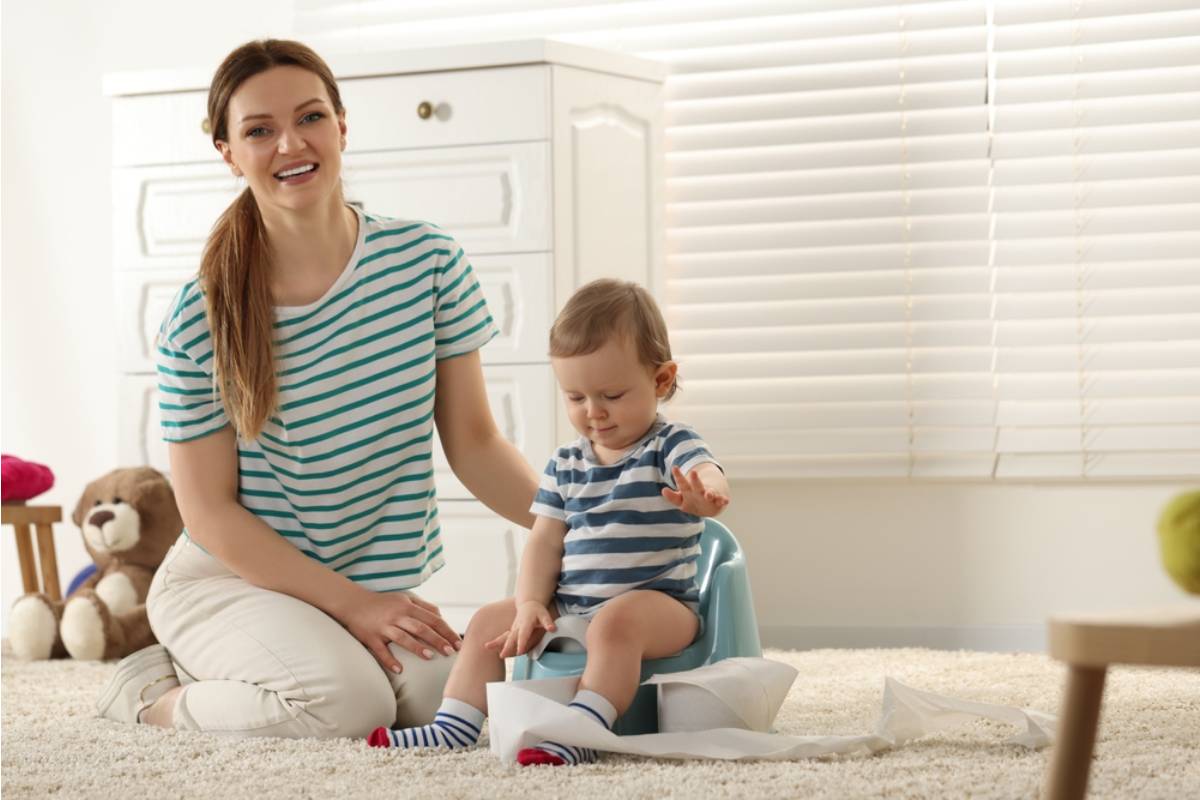
The child was still at the stage where using a toilet comfortably mattered for successful potty training. Instead, his legs dangled while he sat on a wide, narrow oval seat that did little to make him feel secure. The parent explained that without proper support, relaxing enough to have a bowel movement became nearly impossible.
Even Children’s Spaces Were Missing the Basics
The frustration grew because these problems were not limited to office buildings or ordinary restaurants. The person expected children’s museums, gymnastics facilities, and other places designed around young children to have bathrooms that were easier for them to use. Even those supposedly kid-friendly environments often relied on the same full-sized fixtures found everywhere else.
The absence was especially noticeable in places families could spend hours visiting. Parents might carefully choose destinations based on activities, food, parking, and stroller access, only to discover that the bathroom had been designed almost entirely around adults. For a family working through potty training, that missing detail could become the most memorable part of the trip.
Then Airports Entered the Complaint
Major airports became another surprising example in the story. Airports are filled with families carrying luggage, managing tired children, and making long journeys, yet child-sized toilets were still difficult to find. The parent questioned why spaces serving so many children were not more likely to include fixtures designed for them.
The complaint was not really about luxury or convenience. It was about whether a child could physically use the bathroom without a parent turning into a human support structure. A place could have polished floors and enormous facilities, but one very small toilet fixture might have made a much bigger difference.
The Toilet Seat Created Its Own Problem
The shape of the toilet seat became another part of the struggle. Instead of giving the child a stable feeling, the wide oval design left him trying to position himself on a fixture built for a much larger body. That made an already awkward situation even harder.
The parent explained that the child could not simply sit there and relax like an adult could. With his feet unable to touch the ground, he lacked the stability that can make using the toilet less intimidating for a young child. What seemed like a minor design choice suddenly became a serious obstacle during potty training.
A Family Bathroom Offered a Glimpse of the Solution
Then a person shared a response about a mall that had solved the problem in a surprisingly simple way. Its family bathroom contained both a regular toilet and a child-sized toilet, along with a setup that made the space more comfortable for families. The parent who described it said having that option had been extremely helpful when raising young children.
That detail changed the tone of the discussion because it proved the idea was not impossible. The child-sized fixture did not require an entire building to be redesigned around toddlers. It simply showed what could happen when someone deliberately included small users in the planning.
But Even That Improvement Was Not Permanent
Another person remembered getting excited about a similar setup at a local mall. She even looked forward to showing her four-year-old daughter the child-sized bathroom fixture. Then the bathroom was renovated, and the smaller toilet disappeared.
The story added an unexpected twist to what had started as a complaint about missing amenities. Even when families finally found a thoughtful design, there was no guarantee it would survive the next renovation. A small improvement could vanish as quickly as it appeared.
The Sink Turned Out to Be Another Battle
The conversation then shifted from toilets to sinks. A person shared that her five-year-old could barely reach many standard sinks, forcing her to hold the child up while trying to help her wash her hands. Suddenly, the same design problem appeared in another part of the bathroom.
That detail mattered because handwashing is supposed to be one of the simplest parts of a child’s bathroom routine. Instead, parents sometimes have to lift children toward counters that were clearly built for adults. The bathroom might technically contain everything a child needs, yet still make every step harder than it should be.
A Simple Step Stool Sounded Like an Easy Answer
Several people pointed toward fold-down or portable step stools as a practical solution. One response described finding attached step stools in public bathrooms, while another mentioned stores that had similar setups under sinks. For parents, that kind of feature could eliminate the awkward balancing act of lifting a child over a counter.
But another person explained why the solution was not quite as simple as buying a cheap stool and leaving it there. Commercial fixtures can be expensive, and businesses may worry about durability, theft, breakage, and liability if a child falls. What sounded like a twenty-dollar fix inside a home could become a much larger decision in a public building.
Lower Sinks Could Help More Than One Group
Another response suggested a different approach that solved more than one problem at once. Lower-height sinks could work for children while also being useful for wheelchair users and shorter adults. Instead of creating separate equipment for every group, the same thoughtful design could serve several people.
That possibility gave the discussion a broader meaning. The problem was not necessarily that public spaces needed a special gadget for every child. Sometimes the better answer was simply designing common fixtures so that more people could use them comfortably in the first place.
Some Family-Friendly Places Had Already Figured It Out
Not every location had ignored the problem. A person shared that a local aquarium had a lower sink that was easy for children to reach, making handwashing much less of a struggle. Another person mentioned a family bathroom in a fast-food play area that included a full-sized toilet, a child-sized toilet, and a changing station.
Those examples mattered because they showed families did not need complicated technology to notice the difference. A six-year-old being able to wash his hands without stretching across a giant counter could feel like a tiny improvement to a designer. To a parent trying to get through an ordinary day, it could feel enormous.
The Zoo Somehow Became a Disappointment
Then came another ironic example. A person said she had been surprised to find fold-down child-friendly equipment at a large retail store, only to discover that a zoo she visited did not have child-sized toilets. A place built almost entirely around children’s experiences had somehow missed a feature that would make a basic necessity easier.
That comparison exposed why the original complaint resonated so strongly. Parents were not demanding that every bathroom look like a preschool. They were simply wondering why places that actively advertise themselves as family-friendly sometimes overlooked the most basic needs of the families they wanted to attract.
There Was an Argument About Who Gets Considered in Design
The person who started the discussion then wondered whether the history of architecture and design had something to do with the problem. She questioned whether fields that had traditionally been dominated by men might have produced spaces based on a narrower range of everyday experiences. Her point was that people who regularly handle small children may notice design problems that others never encounter.
Another person responded with the broader idea that better design often comes from considering many different users at the same time. A bathroom designed with children, wheelchair users, shorter adults, and caregivers in mind could become more practical without becoming more complicated. The debate moved away from one toilet and toward a much larger question about who gets remembered when ordinary spaces are planned.
Parents Were Left Wondering Why This Was So Rare
One response described the lack of child-friendly bathroom features as just another small difficulty added to the long list parents already navigate. A bathroom trip can involve lifting, balancing, cleaning, carrying bags, and trying to prevent a child from touching everything nearby. None of those tasks are dramatic on their own, but together they can turn a routine stop into a full production.
That was the emotional twist at the center of the story. The missing toilets were never really just about toilets, and the absent step stools were never just about sinks. They represented all the little moments when a space technically works for everyone while still making life noticeably harder for families with young children.
The Smallest Fix Might Have Made the Biggest Difference
By the end of the discussion, the striking part was how many ordinary solutions already existed. A child-sized toilet, a lower sink, or a securely attached step stool could change the experience without transforming the entire building. Several people had already encountered these features in malls, aquariums, grocery stores, retail stores, and other public spaces.
For the parent who began the conversation, that realization did not erase the frustration, but it gave the complaint a clearer shape. The question was no longer simply why children could not find toilets small enough for them. It became why more public places had not borrowed ideas that families had already proven could work.
The Bathroom Was Never Really Just a Bathroom
The story began with a toddler struggling to sit on a full-sized toilet, but it ended somewhere much bigger. A person shared his story because one awkward bathroom trip exposed how many everyday spaces are designed around assumptions that do not fit young children. Responses from other people showed that thoughtful alternatives already existed, even if they were scattered and inconsistent.
In the end, the most surprising part was not that child-sized toilets were uncommon. It was that parents could describe so many simple examples of places that had already solved portions of the problem, yet those ideas had not become standard everywhere. For families in the middle of potty training, that tiny gap between “technically available” and “actually usable” can feel much larger than the bathroom itself.