A Teacher Says a Student Asked Her if It’s Normal to Rehearse What You’re Going to Say to Your Own Parents Before You Say It

The question came so quietly that Ms. Carter almost missed it. Her classroom had emptied after the final bell, leaving only one student slowly organizing papers into an already neat backpack. She assumed eleven year old Ava had forgotten an assignment or needed help with homework.
Instead, Ava looked toward the classroom door, made sure nobody else was listening, and asked something that instantly changed the teacher’s entire afternoon. “Can I ask you something weird?” she said. Ms. Carter smiled and nodded, never expecting a single sentence to reveal a struggle hiding behind perfect grades and excellent behavior.
A Question That Hung in the Air
Ava hesitated for several seconds before finally speaking.
“Is it normal to practice what you’re going to say to your own parents before you actually say it?”
Ms. Carter did not answer immediately. She wanted to understand what Ava meant instead of rushing into reassurance.
“What kinds of things do you practice?” she asked gently.
Ava looked relieved that someone had asked instead of assuming.
Every Conversation Felt Like a Test
“I practice almost everything,” Ava admitted.
“If I need help with homework, I practice. If I want to ask to visit a friend’s house, I practice. Even if I just want to tell them something good that happened at school, I say it over and over in my room first.”
She laughed awkwardly, hoping it sounded silly.
“I even guess what they’ll say back so I can prepare another answer.”
The Student Nobody Worried About
Ms. Carter knew Ava as the dependable student.
She finished assignments early, never interrupted class, and politely thanked people for even the smallest favors. Teachers often described her as mature beyond her years.
That reputation suddenly felt different.
Sometimes children who caused no problems were carrying the biggest worries because they became experts at hiding them.
Looking Beyond Perfect Grades
Instead of ending the conversation, Ms. Carter invited Ava to sit for a few more minutes.
“What happens if you don’t rehearse?”
Ava stared at the floor.
“I usually don’t say anything.”
That answer landed harder than the first question.
It meant silence had become safer than speaking naturally.
A Story From Last Weekend
Ava slowly described what had happened a few nights earlier.
She wanted to ask if she could join the school art club.
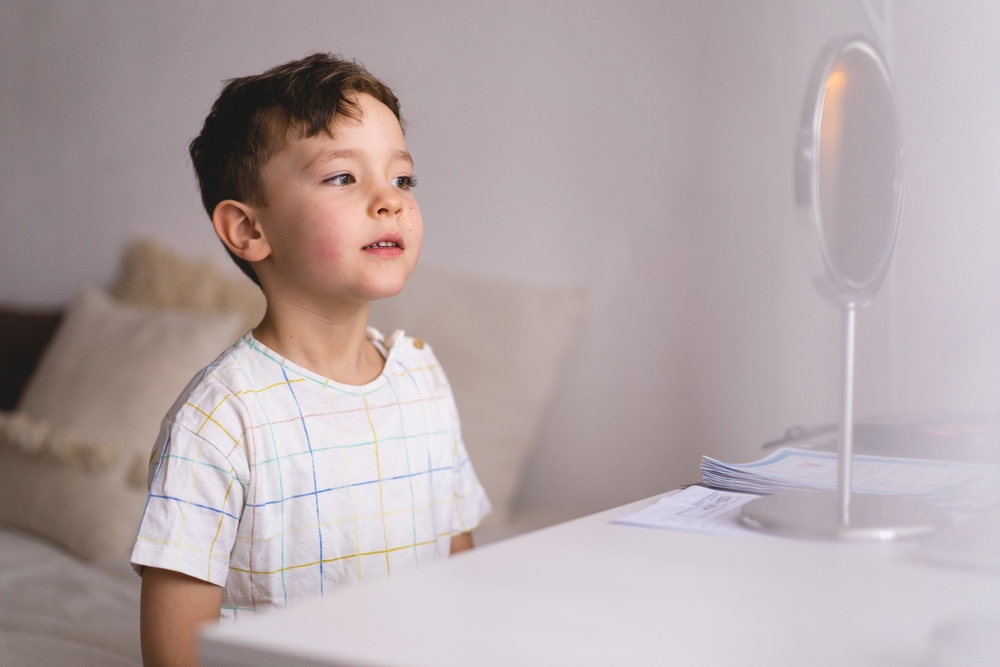
Before walking downstairs, she practiced her request nearly twenty times. She even stood in front of her bedroom mirror pretending to answer possible questions.
By the time she finally approached her parents, she felt so nervous that she simply said she was tired and went back upstairs.
She never mentioned the club at all.
The Fear Was Not About Punishment
Ms. Carter carefully asked whether her parents yelled at her often.
Ava quickly shook her head.
“They’re not mean.”
That surprised Ms. Carter.
“So what makes it so scary?”
Ava thought for a moment.
“I just really don’t want to disappoint them. If they look disappointed, I feel like I failed.”
Small Reactions That Grew Bigger
As Ava continued talking, a pattern began to appear.
Whenever she earned an A, her parents celebrated.
Whenever she brought home a B, they simply asked what happened.
If she forgot a chore, they sighed without saying much. They rarely shouted, but Ava interpreted every expression as proof that she needed to perform better next time.
Over the years, those small moments quietly became enormous inside her mind.
Another Adult Notices Something
The following morning Ms. Carter stopped by the school counselor’s office.
She did not share unnecessary details, but she asked whether other students struggled with rehearsing conversations.
The counselor nodded almost immediately.
“More than people realize,” she said.
“Some children rehearse because they’re anxious. Others do it because they’re afraid of conflict. Sometimes it’s simply because they care deeply about getting things right.”
The conversation reminded Ms. Carter that one question rarely told the whole story.
A Classroom Exercise Changes Direction
Later that week Ms. Carter assigned students a simple writing activity.
They were asked to describe someone who made them feel comfortable enough to speak honestly.
Most students wrote about grandparents, cousins, or best friends.
Ava wrote only three sentences.
“My dog listens without interrupting. I never have to practice talking to him. I wish people were that easy.”
Reading those words made Ms. Carter pause for a long time.
An Invitation to Talk
With the counselor’s guidance, the school invited Ava’s parents to meet after class.
They arrived looking confused.
Her mother immediately asked if Ava had broken a rule.
“No,” Ms. Carter answered.
“Actually, this meeting is because she’s doing so many things right that something important almost stayed hidden.”
Both parents leaned forward, clearly concerned.
Parents Hear Something They Never Expected
Ms. Carter carefully described Ava’s question without blaming anyone.
Silence filled the room.
Finally Ava’s father looked at his daughter.
“You practice talking to us?”
Ava nodded.
Her mother covered her mouth.
“We honestly had no idea.”
There was no anger in the room, only surprise and sadness.
A Different Perspective Emerges
Ava’s father admitted that he often asked, “What happened?” after seeing a lower grade because he believed he was encouraging problem solving.
“I never meant it to sound like disappointment,” he said quietly.
Her mother confessed she often corrected mistakes before celebrating successes because that was how she had been raised.
“We thought we were preparing you for life.”
Ava whispered, “Sometimes I just wanted you to be happy first.”
Those words changed the entire conversation.
Building New Habits at Home
The family agreed to try something simple.
Whenever Ava wanted to share news, nobody would interrupt until she finished speaking.
If she made a mistake, her parents would ask how she felt before offering advice.
Most importantly, they promised that good conversations would not depend on perfect grades or perfect choices.
It felt awkward during the first week, but slowly the tension around everyday conversations began to fade.
The First Unrehearsed Conversation
About a month later Ava stayed after class again.
This time she looked different.
Not happier in an exaggerated way, just lighter.
I asked my parents if I could try out for the school play.”
Ms. Carter smiled.
“Did you practice first?”
Ava laughed.
“Only once.”
Then she paused before adding something even more meaningful.
“Actually, I think that was just me thinking about it. It didn’t feel like practicing.”
A Simple Note That Stayed on the Desk
On the final day of school, Ava left a folded note on Ms. Carter’s desk.
Inside she had written, “Thank you for answering my question without making me feel strange. I thought everyone else knew how to talk to their parents naturally, and I was the only one pretending. You helped me realize I didn’t have to carry that feeling by myself.”
Ms. Carter carefully placed the note inside a folder she kept for meaningful memories from her teaching career. She had received thank you notes before, but this one reminded her why listening mattered more than having quick answers. A child had asked what sounded like a simple question, yet behind it was months of quiet anxiety that nobody had noticed.
Because one adult chose to listen with patience instead of rushing past the moment, an entire family began talking to one another in a different way. Sometimes the most important lesson taught in a classroom is not part of any textbook, but the realization that every child deserves to feel safe enough to speak without rehearsing every single word first.