A Teacher Says a Student Told Her He Practices Answers to Questions Teachers Might Ask So He Never Has to Think of Something to Say on the Spot

Mrs. Lauren Bennett had taught seventh grade English for more than a decade, and she believed she could usually tell when a student had not completed the reading assignment. That was why she was surprised when Mason Reed always seemed ready with thoughtful answers the moment she called on him.
His responses were clear, detailed, and organized in a way that impressed both classmates and teachers. Yet there was something unusual about the way he spoke. Every answer sounded as though it had been rehearsed long before the question was asked. One afternoon after class, Mason quietly admitted there was a reason for that, and it changed the way Lauren viewed him for the rest of the school year.
A Conversation After the Bell
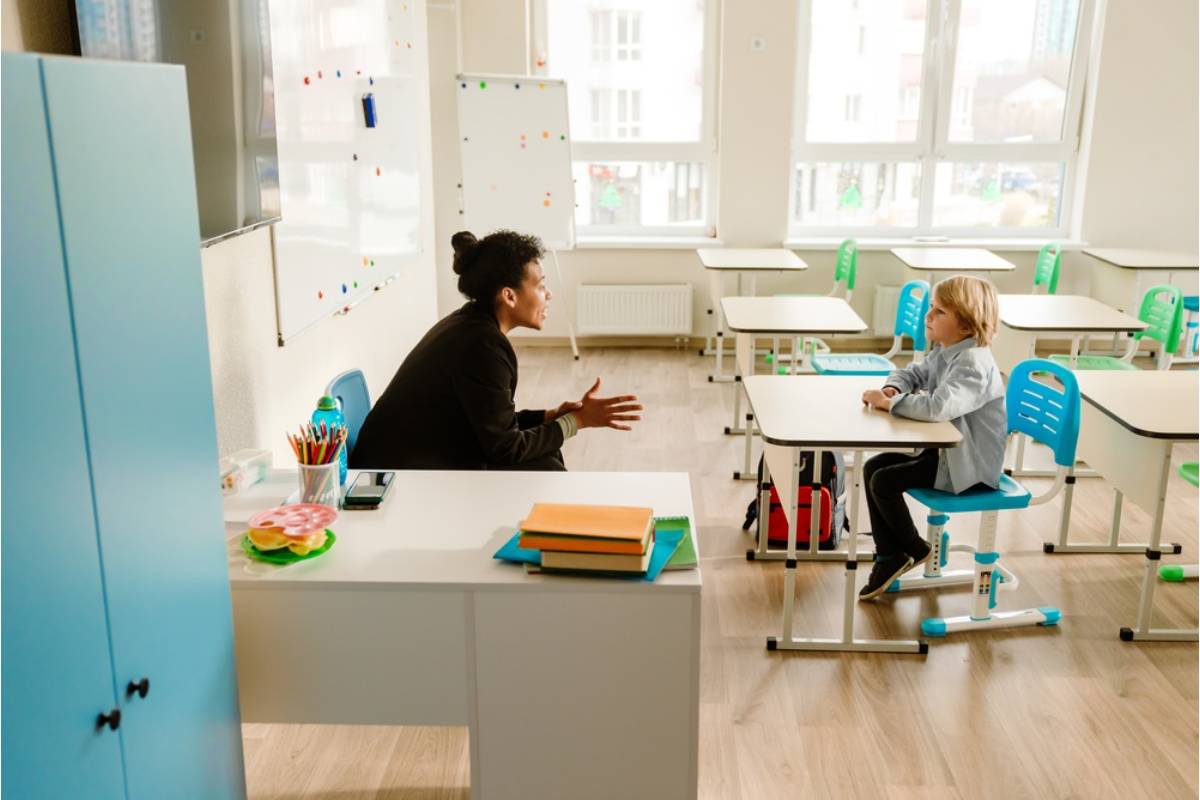
As the last students filed out of the classroom, Mason lingered near his desk instead of heading toward the hallway. Lauren assumed he had a question about an upcoming essay or a missing assignment. Instead, he looked nervous and kept adjusting the strap of his backpack.
Finally, he said, “Can I tell you something without getting in trouble?” Lauren smiled and assured him he could. Mason took a deep breath before revealing that he practiced answers to questions teachers might ask because he never wanted to think of something to say in front of everyone.
A Routine Hidden From Everyone
Lauren blinked in surprise. She had expected almost any explanation except that one. Mason explained that every evening he looked through his textbooks and tried to predict what teachers would ask the next day.
Then he stood in front of the bathroom mirror and answered each imaginary question out loud. Sometimes he repeated the same response several times until it sounded natural. He believed that if he prepared enough possibilities, he could avoid the panic of speaking without warning.
The Fear Started Years Earlier
Lauren gently asked why answering spontaneous questions felt so difficult. Mason stared at the floor before describing an experience from elementary school. During a class discussion, he had frozen while trying to answer a simple question.
A few students laughed when he struggled to find the right words. The teacher quickly moved on, but Mason never forgot how embarrassed he felt. Ever since then, he had promised himself he would never be caught unprepared again.
Preparation Became Protection
Over the years Mason turned preparation into a daily habit. Before every science class, he imagined possible lab questions. Before history, he practiced explaining important events. Even before gym class, he rehearsed simple conversations with classmates in case someone started talking to him.
The habit worked well enough that nobody suspected how anxious he actually felt. Teachers praised his confidence, while classmates assumed speaking came naturally to him. Only Mason knew how much effort every classroom discussion required.
Small Signs Began Making Sense
After their conversation, Lauren started paying closer attention during class. She noticed Mason answered quickly whenever the discussion followed the lesson plan. But if another student asked an unexpected question that changed the direction of the conversation, Mason became unusually quiet.
His confident expression disappeared as he stared at his notebook. It was not because he lacked ideas. He simply had not prepared for that particular moment.
A Private Meeting With the School Counselor
Lauren believed Mason deserved additional support, so she asked whether he would feel comfortable speaking with the school counselor. He agreed after learning he would not be in trouble. During their first meeting, counselor Rebecca Ellis listened carefully as Mason described his nightly routine.
Rebecca explained that many students experienced anxiety about speaking unexpectedly. What made Mason different was how much time he spent trying to eliminate every possible surprise. She gently pointed out that no one could prepare for every conversation life might bring.
Trying Something Uncomfortable
Rebecca suggested a small exercise during their weekly meetings. She would ask Mason completely random questions that had no right or wrong answers. At first he hated the idea because there was no way to rehearse.
The first question was simply, “What’s the funniest thing you’ve seen this month?” Mason froze for several seconds before slowly answering. Nothing terrible happened. Rebecca smiled, thanked him, and moved on to another unexpected topic.
The Classroom Experiment
Lauren wanted to help without making Mason uncomfortable in front of his classmates. She began introducing brief partner discussions before asking students to answer aloud. This gave everyone a chance to organize their thoughts.
Mason later admitted those extra moments made a huge difference. Knowing he could quietly think before speaking helped him participate more naturally. He no longer felt as though every question was a race against embarrassment.
An Unexpected Challenge
Several weeks later a substitute teacher visited Lauren’s classroom while she attended a district meeting. Unlike Lauren, the substitute called on students without warning and encouraged fast paced discussions. Mason immediately recognized the familiar pressure returning.
When the substitute unexpectedly asked for his opinion on a novel’s ending, his mind went completely blank. The room felt painfully quiet. For a brief moment, he considered pretending he had forgotten the reading assignment.
Choosing a Different Response
Then Mason remembered something Rebecca had practiced with him. Instead of forcing an immediate answer, he calmly said, “Can I take a second to think about it?” The substitute smiled and nodded without hesitation.
Those few extra seconds gave Mason enough time to gather his thoughts. His answer turned out thoughtful and well organized. More importantly, he discovered that asking for a moment was perfectly acceptable.
Classmates Shared Their Own Experiences
After class one of Mason’s friends quietly admitted he often forgot words during presentations. Another student confessed she rehearsed introductions before every group project because she worried about saying something awkward.
The conversation surprised Mason. He had believed everyone else spoke naturally without effort. Hearing classmates describe their own struggles made him realize he was far less alone than he had imagined.
A New Way of Measuring Success
Rebecca encouraged Mason to stop judging himself based on whether he answered perfectly. Instead, she suggested measuring success by whether he stayed engaged in the conversation. Some answers would come quickly. Others might require a pause.
At first that shift felt strange. Mason had spent years believing hesitation meant failure. Gradually he began seeing thoughtful pauses as part of normal communication rather than signs of weakness.
The Presentation Nobody Expected
Near the end of the semester students were assigned individual presentations on books they had recently finished. Instead of memorizing every sentence, Mason decided to prepare key ideas while leaving room for natural conversation. It was the first time he intentionally chose not to script every word.
During the question and answer portion, a classmate asked something he had never considered. The old fear returned for a moment, but he smiled and admitted, “That’s a good question. Let me think about it.” He answered honestly instead of perfectly, and the discussion continued without any awkwardness.
Looking Back With New Confidence
After the presentations Lauren asked Mason how he felt compared to the beginning of the school year. He laughed softly before admitting he still liked preparing ahead of time. The difference was that preparation no longer felt like the only thing protecting him from embarrassment.
He had learned that conversations were not tests with only one correct response. People were usually far more patient than he had believed, and thoughtful pauses were not something to fear.
Lauren carried that lesson with her as well, realizing that students who appeared the most confident sometimes worked the hardest just to feel comfortable speaking. From then on, she made space for every student to think before answering, knowing that a few extra seconds could give someone the confidence to let their real voice be heard.