A California Mom Says She Nearly Sent Her Toddler Up a Target Cart Escalator, and a Shopper Told Her Not To

The shopping cart was already lined up on the ramp of the cart escalator, and Hayley Larue’s toddler, Livvy, was still sitting inside it. In a few more seconds the cart would have passed through the gate and started its trip to the next floor of a multi-story Target in California. Larue had already caught the mistake and was reaching for her daughter when a nearby shopper called out, “Don’t do that!”
The California mom and content creator shared the moment in a TikTok video, and Parenting Patch wrote up her account on Nov. 9. The story was first reported by The Mary Sue, according to Parenting Patch. The cart never moved with Livvy in it.
A First Ride on the Cart Escalator
Larue had gone to the store with her own mother and Livvy. This Target had more than one floor, and at its entrance shoppers could send their carts up a separate cart escalator while they rode the passenger escalator beside it, Parenting Patch reported.
It was new territory for her. Larue told viewers she had never used the cart escalator before, because she usually orders Target pickup instead of going into the store. On this trip, she asked her mother to film her putting Livvy in the cart. Her mother kept the camera rolling longer than Larue wanted, and Larue said, “Okay, that’s enough.”
Few people were around. Larue rolled the cart onto the ramp with Livvy still seated inside. The cart had not yet gone through the gate when the thought landed. “Wait, she can’t go in this,” Larue said, according to Parenting Patch. She lifted her daughter out of the seat.
Larue later called the whole thing “so embarrassing.” She said she had simply stood there for a moment before taking Livvy out, the outlet reported.
The Woman Who Spoke Up
As Larue reached for her daughter, a woman nearby told her, “Don’t do that!” Larue answered that she knew. The woman went on to warn her that she could get in trouble, and Larue said she understood, Parenting Patch reported.
Then a Target employee walked in during the exchange. Larue said the worker looked at her as though she were an incompetent mom.
The video, which Larue posted on her TikTok account, lands in familiar territory for many parents of small children: a split second of autopilot in a busy store, caught by the parent herself, and then witnessed by strangers who arrive at the exact wrong moment.
Other parents have shared their own public-outing moments with little ones, from a mom whose toddler runs from her in parking lots, laughing, to one whose son brought his new doll along on a Walmart trip.
Machines Built for Carts, Not Children
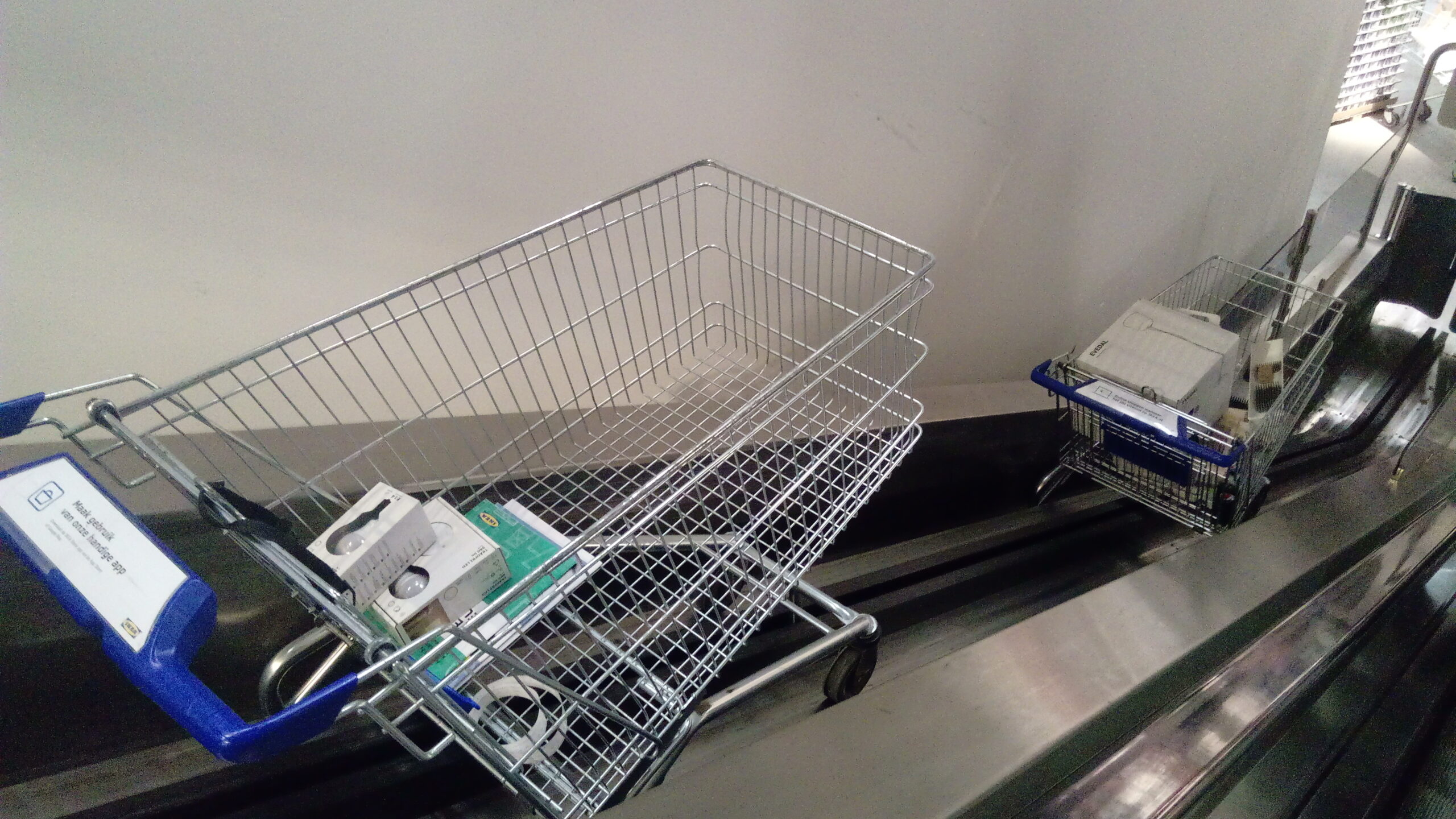
The woman who spoke up had a point about the machine itself. A shopping cart conveyor, sometimes called a Vermaport or a cart escalator, is a device used in multi-level stores to move carts up or down next to a regular escalator. Shoppers push a specially designed cart through safety doors, floor guides line up its wheels, and the device senses the cart and carries it to the next level while the shopper rides alongside.
The equipment is designed to move carts, not people, and many models use one-way hinges or sensors to keep people from getting into the conveyor. In the United States, these devices fall under the ASME B20.1 safety standard for conveyors. Parenting Patch also noted that cart conveyors are not built to carry riders.
The machines also work differently from the moving ramps some stores use. The cart stays level during the trip so merchandise does not slide off, and the conveyor runs no faster than the escalator beside it, giving shoppers time to ride along and collect the cart on the next level. Inclined moving walkways can also carry carts between floors, but they raise their own safety concerns, such as with baby strollers.
Shopping carts on their own have long sent young children to the hospital. The Consumer Product Safety Commission counted an annual average of 21,600 children age 5 and younger treated in hospital emergency rooms for shopping cart injuries from 1985 to 1996. An average of 12,800 of them each year were hurt in falls from carts, and in a 1995 to 1996 analysis, 66% of fall victims had head injuries. The agency noted that about half of the children who fell had tumbled from the seat and about half from the basket.
Carts themselves keep changing, too. In May, Target announced a redesigned cart rolling out gradually to select stores, with a deeper child seat the company said was designed to be secure, a change it said came from feedback from busy families.
Why a Stranger’s Comment Lands So Hard
Much of Larue’s video is about the feeling of being watched while fixing a mistake. That feeling is common among mothers of young children. In a 2017 C.S. Mott Children’s Hospital National Poll on Children’s Health of 475 mothers of children ages 0 to 5, about six in 10 said they had been criticized about their parenting, on topics ranging from discipline to breastfeeding.
Sarah Clark, co-director of the poll, said the findings “tap into the tensions moms face,” and that mothers “can get overwhelmed by so many conflicting views” on the best way to raise a child. She added that unsolicited advice can come across as a sign that a mother is not doing a good job.
In Larue’s case, the stranger’s warning came while she was already fixing the mistake. Livvy came out of the cart before it moved, and the cart never left the ramp with her inside. What remained was a short clip, an embarrassed mom and a reminder that cart escalators are meant for groceries only.
Get stories like this by email. Sign up for The Parent Diaries Letter.
This article was produced with AI assistance and edited for accuracy against the sources linked above.
Image: “Shopping cart escalator inside of an IKEA, Groningen (2018)” by Donald Trung Quoc Don (Chữ Hán: 徵國單) – Wikimedia Commons, licensed under CC BY-SA 4.0. https://creativecommons.org/licenses/by-sa/4.0/