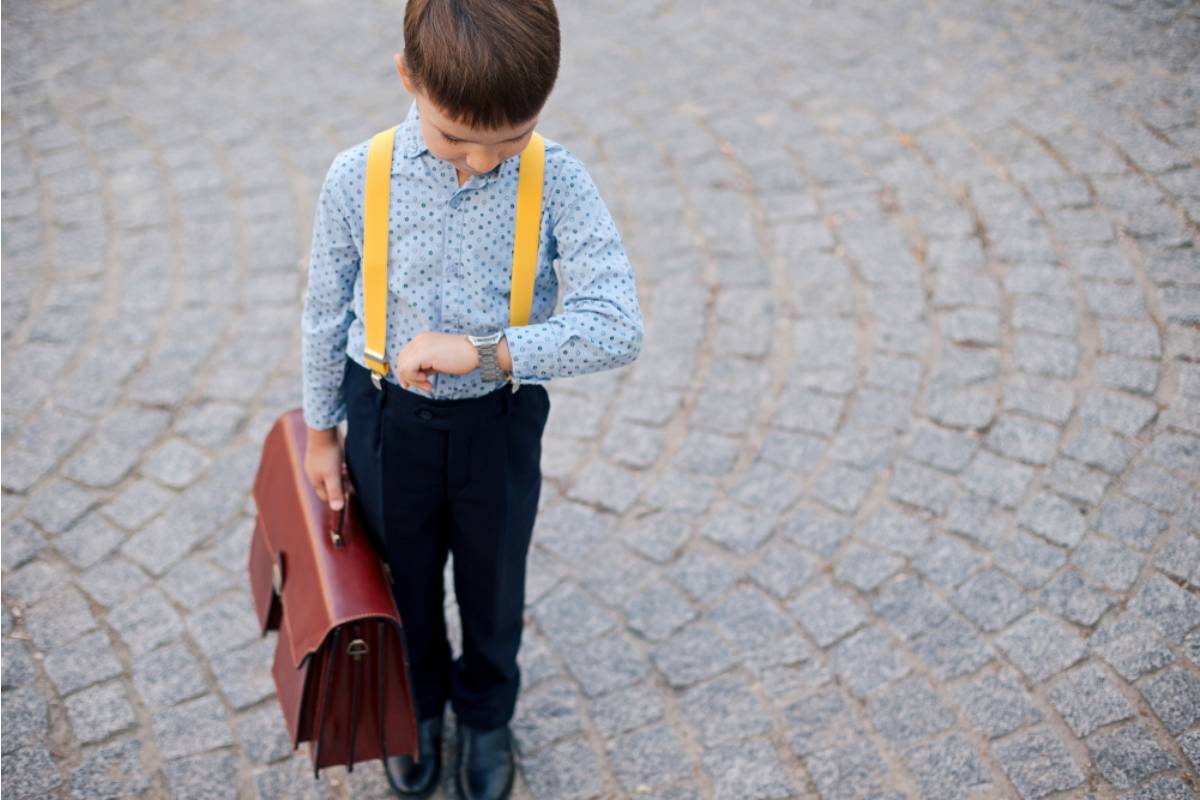
A Dad Found Out His Son Had Been Timing How Long It Took Him to Walk to School So He’d Know Exactly When to Leave to Avoid Seeing Anyone

For years, Daniel thought his twelve year old son, Caleb, was simply independent. Caleb never asked for rides, never complained about walking to school, and always seemed prepared before leaving the house each morning. Daniel admired that responsibility and often told friends how mature his son was becoming.
He never questioned why Caleb insisted on leaving at the exact same minute every day or why he became uncomfortable whenever Daniel offered to walk with him. The answer would come from a small notebook hidden in Caleb’s room, revealing that the walk to school was not about independence at all.
A Morning Question Changed Everything
One Monday morning, Daniel noticed Caleb standing near the front door with his backpack already on. He checked the clock twice before putting on his shoes.
“You’re leaving earlier than usual,” Daniel said.
Caleb immediately looked nervous.
“No, I’m not. I’m leaving the normal time.”
Daniel smiled and assumed his son was just being particular. He did not realize that Caleb had memorized his entire morning routine down to the minute.
The Walk That Became a Daily Calculation
Daniel worked from home several days a week, so he was usually around when Caleb left for school. He had noticed that Caleb always walked instead of accepting a ride.
At first, he thought it was because Caleb enjoyed the fresh air or wanted extra exercise.
But over time, Daniel noticed something unusual.
If Daniel stepped outside at the same time, Caleb suddenly became uncomfortable and asked him to go back inside.
He never explained why.
A Notebook Revealed the Hidden Routine
The discovery happened while Daniel was helping Caleb organize his desk.
He found a small spiral notebook underneath a stack of old homework papers.
Daniel almost put it away without looking, but the front page caught his attention.
It contained handwritten notes about walking times, including phrases like “leave after Dad finishes coffee” and “wait two minutes if neighbors are outside.”
Daniel stopped reading immediately.
Something about the notes worried him.
A Father Realized This Was Not About Time
Daniel respected Caleb’s privacy, but he could not ignore what he had seen.
That evening, he gently asked about the notebook.
Caleb’s expression changed instantly.
He did not look angry.
He looked embarrassed.
“I wasn’t doing anything bad,” he said quietly.
Daniel assured him he was not in trouble.
He simply wanted to understand why walking to school required so much planning.
Caleb Explained the Reason Behind the Schedule
After a long silence, Caleb admitted he had been timing everything for almost a year.
He knew exactly how long it took to walk from their house to school.
He knew which neighbors usually left for work at certain times.
He knew when groups of students normally walked past his street.
Daniel asked the obvious question.
“Why?”
Caleb looked down.
“Because I don’t want anyone seeing me with you.”
The Words Hurt More Than Expected
Daniel felt his chest tighten.
He had expected many answers.
Maybe Caleb wanted more freedom.
Maybe he wanted to spend time with friends before school.
He never expected his son was carefully avoiding being seen with him.
Daniel tried not to react emotionally because he did not want Caleb to feel guilty for being honest.
Instead, he asked what made walking together feel embarrassing.
A Fear That Started at School
Caleb explained that several classmates had teased him after seeing Daniel walk him to school months earlier.
They joked that he was still being treated like a little kid.
One student asked if his dad still packed his backpack too.
The comments were not constant, but they stuck with him.
Caleb started worrying that one more joke would make him stand out.
The Problem Was Bigger Than One Walk
Daniel realized Caleb had not just avoided one embarrassing moment.
He had created an entire system around avoiding attention.
The notebook included alternate routes, backup departure times, and notes about when the sidewalk was less crowded.
He had spent months managing a problem that adults did not even know existed.
Daniel felt sad that Caleb carried that burden alone.
A Conversation About Growing Up
That night Daniel sat with Caleb on the porch.
He told him he understood wanting independence.
Growing up meant wanting more space and privacy.
But he also explained that hiding something because of fear felt different from simply becoming more independent.
Caleb admitted he knew that.
“I just didn’t want people thinking I was weird,” he said.
Daniel Shared Something From His Own Childhood
Instead of giving a lecture, Daniel told Caleb about a time when he was young and worried about being judged.
He explained how he once changed his interests because he wanted to fit in with classmates.
Years later, he regretted spending so much energy trying to appear like someone else.
“I spent too much time worrying about what people thought,” Daniel said.
“I don’t want you to do the same thing.”
A Small Change Started the Next Morning
The following day, Daniel did not ask Caleb to walk with him.
He simply stood outside and waved goodbye.
Caleb looked surprised but waved back.
It was a small moment, but Daniel noticed something important.
Caleb did not immediately check the street.
He did not rush away.
He simply walked toward school.
The School Counselor Noticed Something Too
A few weeks later, Caleb’s school counselor contacted Daniel after noticing changes in Caleb’s behavior.
She explained that Caleb had started participating more during group activities.
He had begun eating lunch with different classmates instead of sitting alone.
Daniel mentioned the walking situation.
The counselor nodded because she had seen similar situations before.
Many students feared small moments becoming public embarrassment.
Caleb Found Confidence in Unexpected Places
The biggest change happened during a school charity event.
Students were asked to help set up tables before families arrived.
Caleb volunteered.
Normally, he avoided anything that involved being seen or recognized.
This time, he worked beside classmates without worrying about how he looked.
When Daniel arrived at the event, Caleb introduced him to friends instead of trying to disappear.
The Notebook Returned for a Different Reason
Months later, Daniel found the same spiral notebook on Caleb’s desk.
He smiled when he saw it.
But this time, the pages were different.
Instead of tracking walking times, Caleb had written goals for the school year.
There were notes about joining clubs, trying out for a sports team, and talking to new classmates.
The notebook that once recorded ways to avoid people had become a place where he planned ways to connect with them.
A Father Understood the Real Lesson
Daniel never forgot the day he discovered Caleb’s secret schedule.
At first, he thought his son was avoiding a simple walk.
Later, he realized Caleb had been trying to control every possible situation where he might feel embarrassed.
The timing, the routes, and the careful planning were all signs of a child who wanted to belong but did not know how to handle the fear of standing out.
Daniel learned that children do not always ask for help when something is bothering them. Sometimes they create quiet routines that look like independence but are actually attempts to protect themselves. Caleb still walked to school most mornings, but he no longer measured every minute or planned every step.
Sometimes Daniel joined him, sometimes he did not. The important difference was that the choice finally came from confidence instead of fear. The walk was never really about getting from their house to the school building. It was about learning that being seen with someone who loves you should never feel like something you need to hide.