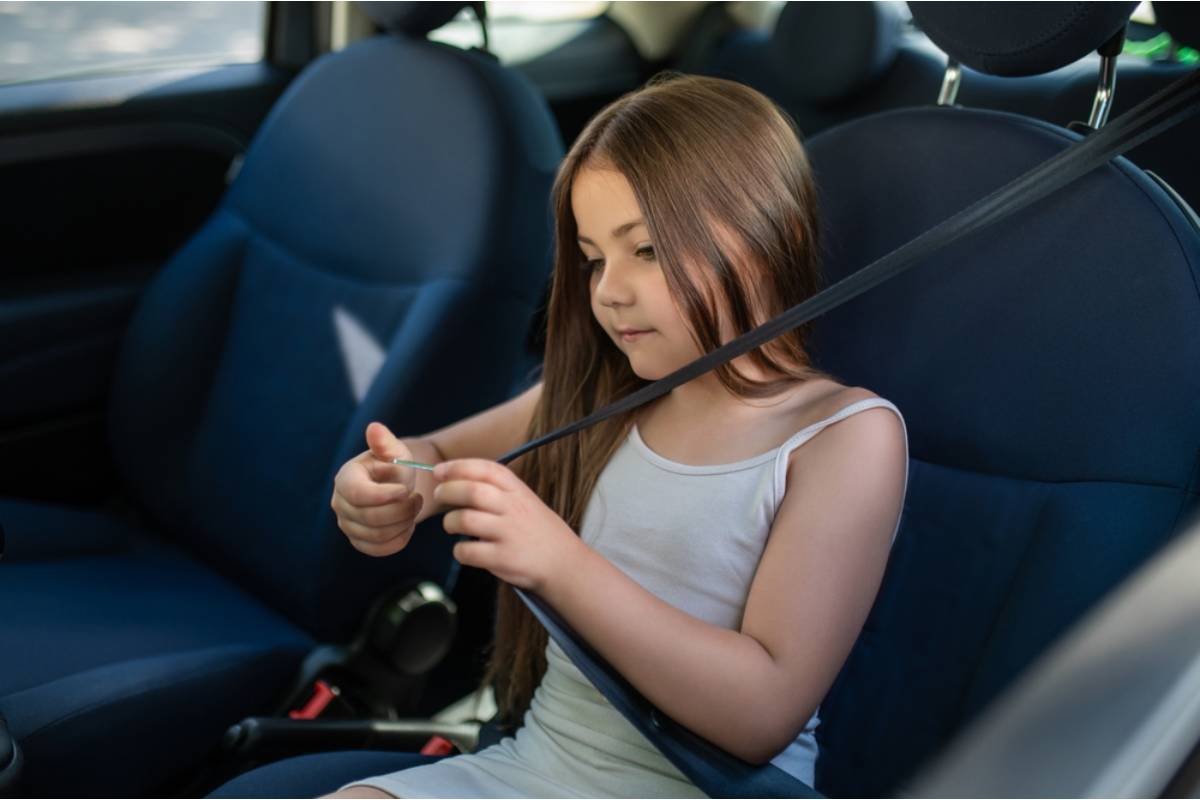
A Dad Says His 9-Year-Old Daughter Keeps Riding in the Front Seat With Her Mom, and His Ex Insists Texas Law Means There Is Nothing Unsafe About It

A father became increasingly worried after discovering that his 9-year-old daughter was regularly riding in the front passenger seat while her mother drove. His concern wasn’t limited to short trips around the neighborhood, because the child was also sitting up front on busy streets in Austin. He had already tried discussing the issue with his ex, but she dismissed his concerns by pointing out that Texas law allowed it.
That answer didn’t settle anything for him. He had read safety guidance warning that children should generally remain in the back seat because of the risks associated with airbags and the way vehicle restraints are designed. What started as a disagreement between two parents quickly became a much bigger question about whether being legally permitted and being genuinely safe were actually the same thing.
The Front Seat Became the Problem
The father wasn’t worried about where his daughter sat simply because he preferred the back seat. He was concerned that a 9-year-old’s smaller body could be positioned differently from the adult body that vehicle safety systems are designed around. The airbag, seat belt, seat position, and distance from the dashboard all became part of the argument.
His daughter wasn’t occasionally asking to sit beside her mother for a short trip either. According to him, this had become a regular practice. That made the situation feel more serious because the exposure wasn’t limited to one unusual journey.
Texas Law Complicated the Argument
The father’s biggest obstacle was his ex’s interpretation of Texas law. She believed that because the state didn’t prohibit their daughter from sitting in the front seat under the circumstances, there was no meaningful safety problem. From her perspective, legality settled the argument.
The father saw it differently. He believed laws established minimum requirements rather than guaranteeing that every legal choice was the safest possible choice. That distinction became the heart of the disagreement, because neither parent appeared willing to accept the other’s interpretation.
The Airbag Was at the Center of the Concern
Several responses immediately focused on airbags. One person suggested checking the warning label and owner’s manual for the specific vehicle because some manufacturers provide very clear guidance about children riding in the front. That advice gave the father something more concrete than another general argument with his ex.
Instead of saying, “I read online that this is dangerous,” he could potentially point to instructions written specifically for the vehicle being used. A manufacturer warning might carry more weight in a conversation where his ex had already dismissed broader safety information.
Weight Wasn’t the Only Factor
Another person argued that the issue wasn’t simply a child’s age. Modern passenger seats can use weight sensors to determine whether the airbag should activate, meaning the child’s size can influence how the safety system behaves. They also pointed out that height and the position of the seat belt matter.
That response added an important complication to what had initially sounded like a simple age debate. The father couldn’t rely only on saying that his daughter was nine. He needed to understand the actual vehicle requirements, her size, the passenger airbag system, and the manufacturer’s instructions before deciding exactly how serious the situation was.
Then Bone Development Entered the Conversation
Another response introduced a different concern: children aren’t simply smaller adults. Their bodies are still developing, and the way their rib cages and bones respond to force can differ from that of a fully grown passenger. That meant an airbag designed to protect an adult could potentially create a different kind of danger for a child.
The discussion became more detailed as people explained that the concern wasn’t necessarily about whether a child’s bones would break. The structure of the chest and the developing body can affect how impact forces are absorbed. Suddenly, the argument wasn’t merely about a number on a driver’s license or a state law.
The Daughter’s Height Became Important
The father later revealed that his daughter was tall enough to satisfy a height requirement mentioned by the Texas Department of Public Safety. She still wasn’t 4 feet 9 inches tall, however, which made him uncomfortable about treating the legal threshold as the final word on safety.
That detail complicated the situation even further. A child could meet one legal requirement while still being physically smaller than the ideal passenger for a particular safety system. The father was trying to understand that difference while his ex seemed content with the fact that the law didn’t forbid the arrangement.
A Parent Brought Up Seat Geometry
One person explained that front-seat safety depends partly on geometry. The distance between the passenger and the airbag, the position where the airbag deploys, and the way the seat belt crosses the body all matter during a crash. A front seat is fundamentally designed around an adult-sized occupant, so a child’s proportions can change how those systems interact.
That explanation gave the father another way to think about the problem. It wasn’t simply about whether the daughter looked tall enough sitting in the seat. The relationship between her torso, head, chest, seat belt, and airbag could matter in ways that aren’t obvious during an ordinary drive.
The Father Realized His Daughter Was in the Middle
The disagreement became more complicated when people began discussing whether the father should teach his daughter to refuse the front seat. Some people thought she should understand the safety risk so she could make safer choices in other vehicles. Others strongly objected to placing that responsibility on a 9-year-old.
The concern was that the child could suddenly find herself caught between two parents giving contradictory instructions. If her mother told her the front seat was safe while her father told her it wasn’t, she would be forced to decide which adult to trust. For a child her age, that was a much bigger burden than simply learning a basic safety rule.
One Response Drew a Clear Line
A person argued that children should absolutely be taught basic safety information. Knowing why certain behaviors are dangerous can help children make better choices as they grow older. From that perspective, explaining the risks of front-seat riding wasn’t automatically creating fear or responsibility.
But another person pushed back on the idea that the daughter should have to enforce the rule herself. They pointed out that a 9-year-old shouldn’t be expected to challenge a parent who tells her something is safe. Teaching her the facts was one thing, but making her responsible for overruling an adult was something else entirely.
The Road-Crossing Example Changed the Conversation
The disagreement became clearer when someone compared the situation to crossing a road. A child can certainly learn to look both ways before crossing, but that doesn’t mean the child should be expected to determine which parent’s instructions to disobey when adults disagree about safety. The responsibility for creating safe conditions still belongs primarily to the adults.
That distinction resonated with the father. He wasn’t simply trying to teach his daughter another rule about cars. He was trying to prevent a situation where she became the referee in an argument between her parents.
The Father Considered Talking to His Daughter
Some people suggested that he explain the safety issue directly to his daughter. The idea wasn’t necessarily to frighten her, but to help her understand why the back seat was preferable and why certain vehicle safety systems could be dangerous for smaller passengers. One person also suggested asking why she liked sitting in the front when riding with her mother.
The father revealed that his daughter had asked to sit in the front before. He had already explained why he believed it was dangerous, but he wasn’t convinced she understood the reasoning. That realization made the problem feel even more complicated because a child who doesn’t understand a rule may simply follow whichever adult gives her permission.
Someone Offered a Practical Coparenting Lesson
Another parent shared that they had faced a similar conflict with an ex. Instead of trying to control every decision made in the other parent’s vehicle, they had taught their child about car safety and encouraged safer habits. The approach didn’t guarantee that the other parent would always agree, but it gave the child information that could remain useful in different situations.
The father was facing the same uncomfortable reality. He couldn’t physically supervise every trip his daughter took with her mother, and he couldn’t force his ex to agree with him simply by repeating the same argument. The conversation therefore shifted toward what he could actually control.
The Vehicle Manual Could Change Everything
Several responses returned to the same practical point: check the specific vehicle. The owner’s manual and the warnings inside the car could provide information about passenger airbags, weight sensors, seat positioning, and age or size recommendations. That evidence would be much more specific than relying on general opinions from other parents.
The father seemed receptive to that idea. Instead of another emotional conversation with his ex, he could bring her something directly connected to the car she was actually driving. If the manufacturer gave a clear warning about children in the front seat, the discussion would at least be based on information that couldn’t be dismissed as merely his personal preference.
One Person Pointed Out That Legal Doesn’t Mean Ideal
Another response used an amusing comparison to make the point. Just because something is legal doesn’t automatically mean it is the safest possible decision. Laws establish boundaries, while safety recommendations can be more conservative because they account for risks that may still exist within those legal boundaries.
That distinction became one of the most important lessons in the entire discussion. The father wasn’t necessarily arguing that his ex was breaking the law. He was arguing that she was treating legality as proof of safety, and those are two different questions.
The Ex Was Still the Biggest Obstacle
Despite all the explanations, the father’s biggest problem remained unchanged. His ex had already decided that the front seat was acceptable and didn’t appear interested in revisiting the issue. He could present facts, vehicle information, and safety recommendations, but ultimately he couldn’t make another adult parent exactly the way he wanted.
That realization was frustrating because the person most affected by the disagreement was their daughter. The father didn’t want to turn a safety concern into a larger coparenting conflict, but he also didn’t want to simply ignore something he genuinely believed could put his child at unnecessary risk.
The Twist Wasn’t Really About the Front Seat
By the end, the argument had become less about one specific seat and more about how divorced parents handle conflicting safety standards. The father initially wanted his ex to admit that she was wrong, but the responses suggested that proving her wrong might not be the only useful goal. He could document the vehicle’s recommendations, communicate his concerns calmly, and teach his daughter age-appropriate safety information without making her responsible for the dispute.
The unexpected twist was that the father couldn’t guarantee what happened in the other parent’s car, but he could influence how his daughter understood safety. The front seat disagreement had exposed a deeper coparenting problem, one where two adults could interpret the same situation completely differently. For the father, the next step wasn’t necessarily winning the argument, but finding a way to protect his daughter without making her carry the weight of it.