A Dad Says His Daughter’s Piano Teacher Noticed She Played Faster When She Was Nervous and Started Ending Every Lesson Early Just to Give Her a Slower Walk Home

Some children wear their emotions on their faces. Others hide them so well that even the people closest to them miss the signs. Eleven year old Lily rarely complained, rarely argued, and almost never admitted when something was bothering her. Her father, Brian, thought she was simply a quiet kid who enjoyed piano lessons every Thursday afternoon. It took one observant teacher and one unexpected conversation to reveal that Lily had been carrying anxiety in ways that nobody had recognized.
An Unusual Pattern During Practice
Brian usually waited in the music school’s lobby while Lily took her weekly lesson. Every now and then he could hear the faint sound of scales and familiar songs coming from behind the closed studio doors. One afternoon something caught his attention.
The music became unusually fast.
The notes were technically correct, but they rushed forward as if someone were chasing them. A few minutes later the tempo slowed again, followed by calm conversation that Brian could not quite hear.
The Teacher Asked an Unexpected Question
When the lesson ended, Mrs. Reynolds smiled at Brian before Lily packed her music books.
“Can I ask you something?”
Brian nodded.
“Has Lily always sped things up when she’s nervous?”
Brian looked confused because he had never noticed anything like that. Lily simply stared at the floor, pretending to adjust the zipper on her backpack.
A Habit Hidden Inside Every Song
Mrs. Reynolds explained that Lily played beautifully during relaxed moments. Whenever she felt uncertain or worried about making mistakes, however, every piece suddenly became much faster.
“It isn’t that she’s trying to finish,” the teacher said.
“It’s almost like she’s trying to outrun the music.”
Brian had never thought of nervousness showing up through rhythm instead of words.
Lily Tried to Laugh It Off
Driving home, Brian casually mentioned what Mrs. Reynolds had noticed.
Lily gave a small shrug.
“I guess I just play fast.”
Brian smiled.
“Only when you’re nervous.”
She stayed quiet for several blocks before softly asking, “Was it really that obvious?”
That question carried far more emotion than anything else she said that afternoon.
The Walk That Had Quietly Changed
Over the next few weeks Brian noticed something else.
Lessons seemed to end about ten minutes earlier than they used to.
At first he assumed scheduling had changed.
Then one afternoon he arrived sooner than expected and saw Mrs. Reynolds and Lily walking slowly down the sidewalk together instead of hurrying out the front door.
Neither of them seemed interested in reaching the parking lot quickly.
A Conversation Beside the Sidewalk
Brian apologized for interrupting.
Mrs. Reynolds smiled warmly.
“We were just talking.”
After Lily climbed into the car, Mrs. Reynolds quietly explained why she had been ending lessons early.
I realized Lily always left here carrying whatever anxiety built up during the lesson.
“So I decided the lesson should end before the clock does.”
Brian blinked in surprise.
Time That Belonged to No One
Mrs. Reynolds explained that the final minutes were no longer spent at the piano.
Instead, they slowly walked toward the parking area while talking about books, favorite snacks, baseball games, funny family stories, and anything except music.
“The slower we walk,” she said, “the slower she seems to breathe.”
Brian stood there speechless.
No teacher had ever described helping his daughter that way.
Lily Finally Explained the Pressure
That evening Brian asked whether she enjoyed those walks.
Lily nodded immediately.
“They’re my favorite part.”
Brian looked surprised.
“What about learning new songs?”
“I like that too.”
She hesitated.
But when I leave too fast, I keep thinking about every mistake all the way home.
The walks gave her mind enough time to let those thoughts fade.
School Was Following Her Everywhere
As the conversation continued, Lily admitted something she had hidden for months.
She worried constantly about doing everything perfectly.
If she stumbled over a piano piece, she replayed it in her head.
If she answered one question wrong at school, she wondered whether everyone remembered it.
Even soccer practice became stressful because she kept thinking about mistakes instead of enjoying the game.
Brian suddenly realized the piano had simply revealed a pattern that existed everywhere else.
Mrs. Reynolds Changed the Lessons
Without making a formal announcement, Mrs. Reynolds quietly adjusted her teaching style.
Whenever Lily rushed through a piece, she never interrupted immediately.
Instead she asked, “Can we try walking through the music instead of running?”
Sometimes they clapped the rhythm together.
Sometimes they simply sat silently before trying again.
The lessons became less about perfection and more about noticing how Lily felt before her fingers ever touched the keys.
Progress Arrived in Small Moments
A month later Brian overheard another lesson from the waiting area.
The familiar song flowed steadily without racing ahead.
There were still mistakes.
Lily even stopped halfway through one difficult section.
Instead of apologizing, she laughed.
Mrs. Reynolds laughed too, then encouraged her to begin again without rushing.
Brian smiled because that tiny laugh meant more than a flawless performance ever could.
An Unexpected Performance
The school’s annual recital arrived sooner than anyone expected.
Brian worried Lily might return to her old habit once she faced an audience.
As she walked onto the stage, he noticed her close her eyes for a brief moment before sitting at the piano.
She placed both hands on the keys but did not begin immediately.
Instead she took one slow breath.
Then another.
Only after that did the music begin.
The Audience Never Knew
Lily played beautifully.
There were two small mistakes that almost nobody noticed.
More importantly, she never sped up.
She kept the same steady rhythm from beginning to end, finishing the final note with a quiet smile instead of a relieved sigh.
The audience applauded, unaware that the greatest victory had nothing to do with the music itself.
A Gift That Explained Everything
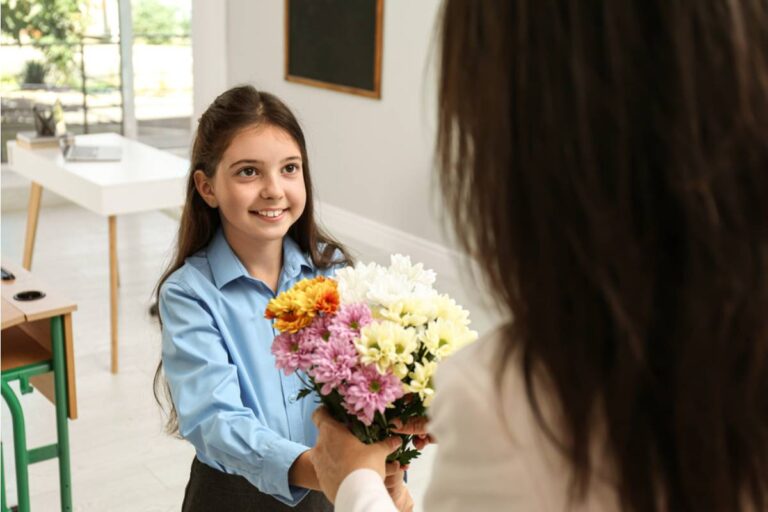
After the recital, Lily handed Mrs. Reynolds a folded thank you card.
Inside she had drawn a winding sidewalk leading away from a piano.
Underneath the drawing she wrote, “You didn’t just teach me how to slow down my songs. You taught me how to slow down my thoughts.”
Mrs. Reynolds quietly folded the card and slipped it into her music folder.
Brian stood nearby, feeling unexpectedly emotional.
For months he had believed his daughter simply needed more confidence at the piano. Instead, she had needed someone patient enough to notice what her hands were saying before she ever found the words herself. The shorter lessons were never about ending class early. They were about giving a young girl enough space between the final note and the ride home to leave her worries behind one careful step at a time. That simple walk became the part of every lesson that neither teacher nor student would ever forget.