A Teacher Says She Noticed a Student Always Offered to Carry Things for Her Between Classes and Realized It Was the Only Time All Day Someone Walked Beside Him on Purpose

Every school day is filled with small routines that most people barely notice. Students hurry through crowded hallways, teachers juggle stacks of papers, and the bell keeps everyone moving from one classroom to the next. Hidden inside those ordinary moments are quiet patterns that often reveal far more than report cards or attendance records ever could.
One middle school teacher began noticing a student who always appeared at exactly the right moment to offer help carrying books, supplies, or classroom materials. At first she thought he was simply being polite, but over time she realized there was a deeper reason behind his constant kindness.
A Familiar Face Outside Every Classroom
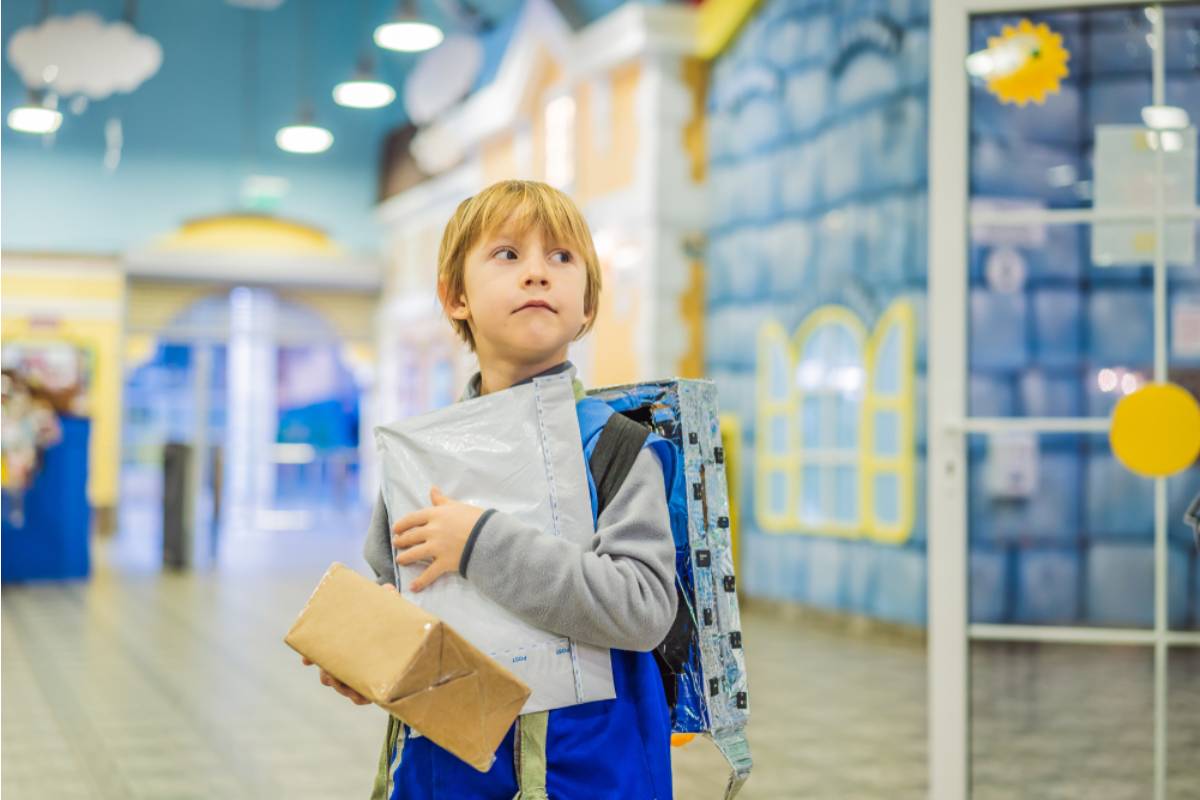
Mrs. Bennett taught seventh grade science and moved between two classrooms several times each day. Almost without fail, she would find twelve year old Mason waiting nearby whenever she needed to transport heavy bins or stacks of notebooks.
“Need a hand?” he always asked before she could even reach for everything herself.
She appreciated the help and thanked him each time. It seemed like the behavior of a thoughtful student who enjoyed being useful.
The Pattern Became Impossible to Ignore
After several weeks, Mrs. Bennett realized Mason’s timing was almost perfect.
Whether she carried microscopes, art supplies borrowed from another teacher, or boxes of lab materials, he somehow appeared within seconds. It happened too often to be a coincidence.
She casually asked another teacher if Mason often helped around the school.
The teacher smiled and said, “He’s always volunteering for something.”
An Ordinary Walk Felt Different
One afternoon Mrs. Bennett asked Mason to help carry a stack of science journals to another hallway.
As they walked, Mason talked about comic books, baseball, and a stray cat that visited his apartment building. He laughed easily and asked questions that showed genuine curiosity.
The conversation flowed naturally until they reached the destination.
The moment Mrs. Bennett thanked him and turned toward another classroom, Mason’s smile quietly faded before he walked away alone.
Lunch Told a Different Story
A few days later Mrs. Bennett happened to pass through the cafeteria during her planning period.
She noticed Mason sitting by himself at the end of a table. Students around him chatted loudly with friends, but no one spoke directly to him.
He did not seem upset.
He simply ate quietly while watching everyone else enjoy conversations that never included him.
Connecting the Small Details
That afternoon another teacher asked Mrs. Bennett to return borrowed equipment.
As expected, Mason appeared.
While they walked together, Mrs. Bennett suddenly understood something that had escaped her before. Every time he volunteered to carry something, he also guaranteed himself several uninterrupted minutes beside another person.
Nobody interrupted.
Nobody ignored him.
Someone chose to walk with him.
Asking a Gentle Question
Instead of making assumptions, Mrs. Bennett decided to ask carefully.
You really don’t have to help me every day,” she said with a smile.
Mason shrugged.
“I know.”
A long silence followed before he quietly added, “I just like walking with somebody.”
His words stayed with her for the rest of the day.
Looking Beyond the Classroom
Mrs. Bennett began paying closer attention without drawing attention to Mason.
She noticed classmates rarely treated him badly. They simply overlooked him.
Group conversations formed naturally around other students while Mason often remained just outside the circle. Nobody seemed intentionally cruel, yet nobody consistently invited him in either.
Being invisible sometimes hurt as much as being excluded.
A Meeting With the School Counselor
Mrs. Bennett shared her observations with the school counselor, Mr. Harris.
He explained that Mason had transferred schools the previous year after his family moved across the state. Although he was polite and academically successful, he struggled to form lasting friendships.
Mr. Harris had been encouraging him to join clubs, but meaningful connections had not happened yet.
Mrs. Bennett wondered how many students quietly experienced the same loneliness.
An Unexpected Group Assignment
The following week Mrs. Bennett organized a science project differently than usual.
Instead of allowing students to immediately choose friends, she paired groups based on shared interests gathered from an earlier classroom survey.
Mason was placed with three students who also loved building model airplanes and reading mystery novels.
At first the conversation felt awkward.
Within minutes they were debating experiment ideas and laughing about books they had all read.
A Friendship Started Outside Class
One afternoon Mrs. Bennett looked through her classroom window toward the courtyard.
She saw Mason walking beside one of his science partners.
Neither student carried books for a teacher.
Neither seemed to need an excuse to spend time together.
They were simply talking while heading toward the buses.
Mrs. Bennett smiled without saying a word.
The Volunteer Habit Continued
Even after making new friends, Mason still offered to carry supplies.
One day Mrs. Bennett joked, “You know you’re allowed to say no.”
He laughed.
“I actually like helping now. Before, it gave me someone to talk to. Now I just enjoy it.”
The difference in his voice was impossible to miss.
Helping had become a choice instead of a necessity.
Parents Shared a Missing Piece
During spring conferences Mason’s mother thanked Mrs. Bennett for taking time to know her son.
She explained that the move had been especially difficult after Mason lost daily contact with lifelong neighborhood friends. At home he often insisted school was “fine,” even though he rarely mentioned classmates by name.
Recently that had changed.
Now dinner conversations included stories about group projects, lunchtime jokes, and weekend plans with friends.
His mother admitted she had almost cried the first time Mason asked if someone could come over after school.
A Hallway Moment Nobody Planned
Near the end of the school year Mrs. Bennett was carrying several heavy boxes toward the science lab.
Before she could ask for help, Mason appeared as usual.
This time, however, two other students walked over.
“We’ve got it,” one of them said.
The three boys carried the supplies together while joking about an upcoming baseball game.
Mrs. Bennett quietly followed behind them.
For the first time, Mason was not creating a reason for someone to walk beside him.
People had chosen to join him on their own.
A Lesson Hidden in Everyday Kindness
On the final day of school Mason handed Mrs. Bennett a handwritten thank you card.
Inside he wrote that carrying books had never really been about the books.
It had been about feeling noticed in a building full of people.
He also wrote that he no longer searched for excuses to walk beside someone because he finally had friends waiting for him after every class.
Mrs. Bennett placed the card in her desk drawer, knowing she would keep it for years. It reminded her that kindness is not always expressed through words. Sometimes it appears in repeated offers to help, quiet acts of service, or a child who seems unusually eager to accompany an adult down a hallway. Looking closely at those small moments can reveal needs that would otherwise remain hidden. One simple observation changed the direction of a school year, proving that being seen is sometimes the first step toward truly belonging.