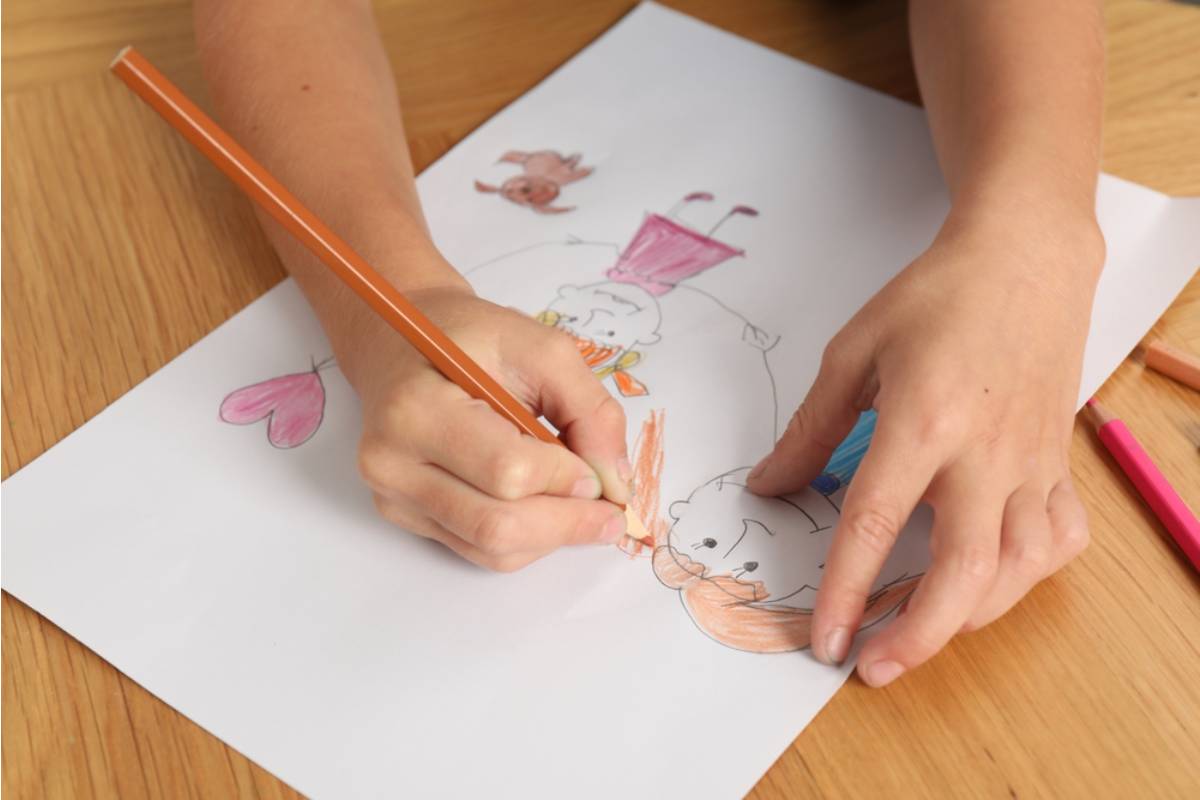
A Teacher Says a Student Handed Her a Drawing of Their Family and Then Asked for It Back and Carefully Crossed Someone Out Before Returning It

Elementary school teachers often learn more from crayons and construction paper than they do from quizzes or homework. One afternoon, a simple art assignment seemed no different from dozens that had come before it. Families, pets, and favorite memories covered the classroom tables while students proudly explained their drawings. Then one child quietly changed a single picture in a way that immediately caught the teacher’s attention. What happened after that revealed a painful story no one had seen unfolding.
The Assignment Started Like Any Other
The class had been asked to draw the people they considered part of their family. Some students filled the page with grandparents, cousins, and pets while others carefully colored small homes with smiling stick figures. The teacher walked around the room complimenting everyone’s creativity and asking questions about the pictures. Most children eagerly pointed to each person they had drawn. One student named Lily remained unusually quiet.
A Hand Slowly Reached Across the Desk
When the teacher stopped beside Lily’s desk, the girl silently handed over her picture. It showed several family members standing together in front of a house with bright flowers and a large tree. Before the teacher could say anything, Lily suddenly asked if she could have the paper back for just a minute. Her voice sounded calm, but her hands trembled slightly. The teacher nodded without asking why.
One Figure Quietly Disappeared
Lily picked up a dark crayon and carefully crossed out one person standing near the middle of the page. She did not scribble angrily or tear the paper. Instead, she slowly covered the figure until it could barely be seen. When she finished, she handed the drawing back without saying a word. The teacher immediately sensed that this was not an ordinary change.
A Gentle Question Opened the Door
Rather than asking in front of the class, the teacher waited until independent reading time. She quietly knelt beside Lily and asked if she wanted to tell her about the picture. Lily stared at the crossed out figure for several seconds before whispering, “He’s not at our house anymore.” She offered no further explanation and returned to her book. The teacher knew she needed to move carefully.
The School Counselor Joined the Conversation
Later that day, the teacher shared the drawing with the school counselor. Together they invited Lily to the counseling office, where coloring supplies and puzzles helped children feel more comfortable. After a long silence, Lily explained that the crossed out person was her mother’s boyfriend. He had moved out recently after many loud arguments that frightened everyone in the house. Lily said she crossed him out because she wanted the picture to show who felt like family now.
Another Drawing Told the Same Story
While looking through Lily’s classroom folder, the teacher found an older drawing completed several months earlier. The same man appeared standing far away from everyone else with a large space separating him from the rest of the family. At the time, the unusual placement had not seemed important. Now it looked like a quiet clue that had gone unnoticed. The teacher realized children often communicate difficult feelings long before they can explain them with words.
A Phone Call Changed the Picture
The counselor contacted Lily’s mother and asked if she could come to the school for a conversation. She arrived looking nervous, clearly expecting trouble. When the drawing was placed on the table, tears filled her eyes almost immediately. She admitted she had recently ended a difficult relationship and believed she had hidden most of the conflict from her daughter. Seeing the crossed out figure made her realize Lily had noticed far more than she ever imagined.
Classmates Accidentally Revealed More
Over the next week, the teacher quietly observed Lily during group activities. Several classmates mentioned that Lily smiled much more often during recess than she had earlier in the school year. One student even commented that Lily laughed again during art class after being quiet for months. None of the children understood why the change had happened. They simply noticed that their friend seemed happier.
A New Family Portrait Appeared
A few weeks later the class completed another creative writing activity with illustrations. This time Lily drew herself, her mother, her younger brother, and their dog sitting together on a couch reading books. Every person wore a wide smile, and no one had been crossed out or erased. When the teacher complimented the picture, Lily quietly replied, “This one feels right.” Those four words carried more meaning than the drawing itself.
The Mother Shared an Honest Truth
Before the school year ended, Lily’s mother requested a meeting with the teacher. She thanked her for noticing what could have easily been dismissed as a random change to an art project. She admitted she had underestimated how carefully children observe relationships inside their homes. Although the transition had been difficult, she believed her daughter finally felt safe enough to express what she had been carrying inside. The teacher realized the drawing had started a conversation that might never have happened otherwise.
The Classroom Became a Safer Place
The teacher quietly adjusted future art assignments to give students more freedom in how they expressed themselves. Instead of assuming every picture represented a happy memory, she began asking gentle questions that invited children to share as much or as little as they wished. Several students gradually opened up about changes happening in their own lives. None of those conversations happened because they were forced. They happened because someone took the time to notice.
One Piece of Paper Stayed With Her
At the end of the school year, the teacher packed away lesson plans and student artwork before summer break. Lily’s drawing remained in a folder she kept as a reminder that children sometimes reveal their biggest struggles through the smallest actions. Crossing out one figure had not been an act of anger. It had been a quiet declaration that life had changed, and that healing had finally begun. From then on, the teacher never looked at a child’s drawing as just another classroom assignment.