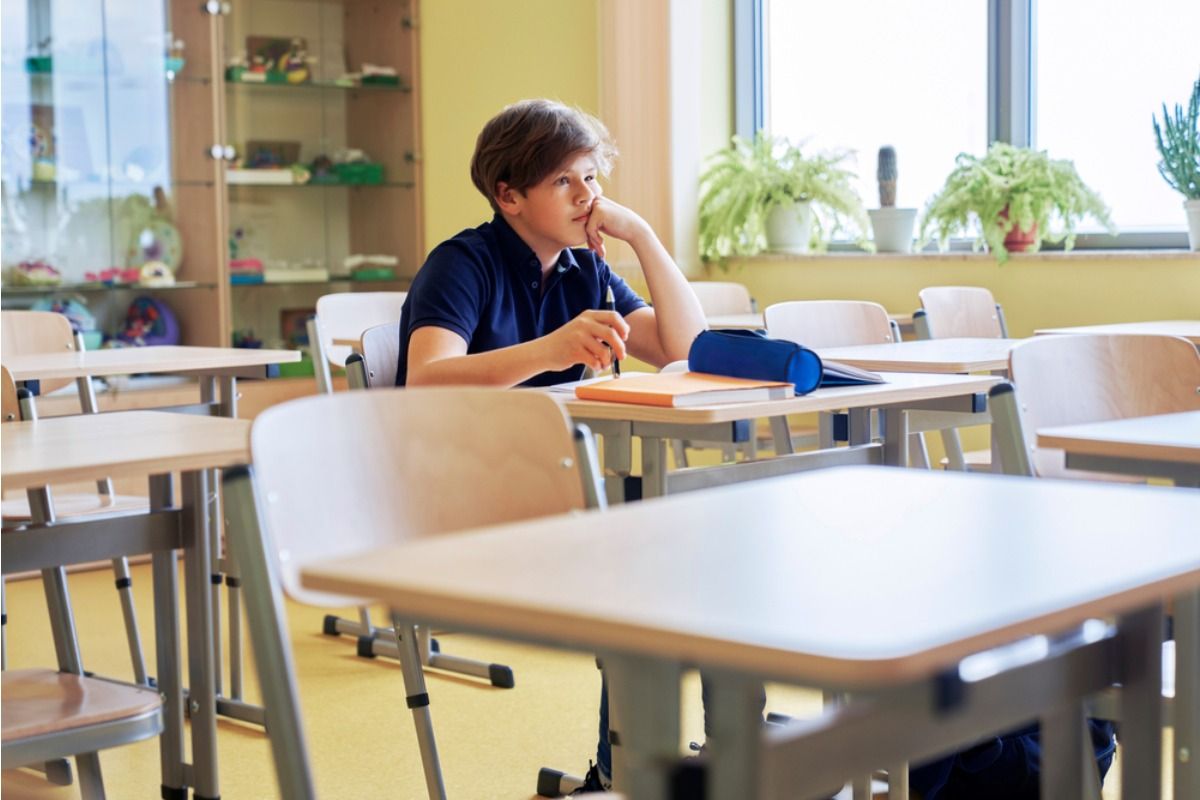
A Teacher Says Students Are Treating Detention Like a Joke, and Consequences “Don’t Mean Anything Anymore”

A teacher says students are treating detention like a joke, and it’s raising concerns about whether traditional consequences still carry weight in today’s school environment.
Detention No Longer Feels Like a Deterrent
For some students, detention doesn’t feel like a real consequence anymore. It may be seen as routine or even expected. When there’s no strong impact, behavior doesn’t change. The purpose of detention starts to fade. It becomes just another part of the day. The effect weakens over time.
Repetition Reduces Impact
When students receive detention frequently, it can lose its meaning. What was meant to correct behavior becomes normalized. Repeated consequences without change reduce effectiveness. Students adapt instead of adjusting. Familiarity lowers seriousness. The cycle continues.
Social Perception Has Shifted
In some cases, detention is no longer seen as embarrassing or negative among peers. Students may talk about it casually or even joke about it. This changes how seriously it’s taken. Peer influence plays a role. Reputation isn’t affected the same way. Social pressure weakens.
Lack of Follow-Through Can Undermine Authority
If consequences are not consistently enforced, students may not take them seriously. Inconsistency creates gaps in authority. Students notice when rules aren’t applied evenly. This affects overall discipline. Clear follow-through is essential. Without it, consequences lose credibility.
Home and School Expectations May Differ
What is considered serious at school may not be reinforced at home. If consequences aren’t supported consistently, their impact decreases. Students receive mixed signals. Alignment between environments matters. Without it, discipline becomes less effective. Consistency shapes behavior.
Students May Not Connect Actions to Consequences
For consequences to work, students need to understand why they are given. If detention feels disconnected from behavior, it becomes meaningless. Reflection is often missing. Without understanding, there’s no change. The lesson behind the consequence gets lost. Clarity is important.
Alternative Approaches Are Being Considered
Some educators are exploring different methods like restorative practices or behavior reflection sessions. These focus on understanding actions rather than just punishing them. The goal is long-term behavior change. Traditional methods may not work for everyone. New approaches are being tested.
Classroom Management Is Becoming More Complex
Teachers are balancing discipline with engagement and learning. When consequences lose impact, maintaining order becomes harder. Time is spent managing behavior instead of teaching. This affects the classroom environment. Control becomes more challenging. Strategies need to evolve.
Respect and Authority Are Being Re-evaluated
This issue reflects a broader shift in how students view authority. Traditional systems may not carry the same weight as before. Respect is influenced by many factors. Expectations are changing. Authority is no longer automatic. It has to be reinforced differently.
A Growing Discussion Around Discipline
Educators and parents are increasingly discussing whether current discipline methods are still effective. The focus is shifting toward finding approaches that actually influence behavior. It’s not just about punishment but about impact. The conversation is ongoing. Solutions are still evolving.
As teachers continue to report that detention is losing its effect, schools are rethinking how consequences are used, aiming to find approaches that still hold meaning and encourage real behavior change in today’s classrooms.